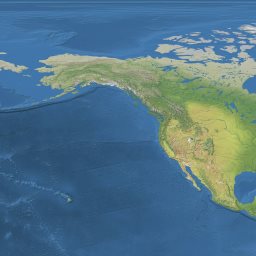
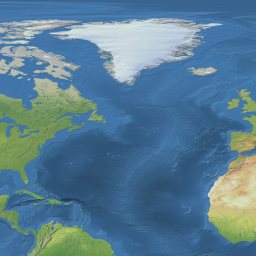
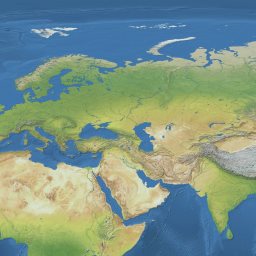
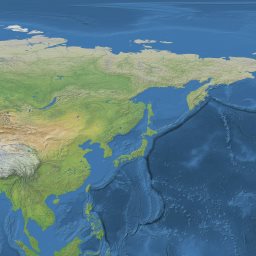
Quo Fuit places 9 dated presences for Subrahmanyan Chandrasekhar across 9 places, from 1910 to 1995.
Each one keeps the sentence it was taken from and a link to its source.
Subrahmanyan Chandrasekhar (19 October 1910 – 21 August 1995) was an Indian-American theoretical physicist.Wikipedia, full article · CC BY-SA
Every dot is a place Subrahmanyan Chandrasekhar is documented in, on a dated record. The interactive globe carries the full detail.
Where Subrahmanyan Chandrasekhar was documented, and when
19 October 1910exact date
Lahoreattested“Chandrasekhar was born in Lahore on 19 October 1910 of the British Raj (present-day Pakistan) into a Tamil family, to Sita Balakrishnan and Chandrasekhara Subrahmanya Ayyar, who was stationed in Lahore as Deputy Auditor General of the No…”source: Wikipedia: Subrahmanyan Chandrasekhar
1925 to 1930period
University of Madrasattested“From 1925 to 1930, he studied at Presidency College, Madras (affiliated to the University of Madras), writing his first paper, "The Compton Scattering and the New Statistics", in 1929 after being inspired by a lecture by Arnold Sommerfeld.”source: Wikipedia: Subrahmanyan Chandrasekhar
July 1930month
University of Cambridgeattested“In July 1930, Chandrasekhar was awarded a Government of India scholarship to pursue graduate studies at the University of Cambridge, where he was admitted to Trinity College.”source: Wikipedia: Subrahmanyan Chandrasekhar
July 1930month
Trinity College, Cambridgeattested“In July 1930, Chandrasekhar was awarded a Government of India scholarship to pursue graduate studies at the University of Cambridge, where he was admitted to Trinity College.”source: Wikipedia: Subrahmanyan Chandrasekhar
1932year
Englandattested“She wanted to continue her studies in England, but her mother did not agree to this, which led Doraiswamy to earn an LT (teaching degree) from the University of Madras and Lady Willingdon Training College in 1932.”source: Wikipedia: Subrahmanyan Chandrasekhar
September 1932month
Niels Bohr Instituteattested“On the advice of Paul Dirac, he spent his final year of graduate studies (September 1932 to May 1933) at the Institute for Theoretical Physics in Copenhagen, where he met Niels Bohr.”source: Wikipedia: Subrahmanyan Chandrasekhar
September 1932month
Copenhagenattested“On the advice of Paul Dirac, he spent his final year of graduate studies (September 1932 to May 1933) at the Institute for Theoretical Physics in Copenhagen, where he met Niels Bohr.”source: Wikipedia: Subrahmanyan Chandrasekhar
1933year
Cambridgeattested“After receiving a bronze medal for his work on degenerate stars, Chandrasekhar was awarded his PhD degree at Cambridge in the summer of 1933, with a thesis on rotating self-gravitating polytropes.”source: Wikipedia: Subrahmanyan Chandrasekhar
1995year
University of Chicagoattested“Chandrasekhar died of a heart attack at the University of Chicago Hospital in 1995 after surviving a heart attack in 1975.”source: Wikipedia: Subrahmanyan Chandrasekhar
Open Quo Fuit to see these 9 presences on the
globe, filter them by date, and follow the journey year by year.
Places Subrahmanyan Chandrasekhar is documented in
Other places tied to Subrahmanyan Chandrasekhar in the record
In each of these, a source puts Subrahmanyan Chandrasekhar and the place in the same dated sentence without stating
that Subrahmanyan Chandrasekhar was there. They are kept apart from the timeline above for exactly that reason:
a mention is not a presence, and Quo Fuit does not quietly promote one into the other.
1916 to 1918period
Lahorementioned“The family moved from Lahore to Allahabad in 1916, and finally settled in Madras in 1918.”source: Wikipedia: Subrahmanyan Chandrasekhar
1916 to 1918period
Prayagrajmentioned“The family moved from Lahore to Allahabad in 1916, and finally settled in Madras in 1918.”source: Wikipedia: Subrahmanyan Chandrasekhar
1916 to 1918period
Madrasmentioned“The family moved from Lahore to Allahabad in 1916, and finally settled in Madras in 1918.”source: Wikipedia: Subrahmanyan Chandrasekhar
1931year
Göttingenmentioned“At the invitation of Max Born he spent the summer of 1931, his second year of post-graduate studies, at Born's institute at Göttingen, working on opacities, atomic absorption coefficients, and model stellar photospheres.”source: Wikipedia: Subrahmanyan Chandrasekhar
1932year
University of Madrasmentioned“She wanted to continue her studies in England, but her mother did not agree to this, which led Doraiswamy to earn an LT (teaching degree) from the University of Madras and Lady Willingdon Training College in 1932.”source: Wikipedia: Subrahmanyan Chandrasekhar
1933 to 1937period
Trinity College, Cambridgementioned“On 9 October, he was elected to a Prize Fellowship at Trinity College for the period 1933–1937, becoming only the second Indian to receive a Trinity Fellowship after Srinivasa Ramanujan 16 years earlier.”source: Wikipedia: Subrahmanyan Chandrasekhar
1935year
Royal Astronomical Societymentioned“After graduating from Cambridge, Chandrasekhar, who was in close contact with Arthur Eddington, presented a full solution to his stellar equation at the Royal Astronomical Society meeting in 1935.”source: Wikipedia: Subrahmanyan Chandrasekhar
1935year
Cambridgementioned“After graduating from Cambridge, Chandrasekhar, who was in close contact with Arthur Eddington, presented a full solution to his stellar equation at the Royal Astronomical Society meeting in 1935.”source: Wikipedia: Subrahmanyan Chandrasekhar
1937year
University of Chicagomentioned“Chandrasekhar remained at the University of Chicago for the rest of his career, 1937-1995.”source: Wikipedia: Subrahmanyan Chandrasekhar
1946year
Chicagomentioned“In 1946, when Princeton University offered Chandrasekhar a position vacated by Henry Norris Russell with a salary double that of Chicago's, Hutchins incremented his salary matching with that of Princeton's and persuaded Chandrasekhar to…”source: Wikipedia: Subrahmanyan Chandrasekhar
Two people documented in the same place in the same year is a correlation, not a meeting.
Quo Fuit will never say they met without a source that says so.
How to read this page
Every line above is a dated fact taken from a source, with the sentence it came from and a link
back to it. Nothing is inferred, and a gap in the record is not evidence that someone was elsewhere.
A tag says how the fact is carried by its source: documented a structured,
explicitly dated record, attested a sentence that states the person was there,
mentioned a sentence that ties the person to the place without stating presence.
Sentences quoted from Wikipedia are available under CC BY-SA 4.0. Public domain books come from
Project Gutenberg. Quo Fuit claims no rights over these sources.
See Subrahmanyan Chandrasekhar on a 3D globe, filter the record by date, and cross this life with another to find
where the two overlap.