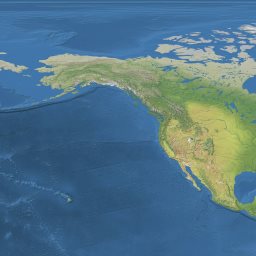
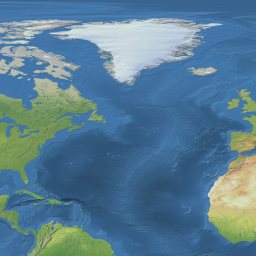
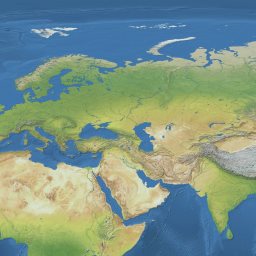
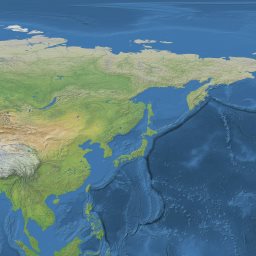
Quo Fuit places 14 dated presences for Alan Hodgkin across 10 places, from 1914 to 1951.
Each one keeps the sentence it was taken from and a link to its source.
Sir Alan Lloyd Hodgkin (5 February 1914 – 20 December 1998) was an English physiologist and biophysicist who shared the 1963 Nobel Prize in Physiology or Medicine with Andrew Huxley and John Eccles.Wikipedia, full article · CC BY-SA
Every dot is a place Alan Hodgkin is documented in, on a dated record. The interactive globe carries the full detail.
Where Alan Hodgkin was documented, and when
5 February 1914exact date
Banburyattested“Hodgkin was born in Banbury, Oxfordshire, on 5 February 1914.”source: Wikipedia: Alan Hodgkin
24 June 1918exact date
Baghdadattested“He died of dysentery in Baghdad on 24 June 1918, just a few weeks after his youngest son, Keith, had been born.”source: Wikipedia: Alan Hodgkin
1932year
Germanyattested“Despite his Quaker upbringing, Hodgkin was eager to join the war effort as contact with the Nazis during his stay in Germany in 1932 had removed all his pacifist beliefs.”source: Wikipedia: Alan Hodgkin
May 1932month
Wray Castleattested“Between school and college, he spent May 1932 at the Freshwater Biological Station at Wray Castle based on a recommendation of his future Director of Studies at Trinity, Carl Pantin.”source: Wikipedia: Alan Hodgkin
May 1932month
Trinity College, Cambridgeattested“Between school and college, he spent May 1932 at the Freshwater Biological Station at Wray Castle based on a recommendation of his future Director of Studies at Trinity, Carl Pantin.”source: Wikipedia: Alan Hodgkin
August 1932month
Frankfurtattested“After Wray Castle, he spent two months with a German family in Frankfurt as "in those days it was thought highly desirable that anyone intending to read science should have a reasonable knowledge of German." After his return to England i…”source: Wikipedia: Alan Hodgkin
August 1932month
Englandattested“After Wray Castle, he spent two months with a German family in Frankfurt as "in those days it was thought highly desirable that anyone intending to read science should have a reasonable knowledge of German." After his return to England i…”source: Wikipedia: Alan Hodgkin
1935year
Trinity College, Cambridgeattested“After his return to Cambridge he started collaborating with Andrew Huxley who had entered Trinity as a freshman in 1935, three years after Hodgkin.”source: Wikipedia: Alan Hodgkin
1935year
Cambridgeattested“After his return to Cambridge he started collaborating with Andrew Huxley who had entered Trinity as a freshman in 1935, three years after Hodgkin.”source: Wikipedia: Alan Hodgkin
1936 to 1937period
New York Cityattested“In 1936, Hodgkin was invited by Herbert Gasser, then director of the Rockefeller Institute in New York City, to work in his laboratory during 1937–38.”source: Wikipedia: Alan Hodgkin
July 1939month
Plymouth Marine Laboratoryattested“He moved all his equipment to the Plymouth Marine Laboratory in July 1939.”source: Wikipedia: Alan Hodgkin
1944year
Cambridgeattested“As the Allied Forces' invasion of France and their continued advance towards Germany in autumn 1944 suggested an end of the war in the foreseeable future, Hodgkin started to plan his return to a career in research at Cambridge.”source: Wikipedia: Alan Hodgkin
1944year
Germanyattested“As the Allied Forces' invasion of France and their continued advance towards Germany in autumn 1944 suggested an end of the war in the foreseeable future, Hodgkin started to plan his return to a career in research at Cambridge.”source: Wikipedia: Alan Hodgkin
1951 to 1969period
Cambridgeattested“From 1951 to 1969, Hodgkin was the Foulerton Professor of the Royal Society at Cambridge.”source: Wikipedia: Alan Hodgkin
Open Quo Fuit to see these 14 presences on the
globe, filter them by date, and follow the journey year by year.
In each of these, a source puts Alan Hodgkin and the place in the same dated sentence without stating
that Alan Hodgkin was there. They are kept apart from the timeline above for exactly that reason:
a mention is not a presence, and Quo Fuit does not quietly promote one into the other.
1916year
Armeniamentioned“In 1916, George Hodgkin travelled to Armenia as part of an investigation of distress.”source: Wikipedia: Alan Hodgkin
1918year
Persian Gulfmentioned“Moved by the misery and suffering of Armenian refugees he attempted to go back there in 1918 on a route through the Persian Gulf (as the northern route was closed because of the October Revolution in Russia).”source: Wikipedia: Alan Hodgkin
1918year
Russiamentioned“Moved by the misery and suffering of Armenian refugees he attempted to go back there in 1918 on a route through the Persian Gulf (as the northern route was closed because of the October Revolution in Russia).”source: Wikipedia: Alan Hodgkin
1934year
Atlas Mountainsmentioned“Nevertheless, he participated in a zoological expedition to the Atlas Mountains in Morocco led by John Pringle in 1934.”source: Wikipedia: Alan Hodgkin
1934year
Moroccomentioned“Nevertheless, he participated in a zoological expedition to the Atlas Mountains in Morocco led by John Pringle in 1934.”source: Wikipedia: Alan Hodgkin
May 1940month
Swanagementioned“The group moved to Swanage in May 1940 where Pringle replaced Bowen as leader of the group.”source: Wikipedia: Alan Hodgkin
March 1944month
MIT Radiation Laboratorymentioned“In February and March 1944, he visited the MIT Radiation Laboratory to help foster the interchange of information on developments in radar between Britain and America.”source: Wikipedia: Alan Hodgkin
1947 to 1949period
Plymouth Marine Laboratorymentioned“They spent the summers of 1947, 1948, and 1949 at the Plymouth Marine Laboratory where they continued to measure resting and action potentials from inside the giant axon of the squid.”source: Wikipedia: Alan Hodgkin
1970year
Cambridgementioned“In 1970 he became the John Humphrey Plummer Professor of Biophysics at Cambridge.”source: Wikipedia: Alan Hodgkin
Two people documented in the same place in the same year is a correlation, not a meeting.
Quo Fuit will never say they met without a source that says so.
How to read this page
Every line above is a dated fact taken from a source, with the sentence it came from and a link
back to it. Nothing is inferred, and a gap in the record is not evidence that someone was elsewhere.
A tag says how the fact is carried by its source: documented a structured,
explicitly dated record, attested a sentence that states the person was there,
mentioned a sentence that ties the person to the place without stating presence.
Sentences quoted from Wikipedia are available under CC BY-SA 4.0. Public domain books come from
Project Gutenberg. Quo Fuit claims no rights over these sources.
See Alan Hodgkin on a 3D globe, filter the record by date, and cross this life with another to find
where the two overlap.