Quo Fuit places 5 dated presences for Samuel Butler (novelist) across 5 places, from 1858 to 1902.
Each one keeps the sentence it was taken from and a link to its source.
Samuel Butler (4 December 1835 – 18 June 1902) was an English novelist and critic, best known for the satirical utopian novel Erewhon (1872) and the semi-autobiographical novel The Way of All Flesh (published posthumously in 1903 with substantial revisions and published in its original form in 1964 Wikipedia, full article · CC BY-SA
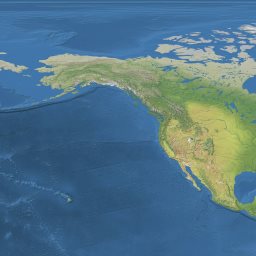
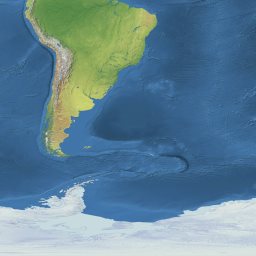
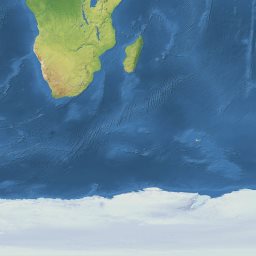
Every dot is a place Samuel Butler (novelist) is documented in, on a dated record. The interactive globe carries the full detail.
Where Samuel Butler (novelist) was documented, and when
1858 to 1859period
Londonattested“After Cambridge, he went to live in a low-income parish in London 1858–1859 as preparation for his ordination into the Anglican clergy; there he discovered that infant baptism made no apparent difference to the morals and behaviour of hi…”source: Wikipedia: Samuel Butler (novelist)
1864year
Clifford's Innattested“Butler returned to England in 1864, settling in rooms in Clifford's Inn (near Fleet Street), where he lived for the rest of his life.”source: Wikipedia: Samuel Butler (novelist)
1864year
Englandattested“Butler returned to England in 1864, settling in rooms in Clifford's Inn (near Fleet Street), where he lived for the rest of his life.”source: Wikipedia: Samuel Butler (novelist)
1902year
Barnard's Innattested“Although Jones kept his own lodgings at Barnard's Inn, the two men saw each other daily until Butler's death in 1902, collaborating on music and writing projects in the daytime, and attending concerts and theatres in the evenings; they a…”source: Wikipedia: Samuel Butler (novelist)
1902year
Italyattested“Although Jones kept his own lodgings at Barnard's Inn, the two men saw each other daily until Butler's death in 1902, collaborating on music and writing projects in the daytime, and attending concerts and theatres in the evenings; they a…”source: Wikipedia: Samuel Butler (novelist)
Open Quo Fuit to see these 5 presences on the
globe, filter them by date, and follow the journey year by year.
Other places tied to Samuel Butler (novelist) in the record
In each of these, a source puts Samuel Butler (novelist) and the place in the same dated sentence without stating
that Samuel Butler (novelist) was there. They are kept apart from the timeline above for exactly that reason:
a mention is not a presence, and Quo Fuit does not quietly promote one into the other.
1854 to 1858period
St John's College, Cambridgementioned“Then, in 1854, he went up to St John's College, Cambridge, where he obtained a first in Classics in 1858.”source: Wikipedia: Samuel Butler (novelist)
1857year
University of Cambridgementioned“While at Cambridge in 1857 he sold the Whitehall mansion and six acres to his cousin Thomas Bucknall Lloyd, but kept the remaining land surrounding the mansion.”source: Wikipedia: Samuel Butler (novelist)
September 1859month
New Zealandmentioned“As a result, in September 1859, on the ship Roman Emperor, he emigrated to New Zealand.”source: Wikipedia: Samuel Butler (novelist)
1874year
Canadamentioned“In 1874 Butler went to Canada, "fighting fraud of every kind" in an attempt to save the company, which collapsed, reducing his own capital to £2,000.”source: Wikipedia: Samuel Butler (novelist)
1881year
Alpsmentioned“His close interest in the art of the Sacri Monti is reflected in Alps and Sanctuaries of Piedmont and the Canton Ticino (1881) and Ex Voto (1888).”source: Wikipedia: Samuel Butler (novelist)
1892 to 1898period
Londonmentioned“Butler argued in a lecture entitled "The Humour of Homer", delivered at The Working Men's College in London, 1892, that Homer's deities in the Iliad are like humans, but "without the virtue", and that he "must have desired his listeners…”source: Wikipedia: Samuel Butler (novelist)
1892 to 1898period
The Working Men's Collegementioned“Butler argued in a lecture entitled "The Humour of Homer", delivered at The Working Men's College in London, 1892, that Homer's deities in the Iliad are like humans, but "without the virtue", and that he "must have desired his listeners…”source: Wikipedia: Samuel Butler (novelist)
Two people documented in the same place in the same year is a correlation, not a meeting.
Quo Fuit will never say they met without a source that says so.
How to read this page
Every line above is a dated fact taken from a source, with the sentence it came from and a link
back to it. Nothing is inferred, and a gap in the record is not evidence that someone was elsewhere.
A tag says how the fact is carried by its source: documented a structured,
explicitly dated record, attested a sentence that states the person was there,
mentioned a sentence that ties the person to the place without stating presence.
Sentences quoted from Wikipedia are available under CC BY-SA 4.0. Public domain books come from
Project Gutenberg. Quo Fuit claims no rights over these sources.
See Samuel Butler (novelist) on a 3D globe, filter the record by date, and cross this life with another to find
where the two overlap.