Quo Fuit places 3 dated presences for Mori Ōgai across 3 places, from 1884 to 1890.
Each one keeps the sentence it was taken from and a link to its source.
Lieutenant-General, known by his pen name, was a Japanese Army Surgeon general officer, translator, novelist, poet and father of famed author Mari Mori.Wikipedia, full article · CC BY-SA
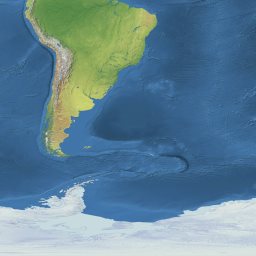
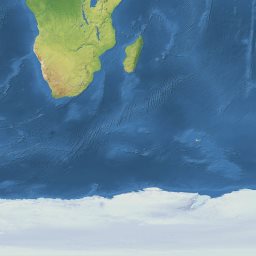
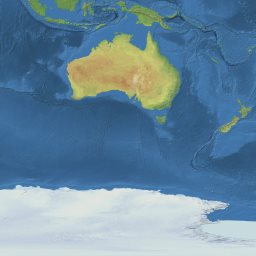
Every dot is a place Mori Ōgai is documented in, on a dated record. The interactive globe carries the full detail.
Where Mori Ōgai was documented, and when
1884 to 1888period
Germanyattested“Mori was sent by the Army to study in Germany (Leipzig, Dresden, Munich, and Berlin) from 1884 to 1888.”source: Wikipedia: Mori Ōgai
May 1885month
Japanattested“Upon his return to Japan, he was promoted to surgeon first class (captain) in May 1885; after graduating from the Army War College in 1888, he was promoted to senior surgeon, second class (lieutenant colonel) in October 1889.”source: Wikipedia: Mori Ōgai
1890year
Berlinattested“Mori's first notable work is "The Dancing Girl" (, , 1890) a story chronicling the love affair between Ōta Toyotarō, a Japanese law student studying abroad in Berlin, and a German dancer, Elis.”source: Wikipedia: Mori Ōgai
Open Quo Fuit to see these 3 presences on the
globe, filter them by date, and follow the journey year by year.
In each of these, a source puts Mori Ōgai and the place in the same dated sentence without stating
that Mori Ōgai was there. They are kept apart from the timeline above for exactly that reason:
a mention is not a presence, and Quo Fuit does not quietly promote one into the other.
1872year
Tokyomentioned“In 1872, after the Meiji Restoration and the abolition of the domains, the Mori family relocated to Tokyo.”source: Wikipedia: Mori Ōgai
1874 to 1881period
Japanmentioned“In 1874, he was admitted to the government medical school (the predecessor for Tokyo Imperial University's Medical School), and graduated in 1881 at the age of 19, the youngest person ever to be awarded a medical license in Japan.”source: Wikipedia: Mori Ōgai
1894 to 1895period
Manchuriamentioned“At the start of the First Sino-Japanese War of 1894–1895, Mori was sent to Manchuria and, the following year, to Taiwan.”source: Wikipedia: Mori Ōgai
1894 to 1895period
Taiwanmentioned“At the start of the First Sino-Japanese War of 1894–1895, Mori was sent to Manchuria and, the following year, to Taiwan.”source: Wikipedia: Mori Ōgai
February 1899month
Kokuramentioned“In February 1899, he was appointed head of the Army Medical Corps with the rank of surgeon major-general and was based in Kokura, Kyūshū.”source: Wikipedia: Mori Ōgai
1902year
Tokyomentioned“In 1902, he was reassigned to Tokyo.”source: Wikipedia: Mori Ōgai
Two people documented in the same place in the same year is a correlation, not a meeting.
Quo Fuit will never say they met without a source that says so.
How to read this page
Every line above is a dated fact taken from a source, with the sentence it came from and a link
back to it. Nothing is inferred, and a gap in the record is not evidence that someone was elsewhere.
A tag says how the fact is carried by its source: documented a structured,
explicitly dated record, attested a sentence that states the person was there,
mentioned a sentence that ties the person to the place without stating presence.
Sentences quoted from Wikipedia are available under CC BY-SA 4.0. Public domain books come from
Project Gutenberg. Quo Fuit claims no rights over these sources.
See Mori Ōgai on a 3D globe, filter the record by date, and cross this life with another to find
where the two overlap.