Quo Fuit places 9 dated presences for Max Bruch across 7 places, from 1838 to 1920.
Each one keeps the sentence it was taken from and a link to its source.
Max Bruch (6 January 1838 – 2 October 1920) was a German Romantic composer, violinist, teacher, and conductor who wrote more than 200 works, including three violin concertos, the first of which has become a staple of the violin repertoire.Wikipedia, full article · CC BY-SA
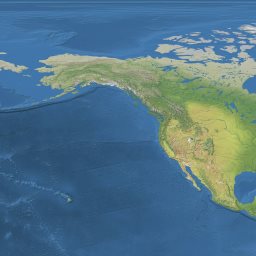
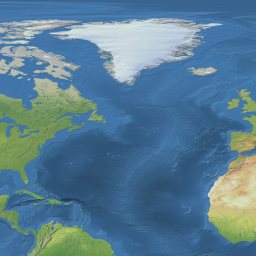
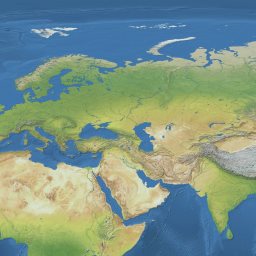
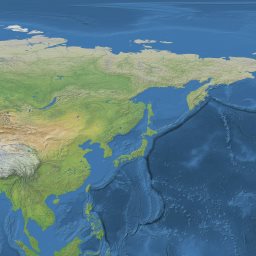
Every dot is a place Max Bruch is documented in, on a dated record. The interactive globe carries the full detail.
Where Max Bruch was documented, and when
1838year
Cologneattested“Max Bruch was born in 1838 in Cologne to Wilhelmine (), a singer, and August Carl Friedrich Bruch, an attorney who became vice president of the Cologne police.”source: Wikipedia: Max Bruch
1859 to 1873period
Bonnattested“After briefly studying philosophy and art in Bonn (1859), Bruch had a long career as a teacher, conductor, and composer, moving among musical posts in Germany: Mannheim (1862–1864), Koblenz (1865–1867), Sondershausen (1867–1870), Berlin…”source: Wikipedia: Max Bruch
1859 to 1873period
Germanyattested“After briefly studying philosophy and art in Bonn (1859), Bruch had a long career as a teacher, conductor, and composer, moving among musical posts in Germany: Mannheim (1862–1864), Koblenz (1865–1867), Sondershausen (1867–1870), Berlin…”source: Wikipedia: Max Bruch
3 January 1881exact date
Berlinattested“' Bruch married Clara Tuczek, a singer whom he had met on tour in Berlin, on 3 January 1881.”source: Wikipedia: Max Bruch
31 May 1884exact date
Breslauattested“Their first son, Max Felix Bruch, was born on 31 May 1884 in Breslau and showed great aptitude for music at an early age.”source: Wikipedia: Max Bruch
1890 to 1910period
Berlinattested“He taught composition at the Berlin Hochschule für Musik from 1890 until his retirement in 1910.”source: Wikipedia: Max Bruch
1890 to 1910period
Berlin University of the Artsattested“He taught composition at the Berlin Hochschule für Musik from 1890 until his retirement in 1910.”source: Wikipedia: Max Bruch
1920year
Berlin-Friedenauattested“Bruch died in his home in Berlin-Friedenau in 1920.”source: Wikipedia: Max Bruch
1920year
Berlinattested“Bruch died in his home in Berlin-Friedenau in 1920.”source: Wikipedia: Max Bruch
Open Quo Fuit to see these 9 presences on the
globe, filter them by date, and follow the journey year by year.
In each of these, a source puts Max Bruch and the place in the same dated sentence without stating
that Max Bruch was there. They are kept apart from the timeline above for exactly that reason:
a mention is not a presence, and Quo Fuit does not quietly promote one into the other.
1849year
Bonnmentioned“Bruch's first music theory lesson was in 1849 in Bonn.”source: Wikipedia: Max Bruch
1880year
Sefton Parkmentioned“The couple returned to Liverpool where Bruch was conductor of the Liverpool Philharmonic Society (1880–83) and took lodgings in the Sefton Park area.”source: Wikipedia: Max Bruch
1880year
Liverpoolmentioned“The couple returned to Liverpool where Bruch was conductor of the Liverpool Philharmonic Society (1880–83) and took lodgings in the Sefton Park area.”source: Wikipedia: Max Bruch
1882year
Liverpoolmentioned“Their daughter, Margaretha, who later became a noted author and champion of her father's life and works, was born in Liverpool in 1882.”source: Wikipedia: Max Bruch
Two people documented in the same place in the same year is a correlation, not a meeting.
Quo Fuit will never say they met without a source that says so.
How to read this page
Every line above is a dated fact taken from a source, with the sentence it came from and a link
back to it. Nothing is inferred, and a gap in the record is not evidence that someone was elsewhere.
A tag says how the fact is carried by its source: documented a structured,
explicitly dated record, attested a sentence that states the person was there,
mentioned a sentence that ties the person to the place without stating presence.
Sentences quoted from Wikipedia are available under CC BY-SA 4.0. Public domain books come from
Project Gutenberg. Quo Fuit claims no rights over these sources.
See Max Bruch on a 3D globe, filter the record by date, and cross this life with another to find
where the two overlap.