Quo Fuit places 12 dated presences for Mikhail Bakhtin across 10 places, from 1913 to 1961.
Each one keeps the sentence it was taken from and a link to its source.
Mikhail Mikhailovich Bakhtin (– 7 March 1975) was a Russian philosopher and literary critic who worked on the philosophy of language, ethics, and literary theory.Wikipedia, full article · CC BY-SA
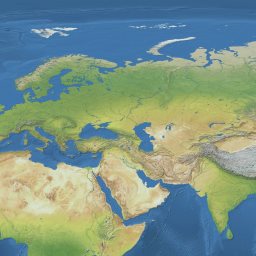
Every dot is a place Mikhail Bakhtin is documented in, on a dated record. The interactive globe carries the full detail.
Where Mikhail Bakhtin was documented, and when
1913year
Oryolattested“For this reason Bakhtin spent his early childhood years in Oryol, in Vilnius, and then in Odessa, where in 1913 he joined the historical and philological faculty at the local university (the Odessa University).”source: Wikipedia: Mikhail Bakhtin
1913year
Vilniusattested“For this reason Bakhtin spent his early childhood years in Oryol, in Vilnius, and then in Odessa, where in 1913 he joined the historical and philological faculty at the local university (the Odessa University).”source: Wikipedia: Mikhail Bakhtin
1913year
Odessaattested“For this reason Bakhtin spent his early childhood years in Oryol, in Vilnius, and then in Odessa, where in 1913 he joined the historical and philological faculty at the local university (the Odessa University).”source: Wikipedia: Mikhail Bakhtin
1924year
Saint Petersburgattested“In 1924, Bakhtin moved to Leningrad, where he assumed a position at the Historical Institute and provided consulting services for the State Publishing House.”source: Wikipedia: Mikhail Bakhtin
1936year
Mordovian State Universityattested“In 1936, they moved to Saransk (then in Mordovian ASSR, now the Republic of Mordovia), where Bakhtin taught at the Mordovian Pedagogical Institute.”source: Wikipedia: Mikhail Bakhtin
1936year
Saranskattested“In 1936, they moved to Saransk (then in Mordovian ASSR, now the Republic of Mordovia), where Bakhtin taught at the Mordovian Pedagogical Institute.”source: Wikipedia: Mikhail Bakhtin
1937year
Moscowattested“In 1937, Bakhtin moved to Savelovo, across the river from Kimry, a town located one hundred kilometers from Moscow.”source: Wikipedia: Mikhail Bakhtin
1937year
Savelovoattested“In 1937, Bakhtin moved to Savelovo, across the river from Kimry, a town located one hundred kilometers from Moscow.”source: Wikipedia: Mikhail Bakhtin
1937year
Kimryattested“In 1937, Bakhtin moved to Savelovo, across the river from Kimry, a town located one hundred kilometers from Moscow.”source: Wikipedia: Mikhail Bakhtin
1940year
Moscowattested“In 1940, and until the end of World War II, Bakhtin lived in Moscow, where he submitted a dissertation on François Rabelais to the Gorky Institute of World Literature to obtain a postgraduate title, although the dissertation could not be…”source: Wikipedia: Mikhail Bakhtin
1940year
Gorky Instituteattested“In 1940, and until the end of World War II, Bakhtin lived in Moscow, where he submitted a dissertation on François Rabelais to the Gorky Institute of World Literature to obtain a postgraduate title, although the dissertation could not be…”source: Wikipedia: Mikhail Bakhtin
1961 to 1975period
Moscowattested“In 1961, Bakhtin's deteriorating health forced him to retire, and in 1969, in search of medical attention, he moved back to Moscow, where he lived until his death in 1975.”source: Wikipedia: Mikhail Bakhtin
Open Quo Fuit to see these 12 presences on the
globe, filter them by date, and follow the journey year by year.
Other places tied to Mikhail Bakhtin in the record
In each of these, a source puts Mikhail Bakhtin and the place in the same dated sentence without stating
that Mikhail Bakhtin was there. They are kept apart from the timeline above for exactly that reason:
a mention is not a presence, and Quo Fuit does not quietly promote one into the other.
Russian Empirementioned“The work was originally published in Russia as Problems of Dostoevsky's Creative Art (Russian: Проблемы творчества Достоевского) in 1929, but was revised and extended in 1963 under the new title.”source: Wikipedia: Mikhail Bakhtin
Two people documented in the same place in the same year is a correlation, not a meeting.
Quo Fuit will never say they met without a source that says so.
How to read this page
Every line above is a dated fact taken from a source, with the sentence it came from and a link
back to it. Nothing is inferred, and a gap in the record is not evidence that someone was elsewhere.
A tag says how the fact is carried by its source: documented a structured,
explicitly dated record, attested a sentence that states the person was there,
mentioned a sentence that ties the person to the place without stating presence.
Sentences quoted from Wikipedia are available under CC BY-SA 4.0. Public domain books come from
Project Gutenberg. Quo Fuit claims no rights over these sources.
See Mikhail Bakhtin on a 3D globe, filter the record by date, and cross this life with another to find
where the two overlap.