Quo Fuit places 8 dated presences for E. H. Carr across 8 places, from 1911 to 1953.
Each one keeps the sentence it was taken from and a link to its source.
Edward Hallett Carr (28 June 1892 – 3 November 1982) was a British English historian, diplomat, journalist and international relations theorist, and an opponent of empiricism within historiography.Wikipedia, full article · CC BY-SA
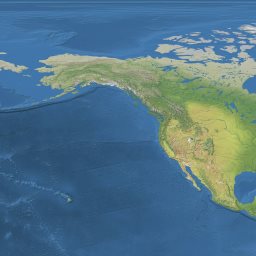
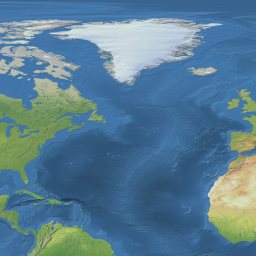
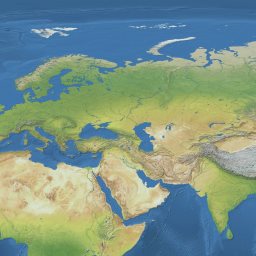
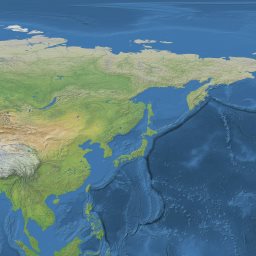
Every dot is a place E. H. Carr is documented in, on a dated record. The interactive globe carries the full detail.
Where E. H. Carr was documented, and when
1911year
Cambridgeattested“In 1911, Carr won the Craven Scholarship to attend Trinity College at Cambridge.”source: Wikipedia: E. H. Carr
1916year
Merchant Taylors' School, Northwoodattested“Carr was born in London to a middle-class family, and was educated at the Merchant Taylors' School in London and Trinity College, Cambridge, where he was awarded a first class degree in classics in 1916.”source: Wikipedia: E. H. Carr
1916year
Londonattested“Carr was born in London to a middle-class family, and was educated at the Merchant Taylors' School in London and Trinity College, Cambridge, where he was awarded a first class degree in classics in 1916.”source: Wikipedia: E. H. Carr
1936year
Aberystwyth Universityattested“Of his views in the 1930s, Carr later wrote: "No doubt, I was very blind." In 1936, Carr became the Woodrow Wilson Professor of International Politics at the University College of Wales, Aberystwyth, and is particularly known for his con…”source: Wikipedia: E. H. Carr
1937year
Soviet Unionattested“As part of the same trip that took Carr to the Soviet Union in 1937 was a visit to Germany.”source: Wikipedia: E. H. Carr
1937year
Germanyattested“As part of the same trip that took Carr to the Soviet Union in 1937 was a visit to Germany.”source: Wikipedia: E. H. Carr
1942 to 1945period
Chatham Houseattested“Between 1942 and 1945, Carr was the Chairman of a study group at the Royal Institute of International Affairs concerned with Anglo-Soviet relations.”source: Wikipedia: E. H. Carr
1953 to 1982period
Balliol College, Oxfordattested“Have you any ideas?" After the war, Carr was a fellow and tutor in politics at Balliol College, Oxford, from 1953 to 1955, when he became a fellow of Trinity College, Cambridge, where he remained until his death in 1982.”source: Wikipedia: E. H. Carr
Open Quo Fuit to see these 8 presences on the
globe, filter them by date, and follow the journey year by year.
In each of these, a source puts E. H. Carr and the place in the same dated sentence without stating
that E. H. Carr was there. They are kept apart from the timeline above for exactly that reason:
a mention is not a presence, and Quo Fuit does not quietly promote one into the other.
1919year
Germanymentioned“He later wrote that in the spring of 1919 he "was disappointed when he [Lloyd George] gave way (in part) on the Russian question in order to buy French consent to concessions to Germany".”source: Wikipedia: E. H. Carr
1919year
Parismentioned“In 1919, Carr was part of the British delegation at the Paris Peace Conference and was involved in the drafting of parts of the Treaty of Versailles relating to the League of Nations.”source: Wikipedia: E. H. Carr
February 1919month
Polandmentioned“Initially, Carr favoured Poland, urging in a memo in February 1919 that Britain recognise Poland at once, and that the German city of Danzig (modern Gdańsk, Poland) be ceded to Poland.”source: Wikipedia: E. H. Carr
1920 to 1954period
Polandmentioned“In a letter written in 1954 to his friend Isaac Deutscher, Carr described his attitude to Poland at the time: "The picture of Poland that was universal in Eastern Europe right down to 1925 was of a strong and potentially predatory power.…”source: Wikipedia: E. H. Carr
1920 to 1954period
Eastern Europementioned“In a letter written in 1954 to his friend Isaac Deutscher, Carr described his attitude to Poland at the time: "The picture of Poland that was universal in Eastern Europe right down to 1925 was of a strong and potentially predatory power.…”source: Wikipedia: E. H. Carr
1920 to 1954period
Parismentioned“In a letter written in 1954 to his friend Isaac Deutscher, Carr described his attitude to Poland at the time: "The picture of Poland that was universal in Eastern Europe right down to 1925 was of a strong and potentially predatory power.…”source: Wikipedia: E. H. Carr
1925 to 1929period
Rigamentioned“In the 1920s, Carr was assigned to the branch of the British Foreign Office that dealt with the League of Nations before being sent to the British Embassy in Riga, Latvia, where he served as Second Secretary between 1925 and 1929.”source: Wikipedia: E. H. Carr
1929year
Londonmentioned“Starting in 1929, Carr began to review books relating to all things Russian and Soviet and to international relations in several British literary journals and, towards the end of his life, in the London Review of Books.”source: Wikipedia: E. H. Carr
January 1931month
Genevamentioned“Further increasing Carr's interest in a replacement ideology for liberalism was his reaction to hearing the debates in January 1931 at the General Assembly of the League of Nations in Geneva, Switzerland, and especially the speeches on t…”source: Wikipedia: E. H. Carr
May 1936month
Germanymentioned“In an article entitled "An English Nationalist Abroad" published in May 1936 in the Spectator, Carr wrote: "The methods of the Tudor sovereigns, when they were making the English nation, invite many comparisons with those of the Nazi reg…”source: Wikipedia: E. H. Carr
12 October 1937exact date
Chatham Housementioned“In a speech given on 12 October 1937 at Chatham House summarising his impressions of those two countries, Carr reported that Germany was "almost a free country".”source: Wikipedia: E. H. Carr
1939year
Germanymentioned“At the time the book was published in the summer of 1939, Neville Chamberlain had adopted his "containment" policy towards Germany, leading Carr to later ruefully comment that his book was dated even before it was published.”source: Wikipedia: E. H. Carr
1941year
Sovietmentioned“In his leaders on foreign affairs, Carr was very consistent in arguing after 1941 that, once the war ended, it was the fate of Eastern Europe to come into the Soviet sphere of influence, and claimed that any effort to the contrary was bo…”source: Wikipedia: E. H. Carr
2 June 1942exact date
House of Lordsmentioned“In a speech on 2 June 1942 in the House of Lords, Viscount Elibank attacked Carr as an "active danger" for his views in Conditions of Peace about a magnanimous peace with Germany and for suggesting that Britain turn over all of her colon…”source: Wikipedia: E. H. Carr
Two people documented in the same place in the same year is a correlation, not a meeting.
Quo Fuit will never say they met without a source that says so.
How to read this page
Every line above is a dated fact taken from a source, with the sentence it came from and a link
back to it. Nothing is inferred, and a gap in the record is not evidence that someone was elsewhere.
A tag says how the fact is carried by its source: documented a structured,
explicitly dated record, attested a sentence that states the person was there,
mentioned a sentence that ties the person to the place without stating presence.
Sentences quoted from Wikipedia are available under CC BY-SA 4.0. Public domain books come from
Project Gutenberg. Quo Fuit claims no rights over these sources.
See E. H. Carr on a 3D globe, filter the record by date, and cross this life with another to find
where the two overlap.