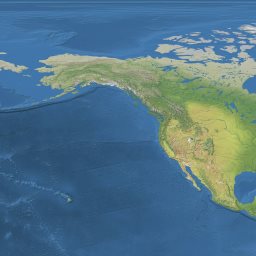
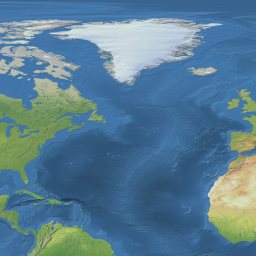
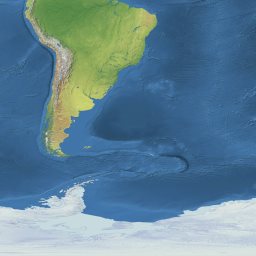
Quo Fuit places 4 dated presences for Lion Feuchtwanger across 4 places, from 1925 to 1943.
Each one keeps the sentence it was taken from and a link to its source.
Lion Feuchtwanger (7 July 1884 – 21 December 1958) was a German Jewish novelist and playwright.Wikipedia, full article · CC BY-SA
Every dot is a place Lion Feuchtwanger is documented in, on a dated record. The interactive globe carries the full detail.
Where Lion Feuchtwanger was documented, and when
1925 to 1932period
Humboldt University of Berlinattested“For professional reasons, he moved to Berlin in 1925 and then to a large villa in Grunewald in 1932.”source: Wikipedia: Lion Feuchtwanger
1925 to 1932period
Grunewald (locality)attested“For professional reasons, he moved to Berlin in 1925 and then to a large villa in Grunewald in 1932.”source: Wikipedia: Lion Feuchtwanger
1933year
Sanary-sur-Merattested“After leaving Germany in 1933, Feuchtwanger lived in Sanary-sur-Mer.”source: Wikipedia: Lion Feuchtwanger
1943 to 1958period
Pacific Palisades, Californiaattested“In 1943, Feuchtwanger bought Villa Aurora in Pacific Palisades, California; he continued to write there until his death in 1958.”source: Wikipedia: Lion Feuchtwanger
Open Quo Fuit to see these 4 presences on the
globe, filter them by date, and follow the journey year by year.
Other places tied to Lion Feuchtwanger in the record
In each of these, a source puts Lion Feuchtwanger and the place in the same dated sentence without stating
that Lion Feuchtwanger was there. They are kept apart from the timeline above for exactly that reason:
a mention is not a presence, and Quo Fuit does not quietly promote one into the other.
1903year
Munichmentioned“In 1903, in Munich, he passed his Abitur examinations at an elite school, the Wilhelmsgymnasium.”source: Wikipedia: Lion Feuchtwanger
1923 to 1924period
County of Tyrolmentioned“*Die häßliche Herzogin Margarete Maultasch (The Ugly Duchess), 1923 —about Margarete Maultasch (14th century in Tyrol) *Leben Eduards des Zweiten von England (The Life of Edward II of England), 1924: written with Bertolt Brecht.”source: Wikipedia: Lion Feuchtwanger
1930year
Germanymentioned“In 1930, Feuchtwanger wrote his first socio-political novel , based on the events of Beer Hall Putsch, as his reaction on the impending threat of Nazism; the novel would become the first entry in Wartesaal trilogy about the rise of Nazis…”source: Wikipedia: Lion Feuchtwanger
1930 to 1933period
Third Reichmentioned“With the publication of Success in 1930 and The Oppermanns in 1933, he became a prominent spokesman in opposition to the Third Reich.”source: Wikipedia: Lion Feuchtwanger
1930 to 1942period
Roman Empirementioned“Drei Jahre Geschichte einer Provinz (Success: Three Years in the Life of a Province), 1930 **Die Geschwister Oppermann (The Oppermanns), Querido, 1933; published in an English translation by James Cleugh, by Secker, 1933 **Exil (Paris Ga…”source: Wikipedia: Lion Feuchtwanger
1930 to 1942period
Amsterdammentioned“Drei Jahre Geschichte einer Provinz (Success: Three Years in the Life of a Province), 1930 **Die Geschwister Oppermann (The Oppermanns), Querido, 1933; published in an English translation by James Cleugh, by Secker, 1933 **Exil (Paris Ga…”source: Wikipedia: Lion Feuchtwanger
30 January 1933exact date
Washington, D.C.mentioned“The Nazis soon began persecuting him, and while he was on a speaking tour of America, in Washington, D.C., he was guest of honor at a dinner hosted by the then ambassador Friedrich Wilhelm von Prittwitz und Gaffron on the same day (30 Ja…”source: Wikipedia: Lion Feuchtwanger
10 May 1933exact date
Germanymentioned“His works were included among those burned in the 10 May 1933 Nazi book burnings held across Germany.”source: Wikipedia: Lion Feuchtwanger
25 August 1933exact date
Francementioned“On 25 August 1933, the official German government gazette, Reichsanzeiger, included Feuchtwanger's name on the list of those whose German citizenship was revoked because of "disloyalty to the German Reich and the German people." Because…”source: Wikipedia: Lion Feuchtwanger
1934year
Denham Studiosmentioned“His drama and his hugely successful novel were adapted for the cinema screen initially in a sympathetic version produced at Denham Studios in Great Britain in 1934 under the direction of fellow German expatriate Lothar Mendes with one of…”source: Wikipedia: Lion Feuchtwanger
1934year
Great Britainmentioned“His drama and his hugely successful novel were adapted for the cinema screen initially in a sympathetic version produced at Denham Studios in Great Britain in 1934 under the direction of fellow German expatriate Lothar Mendes with one of…”source: Wikipedia: Lion Feuchtwanger
1934year
Indiamentioned“Bl.), 1934—title translated into English as Little Tales and as Marianne in India and seven other tales (Marianne in India, Altitude Record, Bullfight, Polar Expedition, The Little Season, Herr Hannsicke's Second Birth, The Armored Cruis…”source: Wikipedia: Lion Feuchtwanger
1935 to 1936period
Spainmentioned“In response to the Western Powers pursuing a policy of appeasement of Nazi Germany and Fascist Italy (the Anglo-German Naval Treaty of 1935; allowing the German reoccupation of the Rhineland (1936); non-intervention against the 1936 Fala…”source: Wikipedia: Lion Feuchtwanger
1936year
Sanarymentioned“In 1936, still in Sanary, he wrote The Pretender (Der falsche Nero), in which he compared the Roman upstart Terentius Maximus, who had claimed to be Nero, with Hitler.”source: Wikipedia: Lion Feuchtwanger
Two people documented in the same place in the same year is a correlation, not a meeting.
Quo Fuit will never say they met without a source that says so.
How to read this page
Every line above is a dated fact taken from a source, with the sentence it came from and a link
back to it. Nothing is inferred, and a gap in the record is not evidence that someone was elsewhere.
A tag says how the fact is carried by its source: documented a structured,
explicitly dated record, attested a sentence that states the person was there,
mentioned a sentence that ties the person to the place without stating presence.
Sentences quoted from Wikipedia are available under CC BY-SA 4.0. Public domain books come from
Project Gutenberg. Quo Fuit claims no rights over these sources.
See Lion Feuchtwanger on a 3D globe, filter the record by date, and cross this life with another to find
where the two overlap.