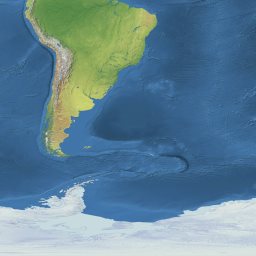
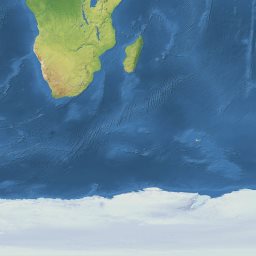
Quo Fuit places 7 dated presences for Louis Leakey across 7 places, from 1925 to 1959.
Each one keeps the sentence it was taken from and a link to its source.
Louis Seymour Bazett Leakey (7 August 1903 – 1 October 1972) was a Kenyan-British palaeoanthropologist and archaeologist whose work was important in demonstrating that humans evolved in Africa, particularly through discoveries made at Olduvai Gorge with his wife, fellow palaeoanthropologist Mary Leakey.Wikipedia, full article · CC BY-SA
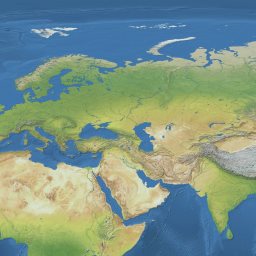
Every dot is a place Louis Leakey is documented in, on a dated record. The interactive globe carries the full detail.
Where Louis Leakey was documented, and when
1925year
Olduvai Gorgeattested“While cleaning two skeletons he had found, he noticed a similarity to one found in Olduvai Gorge by Professor Hans Reck, a German national, whom Leakey had met in 1925 in Germany while on business for Keith.”source: Wikipedia: Louis Leakey
1925year
Germanyattested“While cleaning two skeletons he had found, he noticed a similarity to one found in Olduvai Gorge by Professor Hans Reck, a German national, whom Leakey had met in 1925 in Germany while on business for Keith.”source: Wikipedia: Louis Leakey
1927year
Lake Elmenteitaattested“In 1927, Leakey received a visit at a site called Gamble's Cave, near Lake Elmenteita, by two women on a holiday, one of whom was Frida Avern (1902–1993).”source: Wikipedia: Louis Leakey
1928year
Foxton, Cambridgeshireattested“Following their marriage in 1928, Leakey and Frida lived in Foxton near Cambridge.”source: Wikipedia: Louis Leakey
1928year
Cambridgeattested“Following their marriage in 1928, Leakey and Frida lived in Foxton near Cambridge.”source: Wikipedia: Louis Leakey
1959year
British Museum of Natural Historyattested“In 1959 Leakey, while at the British Museum of Natural History in London, received a visit from Ruth DeEtte Simpson, an archaeologist from California.”source: Wikipedia: Louis Leakey
1959year
Londonattested“In 1959 Leakey, while at the British Museum of Natural History in London, received a visit from Ruth DeEtte Simpson, an archaeologist from California.”source: Wikipedia: Louis Leakey
Open Quo Fuit to see these 7 presences on the
globe, filter them by date, and follow the journey year by year.
British Museum of Natural History1 presence · 1959
Foxton, Cambridgeshire1 presence · 1928
Lake Elmenteita1 presence · 1927
Olduvai Gorge1 presence · 1925
Other places tied to Louis Leakey in the record
In each of these, a source puts Louis Leakey and the place in the same dated sentence without stating
that Louis Leakey was there. They are kept apart from the timeline above for exactly that reason:
a mention is not a presence, and Quo Fuit does not quietly promote one into the other.
1904 to 1913period
Reading, Berkshirementioned“From 1904 to 1906 the entire family lived back in England, at May's mother's house in Reading, Berkshire, while Harry recovered from neurasthenia, and again in 1911–1913, while May recovered from general frailty and exhaustion.”source: Wikipedia: Louis Leakey
1904 to 1913period
Englandmentioned“From 1904 to 1906 the entire family lived back in England, at May's mother's house in Reading, Berkshire, while Harry recovered from neurasthenia, and again in 1911–1913, while May recovered from general frailty and exhaustion.”source: Wikipedia: Louis Leakey
1914year
Nairobimentioned“He began to collect tools and was further encouraged in this activity by a role model, Arthur Loveridge, the first curator (1914) of the Natural History Museum in Nairobi, the predecessor of the Coryndon Museum.”source: Wikipedia: Louis Leakey
1919year
Boscombementioned“When the sea lanes opened again in 1919, they returned to Boscombe, and Leakey was sent to Weymouth College, a private boys' school, when he was 16 years old.”source: Wikipedia: Louis Leakey
1919year
Weymouth Collegementioned“When the sea lanes opened again in 1919, they returned to Boscombe, and Leakey was sent to Weymouth College, a private boys' school, when he was 16 years old.”source: Wikipedia: Louis Leakey
1922year
University of Cambridgementioned“Leakey matriculated at the University of Cambridge, his father's alma mater, in 1922, intending to become a missionary to British East Africa.”source: Wikipedia: Louis Leakey
1928year
Lake Elmenteitamentioned“In 1928, they married and continued work near Lake Elmenteita.”source: Wikipedia: Louis Leakey
1929year
Cambridgementioned“John's College and returned to Cambridge in 1929 to classify and prepare the finds from Elmenteita.”source: Wikipedia: Louis Leakey
1929year
Berlinmentioned“In 1929, Leakey visited Berlin to talk to the now sceptical Reck.”source: Wikipedia: Louis Leakey
November 1932month
Girton, Cambridgeshirementioned“In November 1932, Frida used an inheritance to purchase a large brick-built house in Girton, which the family named "The Close".”source: Wikipedia: Louis Leakey
1935year
Englandmentioned“Leakey and Mary returned to England in 1935 without positions or any place to stay except Mary's mother's apartment.”source: Wikipedia: Louis Leakey
1936year
Rhodes Trustmentioned“Copeland at Oxford recommended he apply to the Rhodes Trust for a grant to write a study of the Kikuyu and it was given late in 1936 along with a salary for two years.”source: Wikipedia: Louis Leakey
1936year
Oxfordmentioned“Copeland at Oxford recommended he apply to the Rhodes Trust for a grant to write a study of the Kikuyu and it was given late in 1936 along with a salary for two years.”source: Wikipedia: Louis Leakey
January 1937month
Kenyamentioned“In January 1937 the Leakeys travelled to Kenya.”source: Wikipedia: Louis Leakey
Two people documented in the same place in the same year is a correlation, not a meeting.
Quo Fuit will never say they met without a source that says so.
How to read this page
Every line above is a dated fact taken from a source, with the sentence it came from and a link
back to it. Nothing is inferred, and a gap in the record is not evidence that someone was elsewhere.
A tag says how the fact is carried by its source: documented a structured,
explicitly dated record, attested a sentence that states the person was there,
mentioned a sentence that ties the person to the place without stating presence.
Sentences quoted from Wikipedia are available under CC BY-SA 4.0. Public domain books come from
Project Gutenberg. Quo Fuit claims no rights over these sources.
See Louis Leakey on a 3D globe, filter the record by date, and cross this life with another to find
where the two overlap.