quofuit

Jean-François Millet

1814 to 1875 4 documented presences 4 places

Quo Fuit places 4 dated presences for Jean-François Millet across 4 places, from 1837 to 1848. Each one keeps the sentence it was taken from and a link to its source.

Jean-François Millet (4 October 1814 – 20 January 1875) was a French painter and one of the founders of the Barbizon school in rural France.Wikipedia, full article · CC BY-SA
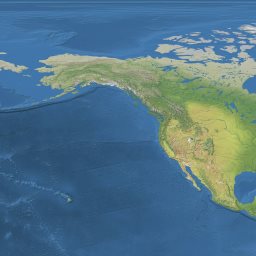
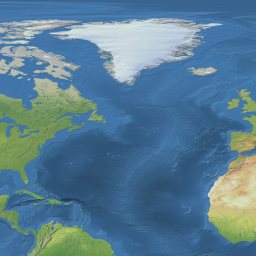
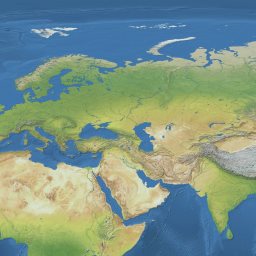
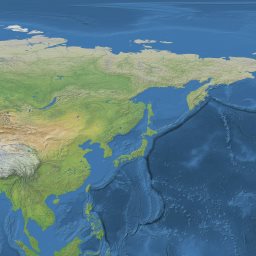
Every dot is a place Jean-François Millet is documented in, on a dated record. The interactive globe carries the full detail.

Where Jean-François Millet was documented, and when

1837year
Parisattested “A stipend provided by Langlois and others enabled Millet to move to Paris in 1837, where he studied at the with Paul Delaroche.” source: Wikipedia: Jean-François Millet
April 1844month
Cherbourgattested “After rejections at the Salon of 1843 and Pauline's death by consumption in April 1844, Millet returned again to Cherbourg.” source: Wikipedia: Jean-François Millet
1845 to 1853period
Le Havreattested “In 1845, Millet moved to Le Havre with Catherine Lemaire, whom he married in a civil ceremony in 1853; they had nine children and remained together for the rest of Millet's life.” source: Wikipedia: Jean-François Millet
1848year
Babylonattested “The Captivity of the Jews in Babylon, Millet's most ambitious work at the time, was unveiled at the Salon of 1848, but was scorned by art critics and the public alike.” source: Wikipedia: Jean-François Millet

Open Quo Fuit to see these 4 presences on the globe, filter them by date, and follow the journey year by year.

Places Jean-François Millet is documented in

Le Havre1 presence · 1845Paris1 presence · 1837
Babylon1 presence · 1848
Cherbourg1 presence · 1844

Other places tied to Jean-François Millet in the record

In each of these, a source puts Jean-François Millet and the place in the same dated sentence without stating that Jean-François Millet was there. They are kept apart from the timeline above for exactly that reason: a mention is not a presence, and Quo Fuit does not quietly promote one into the other.

1833year
Cherbourgmentioned “In 1833, his father sent him to Cherbourg to study with a portrait painter named Bon Du Mouchel.” source: Wikipedia: Jean-François Millet
1835year
Cherbourgmentioned “By 1835 he was studying with Théophile Langlois de Chèvreville, a pupil of Baron Gros, in Cherbourg.” source: Wikipedia: Jean-François Millet
1840year
Cherbourgmentioned “After his first painting, a portrait, was accepted at the Salon of 1840, Millet returned to Cherbourg to begin a career as a portrait painter.” source: Wikipedia: Jean-François Millet
1871year
Barbizonmentioned “Later that year, he and his family fled the Franco-Prussian War, moving to Cherbourg and Gréville, and did not return to Barbizon until late in 1871.” source: Wikipedia: Jean-François Millet
1871year
Cherbourgmentioned “Later that year, he and his family fled the Franco-Prussian War, moving to Cherbourg and Gréville, and did not return to Barbizon until late in 1871.” source: Wikipedia: Jean-François Millet

Documented at the same place, the same year

Prosper MériméeParis · 1837Charles-Valentin AlkanParis · 1837Ferdinand RiesParis · 1837

Two people documented in the same place in the same year is a correlation, not a meeting. Quo Fuit will never say they met without a source that says so.

How to read this page

Every line above is a dated fact taken from a source, with the sentence it came from and a link back to it. Nothing is inferred, and a gap in the record is not evidence that someone was elsewhere.

A tag says how the fact is carried by its source: documented a structured, explicitly dated record, attested a sentence that states the person was there, mentioned a sentence that ties the person to the place without stating presence.

Sources

Sentences quoted from Wikipedia are available under CC BY-SA 4.0. Public domain books come from Project Gutenberg. Quo Fuit claims no rights over these sources.

See Jean-François Millet on a 3D globe, filter the record by date, and cross this life with another to find where the two overlap.

Open Jean-François Millet on the globe