Quo Fuit places 8 dated presences for Charles-Valentin Alkan across 6 places, from 1813 to 1888.
Each one keeps the sentence it was taken from and a link to its source.
Charles-Valentin Alkan (30 November 1813 – 29 March 1888) was a French composer and virtuoso pianist.Wikipedia, full article · CC BY-SA
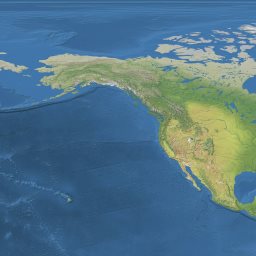
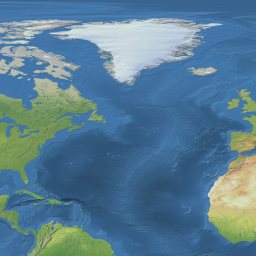
Every dot is a place Charles-Valentin Alkan is documented in, on a dated record. The interactive globe carries the full detail.
Where Charles-Valentin Alkan was documented, and when
30 November 1813exact date
Parisattested“Alkan was born Charles-Valentin Morhange on 30 November 1813 at 1 Rue de Braque in Paris to Alkan Morhange (1780–1855) and Julie Morhange, née Abraham.”source: Wikipedia: Charles-Valentin Alkan
1834year
Bath, Somersetattested“Later in 1834 Alkan made a visit to England, where he gave recitals and where the second Concerto da camera was performed in Bath by its dedicatee Henry Ibbot Field; it was published in London together with some solo piano pieces.”source: Wikipedia: Charles-Valentin Alkan
1834year
Englandattested“Later in 1834 Alkan made a visit to England, where he gave recitals and where the second Concerto da camera was performed in Bath by its dedicatee Henry Ibbot Field; it was published in London together with some solo piano pieces.”source: Wikipedia: Charles-Valentin Alkan
1834year
Londonattested“Later in 1834 Alkan made a visit to England, where he gave recitals and where the second Concerto da camera was performed in Bath by its dedicatee Henry Ibbot Field; it was published in London together with some solo piano pieces.”source: Wikipedia: Charles-Valentin Alkan
January 1836month
Conservatoire de Musique de Genèveattested“In January 1836, Liszt recommended Alkan for the post of Professor at the Geneva Conservatoire, which Alkan declined, and in 1837 he wrote an enthusiastic review of Alkan's Op.”source: Wikipedia: Charles-Valentin Alkan
1837year
Piscopattested“Later that year, Alkan, having found a place of retreat at Piscop outside Paris, completed his first truly original works for solo piano, the Twelve Caprices, published in 1837 as Opp.”source: Wikipedia: Charles-Valentin Alkan
1837year
Parisattested“Later that year, Alkan, having found a place of retreat at Piscop outside Paris, completed his first truly original works for solo piano, the Twelve Caprices, published in 1837 as Opp.”source: Wikipedia: Charles-Valentin Alkan
29 March 1888exact date
Parisattested“decisive 'Never'." However, a few days later he found Alkan at Érard's, and Niecks writes of their meeting that "his reception of me was not merely polite but most friendly." According to his death certificate, Alkan died in Paris on 29…”source: Wikipedia: Charles-Valentin Alkan
Open Quo Fuit to see these 8 presences on the
globe, filter them by date, and follow the journey year by year.
Conservatoire de Musique de Genève1 presence · 1836
Piscop1 presence · 1837
Other places tied to Charles-Valentin Alkan in the record
In each of these, a source puts Charles-Valentin Alkan and the place in the same dated sentence without stating
that Charles-Valentin Alkan was there. They are kept apart from the timeline above for exactly that reason:
a mention is not a presence, and Quo Fuit does not quietly promote one into the other.
September 1831month
Parismentioned“It is not clear exactly when he first met Frédéric Chopin, who arrived in Paris in September 1831.”source: Wikipedia: Charles-Valentin Alkan
1835year
Englandmentioned“A letter to Masarnau and a notice in a French journal that Alkan played in London with Moscheles and Cramer, indicate that he returned to England in 1835.”source: Wikipedia: Charles-Valentin Alkan
1835year
Londonmentioned“A letter to Masarnau and a notice in a French journal that Alkan played in London with Moscheles and Cramer, indicate that he returned to England in 1835.”source: Wikipedia: Charles-Valentin Alkan
1851year
Synagogue de Nazarethmentioned“Alkan was appointed organist at the Synagogue de Nazareth in 1851, although he resigned the post almost immediately for "artistic reasons".”source: Wikipedia: Charles-Valentin Alkan
1857year
Parismentioned“35 Études in the Neue Berliner Musikzeitung in 1857, the year in which they were published in Berlin, commenting that "Alkan is unquestionably the most eminent representative of the modern piano school at Paris.”source: Wikipedia: Charles-Valentin Alkan
1857year
Berlinmentioned“35 Études in the Neue Berliner Musikzeitung in 1857, the year in which they were published in Berlin, commenting that "Alkan is unquestionably the most eminent representative of the modern piano school at Paris.”source: Wikipedia: Charles-Valentin Alkan
Two people documented in the same place in the same year is a correlation, not a meeting.
Quo Fuit will never say they met without a source that says so.
How to read this page
Every line above is a dated fact taken from a source, with the sentence it came from and a link
back to it. Nothing is inferred, and a gap in the record is not evidence that someone was elsewhere.
A tag says how the fact is carried by its source: documented a structured,
explicitly dated record, attested a sentence that states the person was there,
mentioned a sentence that ties the person to the place without stating presence.
Sentences quoted from Wikipedia are available under CC BY-SA 4.0. Public domain books come from
Project Gutenberg. Quo Fuit claims no rights over these sources.
See Charles-Valentin Alkan on a 3D globe, filter the record by date, and cross this life with another to find
where the two overlap.