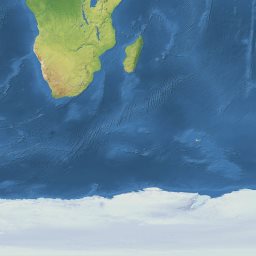
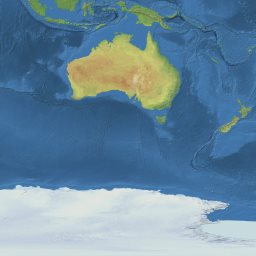
Quo Fuit places 4 dated presences for James Stirling (architect) across 4 places, from 1940 to 1958.
Each one keeps the sentence it was taken from and a link to its source.
Sir James Frazer Stirling (22 April 1924 – 25 June 1992) was a British architect.Wikipedia, full article · CC BY-SA
Every dot is a place James Stirling (architect) is documented in, on a dated record. The interactive globe carries the full detail.
Where James Stirling (architect) was documented, and when
1940year
Liverpoolattested“After leaving school, he studied at the School of Art in Liverpool between 1940-41, while working in an architect's office.”source: Wikipedia: James Stirling (architect)
1940year
Liverpool College of Artattested“After leaving school, he studied at the School of Art in Liverpool between 1940-41, while working in an architect's office.”source: Wikipedia: James Stirling (architect)
1945 to 1950period
University of Liverpoolattested“Stirling studied architecture from 1945 until 1950 at the University of Liverpool, where Colin Rowe was a tutor.”source: Wikipedia: James Stirling (architect)
1958 to 1997period
No 1 Poultryattested“Writing in The Guardian, Andrew Saint called Stirling "A fearless experimentalist, a memorable innovator in form and a pungent character," but declared that, "he lacked the inner maturity, the breadth of reflection and the depth of disci…”source: Wikipedia: James Stirling (architect)
Open Quo Fuit to see these 4 presences on the
globe, filter them by date, and follow the journey year by year.
Places James Stirling (architect) is documented in
Other places tied to James Stirling (architect) in the record
In each of these, a source puts James Stirling (architect) and the place in the same dated sentence without stating
that James Stirling (architect) was there. They are kept apart from the timeline above for exactly that reason:
a mention is not a presence, and Quo Fuit does not quietly promote one into the other.
1952 to 1956period
Londonmentioned“From 1952 to 1956 he worked with Lyons, Israel, Ellis in London where he met his first partner James Gowan.”source: Wikipedia: James Stirling (architect)
1959year
University of Leicestermentioned“Another result of Stirling & Gowan's collaboration is the Department of Engineering building at the University of Leicester (1959–63), noted for its technological and geometric character, marked by the use of three-dimensional drawings b…”source: Wikipedia: James Stirling (architect)
1980 to 1984period
Tate Britainmentioned“Stirling received a series of important commissions in England – the Clore Gallery for the Turner Collection at the Tate Britain, London (1980–87); the Tate Liverpool (1984, but since then heavily altered and no longer recognisable as a…”source: Wikipedia: James Stirling (architect)
1980 to 1984period
Englandmentioned“Stirling received a series of important commissions in England – the Clore Gallery for the Turner Collection at the Tate Britain, London (1980–87); the Tate Liverpool (1984, but since then heavily altered and no longer recognisable as a…”source: Wikipedia: James Stirling (architect)
1988year
Londonmentioned“No 1 Poultry in London (1988–98), one of Stirling's final designs, was posthumously completed by Wilford.”source: Wikipedia: James Stirling (architect)
Two people documented in the same place in the same year is a correlation, not a meeting.
Quo Fuit will never say they met without a source that says so.
How to read this page
Every line above is a dated fact taken from a source, with the sentence it came from and a link
back to it. Nothing is inferred, and a gap in the record is not evidence that someone was elsewhere.
A tag says how the fact is carried by its source: documented a structured,
explicitly dated record, attested a sentence that states the person was there,
mentioned a sentence that ties the person to the place without stating presence.
Sentences quoted from Wikipedia are available under CC BY-SA 4.0. Public domain books come from
Project Gutenberg. Quo Fuit claims no rights over these sources.
See James Stirling (architect) on a 3D globe, filter the record by date, and cross this life with another to find
where the two overlap.