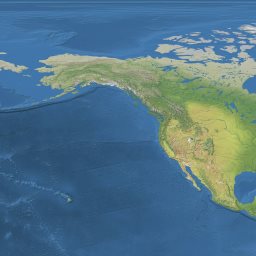
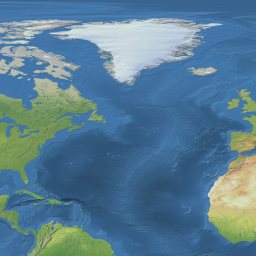
Quo Fuit places 6 dated presences for Charles Laughton across 6 places, from 1899 to 1958.
Each one keeps the sentence it was taken from and a link to its source.
Charles Laughton (1 July 1899 – 15 December 1962) was an English actor and director.Wikipedia, full article · CC BY-SA
Every dot is a place Charles Laughton is documented in, on a dated record. The interactive globe carries the full detail.
Where Charles Laughton was documented, and when
1 July 1899exact date
Scarborough, North Yorkshireattested“Laughton was born on 1 July 1899 in Scarborough, North Riding of Yorkshire, the son of Robert Laughton (1869–1924) and Eliza (née Conlon; 1869–1953), Yorkshire hotel keepers.”source: Wikipedia: Charles Laughton
1933year
The Old Vicattested“While Laughton is most remembered for his film career, he continued to work in the theatre, as when, after the success of The Private Life of Henry VIII he appeared at the Old Vic Theatre in 1933 as Macbeth, Lopakin in The Cherry Orchard…”source: Wikipedia: Charles Laughton
1936year
Comédie-Françaiseattested“In 1936, he went to Paris and on 9 May appeared at the Comédie-Française as Sganarelle in the second act of Molière's Le Médecin malgré lui, the first English actor to appear at that theatre, where he performed the role in French and rec…”source: Wikipedia: Charles Laughton
1936year
Parisattested“In 1936, he went to Paris and on 9 May appeared at the Comédie-Française as Sganarelle in the second act of Molière's Le Médecin malgré lui, the first English actor to appear at that theatre, where he performed the role in French and rec…”source: Wikipedia: Charles Laughton
1940 to 1942period
Californiaattested“He largely moved away from historical roles when he played an Italian vineyard owner in California in They Knew What They Wanted (1940); a South Seas patriarch in The Tuttles of Tahiti (1942); and a US admiral during World War II in Stan…”source: Wikipedia: Charles Laughton
May 1958month
Londonattested“Laughton returned to the London stage in May 1958 to direct and star in Jane Arden's The Party at the New Theatre which also had Elsa Lanchester and Albert Finney in the cast.”source: Wikipedia: Charles Laughton
Open Quo Fuit to see these 6 presences on the
globe, filter them by date, and follow the journey year by year.
Other places tied to Charles Laughton in the record
In each of these, a source puts Charles Laughton and the place in the same dated sentence without stating
that Charles Laughton was there. They are kept apart from the timeline above for exactly that reason:
a mention is not a presence, and Quo Fuit does not quietly promote one into the other.
1925year
RADAmentioned“He was permitted by his family to become a drama student at RADA in 1925, where actor Claude Rains was one of his teachers.”source: Wikipedia: Charles Laughton
28 April 1926exact date
Londonmentioned“Laughton made his first professional appearance on 28 April 1926 at the Barnes Theatre, as Osip in the comedy The Government Inspector, in which he also appeared at London's Gaiety Theatre in May.”source: Wikipedia: Charles Laughton
28 April 1926exact date
Barnes, Londonmentioned“Laughton made his first professional appearance on 28 April 1926 at the Barnes Theatre, as Osip in the comedy The Government Inspector, in which he also appeared at London's Gaiety Theatre in May.”source: Wikipedia: Charles Laughton
1928year
Londonmentioned“Laughton played the lead role as Harry Hegan in the world premiere of Seán O'Casey's The Silver Tassie in 1928 in London.”source: Wikipedia: Charles Laughton
24 September 1931exact date
Lyceum Theatre (Broadway)mentioned“He took the last role across the Atlantic and made his United States debut on 24 September 1931, at the Lyceum Theatre.”source: Wikipedia: Charles Laughton
24 September 1931exact date
Atlanticmentioned“He took the last role across the Atlantic and made his United States debut on 24 September 1931, at the Lyceum Theatre.”source: Wikipedia: Charles Laughton
1933year
Londonmentioned“He returned to London for the 1933–34 Old Vic season and was engaged in four Shakespeare roles (as Macbeth, Henry VIII, Angelo in Measure for Measure and Prospero in The Tempest) and also as Lopakhin in The Cherry Orchard, Canon Chasuble…”source: Wikipedia: Charles Laughton
1933year
British Malayamentioned“After his success in The Private Life of Henry VIII, Laughton soon abandoned the stage for films and returned to Hollywood, where his next film was White Woman (1933) in which he co-starred with Carole Lombard as a Cockney river trader i…”source: Wikipedia: Charles Laughton
1933year
Hollywoodmentioned“After his success in The Private Life of Henry VIII, Laughton soon abandoned the stage for films and returned to Hollywood, where his next film was White Woman (1933) in which he co-starred with Carole Lombard as a Cockney river trader i…”source: Wikipedia: Charles Laughton
30 July 1947exact date
Los Angelesmentioned“Laughton played the title role at the play's premiere in Los Angeles on 30 July 1947 and later that year in New York.”source: Wikipedia: Charles Laughton
30 July 1947exact date
New Yorkmentioned“Laughton played the title role at the play's premiere in Los Angeles on 30 July 1947 and later that year in New York.”source: Wikipedia: Charles Laughton
1948 to 1951period
Manhattanmentioned“He had supporting roles as a Nazi in pre-war Paris in Arch of Triumph (1948), as a bishop in The Girl from Manhattan (1948), as a seedy go-between in The Bribe (1949), and as a kindly widower in The Blue Veil (1951).”source: Wikipedia: Charles Laughton
1949 to 1951period
Parismentioned“Laughton made his first colour film in Paris as Inspector Maigret in The Man on the Eiffel Tower (1949) and, wrote the Monthly Film Bulletin, "appeared to overact" alongside Boris Karloff as a mad French nobleman in a version of Robert L…”source: Wikipedia: Charles Laughton
1959year
Shakespeare Memorial Theatrementioned“He made his final appearances on stage as Nick Bottom in A Midsummer Night's Dream, and as King Lear at the Shakespeare Memorial Theatre in 1959, although failing health resulted in both performances being disappointing, according to som…”source: Wikipedia: Charles Laughton
Two people documented in the same place in the same year is a correlation, not a meeting.
Quo Fuit will never say they met without a source that says so.
How to read this page
Every line above is a dated fact taken from a source, with the sentence it came from and a link
back to it. Nothing is inferred, and a gap in the record is not evidence that someone was elsewhere.
A tag says how the fact is carried by its source: documented a structured,
explicitly dated record, attested a sentence that states the person was there,
mentioned a sentence that ties the person to the place without stating presence.
Sentences quoted from Wikipedia are available under CC BY-SA 4.0. Public domain books come from
Project Gutenberg. Quo Fuit claims no rights over these sources.
See Charles Laughton on a 3D globe, filter the record by date, and cross this life with another to find
where the two overlap.