Quo Fuit places 11 dated presences for Iwane Matsui across 7 places, from 1878 to 1946.
Each one keeps the sentence it was taken from and a link to its source.
was a Japanese general in the Imperial Japanese Army and the commander of the expeditionary force sent to China in 1937.Wikipedia, full article · CC BY-SA
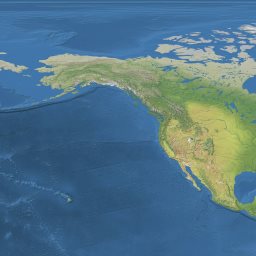
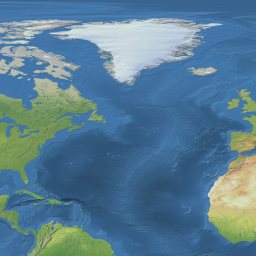
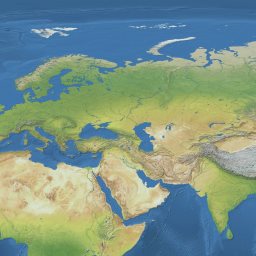
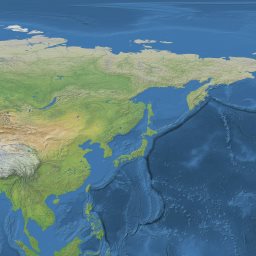
Every dot is a place Iwane Matsui is documented in, on a dated record. The interactive globe carries the full detail.
Where Iwane Matsui was documented, and when
27 July 1878exact date
Nagoyaattested“Iwane Matsui was born in Nagoya on July 27, 1878.”source: Wikipedia: Iwane Matsui
1907year
Chinaattested“At first the Army General Staff gave Matsui an assignment in France, but in 1907 he got his wish to go to China, where he worked as an aide to the military attaché and did intelligence work.”source: Wikipedia: Iwane Matsui
1907year
Franceattested“At first the Army General Staff gave Matsui an assignment in France, but in 1907 he got his wish to go to China, where he worked as an aide to the military attaché and did intelligence work.”source: Wikipedia: Iwane Matsui
1907year
Japanattested“In 1907 when a young Chiang Kai-shek (then a Chinese soldier) wanted to study abroad, Matsui helped him find a place to stay in Japan.”source: Wikipedia: Iwane Matsui
1921 to 1924period
Chinaattested“In 1921 Matsui was posted to Siberia as a staff officer, but returned in 1922 to China where he served until 1924 as an advisor to Zhang Zuolin in the Chinese city of Harbin and did intelligence work for Japan's Kwantung Army.”source: Wikipedia: Iwane Matsui
1921 to 1924period
Siberiaattested“In 1921 Matsui was posted to Siberia as a staff officer, but returned in 1922 to China where he served until 1924 as an advisor to Zhang Zuolin in the Chinese city of Harbin and did intelligence work for Japan's Kwantung Army.”source: Wikipedia: Iwane Matsui
1932year
Japanattested“After returning to Japan in late 1932, Matsui abruptly appeared at the office of the Pan-Asia Study Group, a Tokyo-based think tank, and presented its members with a bold plan to expand their small organization into an international mass…”source: Wikipedia: Iwane Matsui
March 1933month
Japanattested“Matsui persuaded them to adopt his ideas, and in March 1933 the study group was rechristened the Greater Asia Association (大亜細亜協会 Dai-Ajia Kyōkai), described by the historian Torsten Weber as "the single most influential organization to…”source: Wikipedia: Iwane Matsui
March 1936month
Chinaattested“In February and March 1936, amid ongoing tension with China, Matsui made a second trip to China, this time on a government-sponsored goodwill tour.”source: Wikipedia: Iwane Matsui
1946year
Atamiattested“Later that year Matsui bought a new home in Atami in Shizuoka Prefecture and from then until 1946 he spent his winters living in Atami and his summers living at his old house on Lake Yamanaka.”source: Wikipedia: Iwane Matsui
1946year
Shizuoka Prefectureattested“Later that year Matsui bought a new home in Atami in Shizuoka Prefecture and from then until 1946 he spent his winters living in Atami and his summers living at his old house on Lake Yamanaka.”source: Wikipedia: Iwane Matsui
Open Quo Fuit to see these 11 presences on the
globe, filter them by date, and follow the journey year by year.
In each of these, a source puts Iwane Matsui and the place in the same dated sentence without stating
that Iwane Matsui was there. They are kept apart from the timeline above for exactly that reason:
a mention is not a presence, and Quo Fuit does not quietly promote one into the other.
1858 to 1896period
Chinamentioned“Matsui was a fervent admirer of the recently deceased Sei Arao (1858–1896), a continental adventurer and pan-Asianist army officer from his hometown who had served in China.”source: Wikipedia: Iwane Matsui
1907 to 1919period
Battle of Shanghaimentioned“Matsui worked in China between 1907 and 1911, and then again as resident officer in Shanghai between 1915 and 1919.”source: Wikipedia: Iwane Matsui
August 1933month
Taiwanmentioned“In August 1933 Matsui was dispatched to Taiwan to command the Taiwan Army, and then on October 20 was promoted to the rank of general, the highest rank in the Japanese Army.”source: Wikipedia: Iwane Matsui
August 1934month
Japanmentioned“He then returned to Japan in August 1934 to take a seat on Japan's Supreme War Council.”source: Wikipedia: Iwane Matsui
December 1935month
Tianjinmentioned“Between October and December 1935 he toured the major cities of China and Manchukuo speaking to Chinese politicians and businessmen about pan-Asianism and setting up a new branch of the Greater Asia Association in Tianjin.”source: Wikipedia: Iwane Matsui
December 1935month
Japanmentioned“Upon his return to Japan in December 1935 he became President of the Greater Asia Association.”source: Wikipedia: Iwane Matsui
7 February 1938exact date
Nanjingmentioned“He must be held criminally responsible for his failure to discharge this duty.Historian Yuma Totani notes that this verdict represents "one of the earliest precedents for command responsibility in the history of international law." Short…”source: Wikipedia: Iwane Matsui
21 February 1938exact date
Japanmentioned“Matsui sailed out of Shanghai on February 21, 1938, and landed back in Japan on February 23.”source: Wikipedia: Iwane Matsui
1940year
Atamimentioned“It was also in 1940 that Matsui commissioned the construction of a statue of Kannon, the bodhisattva of mercy, and then had a special temple built in Atami to enshrine it.”source: Wikipedia: Iwane Matsui
1945year
Philippinesmentioned“In 1945 as the Allies bore down on the Philippines Matsui declared over the radio that Japan would never withdraw from the Philippines "even though Tokyo should be reduced to ashes." Soon after he also stated his plans to speak at a lect…”source: Wikipedia: Iwane Matsui
15 August 1945exact date
Atamimentioned“Nevertheless, on August 15, 1945, at his home in Atami Matsui heard Emperor Hirohito announce that Japan had surrendered unconditionally to the Allies.”source: Wikipedia: Iwane Matsui
6 March 1946exact date
Sugamo Prisonmentioned“On March 6, 1946, he surrendered himself in to Sugamo Prison.”source: Wikipedia: Iwane Matsui
Two people documented in the same place in the same year is a correlation, not a meeting.
Quo Fuit will never say they met without a source that says so.
How to read this page
Every line above is a dated fact taken from a source, with the sentence it came from and a link
back to it. Nothing is inferred, and a gap in the record is not evidence that someone was elsewhere.
A tag says how the fact is carried by its source: documented a structured,
explicitly dated record, attested a sentence that states the person was there,
mentioned a sentence that ties the person to the place without stating presence.
Sentences quoted from Wikipedia are available under CC BY-SA 4.0. Public domain books come from
Project Gutenberg. Quo Fuit claims no rights over these sources.
See Iwane Matsui on a 3D globe, filter the record by date, and cross this life with another to find
where the two overlap.