Quo Fuit places 5 dated presences for Georges Braque across 4 places, from 1882 to 1963.
Each one keeps the sentence it was taken from and a link to its source.
Georges Braque (13 May 1882 – 31 August 1963) was a major 20th-century French painter, collagist, draughtsman, printmaker and sculptor.Wikipedia, full article · CC BY-SA
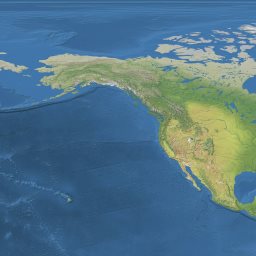
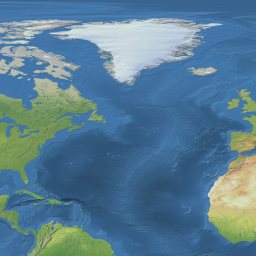
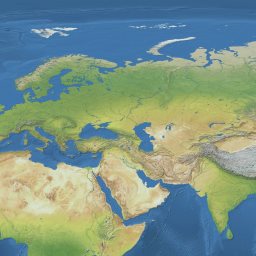
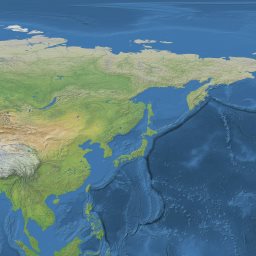
Every dot is a place Georges Braque is documented in, on a dated record. The interactive globe carries the full detail.
Where Georges Braque was documented, and when
13 May 1882exact date
Argenteuilattested“Georges Braque was born on 13 May 1882 in Argenteuil, Val-d'Oise.”source: Wikipedia: Georges Braque
1897 to 1899period
Le Havreattested“However, he also studied artistic painting during evenings at the École supérieure d'art et design Le Havre-Rouen, previously known as the École supérieure des Arts in Le Havre, from about 1897 to 1899.”source: Wikipedia: Georges Braque
1897 to 1899period
École supérieure d'art et design Le Havre-Rouenattested“However, he also studied artistic painting during evenings at the École supérieure d'art et design Le Havre-Rouen, previously known as the École supérieure des Arts in Le Havre, from about 1897 to 1899.”source: Wikipedia: Georges Braque
September 1907month
Parisattested“The same year, Braque's style began a slow evolution as he became influenced by Paul Cézanne who had died in 1906 and whose works were exhibited in Paris for the first time in a large-scale, museum-like retrospective in September 1907.”source: Wikipedia: Georges Braque
École supérieure d'art et design Le Havre-Rouen1 presence · 1897
Other places tied to Georges Braque in the record
In each of these, a source puts Georges Braque and the place in the same dated sentence without stating
that Georges Braque was there. They are kept apart from the timeline above for exactly that reason:
a mention is not a presence, and Quo Fuit does not quietly promote one into the other.
1902year
Parismentioned“In Paris, he apprenticed with a decorator and was awarded his certificate in 1902.”source: Wikipedia: Georges Braque
1904year
Parismentioned“The next year, he attended the Académie Humbert, also in Paris, and painted there until 1904.”source: Wikipedia: Georges Braque
1906year
Le Havrementioned“In 1906, Braque traveled with Friesz to L'Estaque, to Antwerp, and home to Le Havre to paint.”source: Wikipedia: Georges Braque
1906year
L'Estaquementioned“In 1906, Braque traveled with Friesz to L'Estaque, to Antwerp, and home to Le Havre to paint.”source: Wikipedia: Georges Braque
1906year
Antwerpmentioned“In 1906, Braque traveled with Friesz to L'Estaque, to Antwerp, and home to Le Havre to paint.”source: Wikipedia: Georges Braque
May 1915month
Carencymentioned“In May 1915, Braque received a severe head injury in battle at Carency and suffered temporary blindness.”source: Wikipedia: Georges Braque
1943year
Allen Memorial Art Museummentioned“One example of this is his 1943 work Blue Guitar, which hangs in the Allen Memorial Art Museum.”source: Wikipedia: Georges Braque
1952year
Louvrementioned“In 1952–53 he also produced The Birds, a ceiling painting for a room in the Louvre.”source: Wikipedia: Georges Braque
Two people documented in the same place in the same year is a correlation, not a meeting.
Quo Fuit will never say they met without a source that says so.
How to read this page
Every line above is a dated fact taken from a source, with the sentence it came from and a link
back to it. Nothing is inferred, and a gap in the record is not evidence that someone was elsewhere.
A tag says how the fact is carried by its source: documented a structured,
explicitly dated record, attested a sentence that states the person was there,
mentioned a sentence that ties the person to the place without stating presence.
Sentences quoted from Wikipedia are available under CC BY-SA 4.0. Public domain books come from
Project Gutenberg. Quo Fuit claims no rights over these sources.
See Georges Braque on a 3D globe, filter the record by date, and cross this life with another to find
where the two overlap.