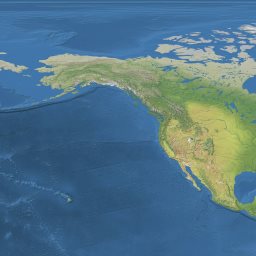
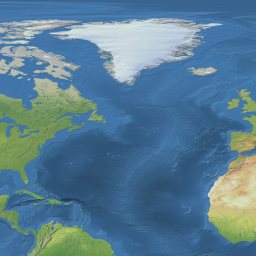
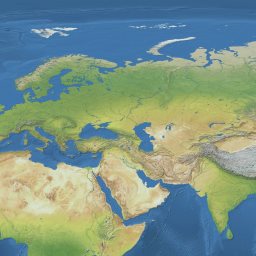
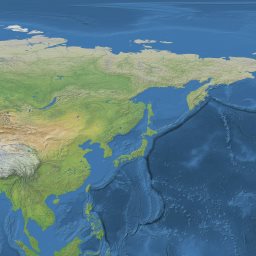
Quo Fuit places 4 dated presences for Giovanni Domenico Cassini across 4 places, from 1648 to 1712.
Each one keeps the sentence it was taken from and a link to its source.
Giovanni Domenico Cassini (8-11 June 1625 – 14 September 1712) was an Italian-French mathematician, astronomer, astrologer and engineer.Wikipedia, full article · CC BY-SA
Every dot is a place Giovanni Domenico Cassini is documented in, on a dated record. The interactive globe carries the full detail.
Where Giovanni Domenico Cassini was documented, and when
1648year
Bolognaattested“In 1648 Cassini accepted a position at the observatory at Panzano (Castelfranco Emilia), near Bologna, to work with Marquis Cornelio Malvasia, a rich amateur astronomer, initiating the first part of his career.”source: Wikipedia: Giovanni Domenico Cassini
1661year
San Petronioattested“In 1661 he developed a method, inspired by Kepler's work, of mapping successive phases of solar eclipses; and in 1662 he published new tables of the sun, based on his observations at San Petronio." Cassini also rejected Newton's theory o…”source: Wikipedia: Giovanni Domenico Cassini
1665 to 1712period
Franceattested“Cassini's determinations of the rotational periods of Jupiter and Mars in 1665–1667 enhanced his fame, and in 1669, with the reluctant assent of the Pope, he moved to France and through a grant from Louis XIV, the "Sun King" of France, h…”source: Wikipedia: Giovanni Domenico Cassini
14 September 1712exact date
Parisattested“"From this marriage Cassini had two sons; the younger, Jacques Cassini, succeeded him as astronomer and geodesist under the name of Cassini II." In 1711, Cassini went blind, and he died on 14 September 1712 in Paris at the age of 87.”source: Wikipedia: Giovanni Domenico Cassini
Open Quo Fuit to see these 4 presences on the
globe, filter them by date, and follow the journey year by year.
Other places tied to Giovanni Domenico Cassini in the record
In each of these, a source puts Giovanni Domenico Cassini and the place in the same dated sentence without stating
that Giovanni Domenico Cassini was there. They are kept apart from the timeline above for exactly that reason:
a mention is not a presence, and Quo Fuit does not quietly promote one into the other.
1645year
Bolognamentioned“In 1645 the Marquis Cornelio Malvasia, a senator of Bologna with a great interest in astrology, invited Cassini to Bologna and offered him a position in the Panzano Observatory, which he was constructing at that time.”source: Wikipedia: Giovanni Domenico Cassini
1650year
University of Bolognamentioned“In 1650 the senate of Bologna appointed him as the principal chair of astronomy at the University of Bologna.”source: Wikipedia: Giovanni Domenico Cassini
1652year
Bolognamentioned“While in his position in Bologna, he observed and wrote a book on the comet of 1652.”source: Wikipedia: Giovanni Domenico Cassini
Cayennementioned“In 1672, he sent his colleague Jean Richer to Cayenne, French Guiana, while he himself stayed in Paris.”source: Wikipedia: Giovanni Domenico Cassini
1672year
Parismentioned“In 1672, he sent his colleague Jean Richer to Cayenne, French Guiana, while he himself stayed in Paris.”source: Wikipedia: Giovanni Domenico Cassini
Siammentioned“In 1688, the French envoy to Siam (Thailand), Simon de la Loubère, returned to Paris with an obscure manuscript relating to the astronomical traditions of that country, along with a French translation.”source: Wikipedia: Giovanni Domenico Cassini
1688year
Parismentioned“In 1688, the French envoy to Siam (Thailand), Simon de la Loubère, returned to Paris with an obscure manuscript relating to the astronomical traditions of that country, along with a French translation.”source: Wikipedia: Giovanni Domenico Cassini
Two people documented in the same place in the same year is a correlation, not a meeting.
Quo Fuit will never say they met without a source that says so.
How to read this page
Every line above is a dated fact taken from a source, with the sentence it came from and a link
back to it. Nothing is inferred, and a gap in the record is not evidence that someone was elsewhere.
A tag says how the fact is carried by its source: documented a structured,
explicitly dated record, attested a sentence that states the person was there,
mentioned a sentence that ties the person to the place without stating presence.
Sentences quoted from Wikipedia are available under CC BY-SA 4.0. Public domain books come from
Project Gutenberg. Quo Fuit claims no rights over these sources.
See Giovanni Domenico Cassini on a 3D globe, filter the record by date, and cross this life with another to find
where the two overlap.