Quo Fuit places 5 dated presences for Georg Cantor across 5 places, from 1845 to 1891.
Each one keeps the sentence it was taken from and a link to its source.
Georg Ferdinand Ludwig Philipp Cantor (– 6 January 1918) was a mathematician who played a pivotal role in the creation of set theory, which has become a fundamental theory in mathematics.Wikipedia, full article · CC BY-SA
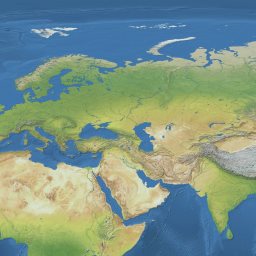
Every dot is a place Georg Cantor is documented in, on a dated record. The interactive globe carries the full detail.
Where Georg Cantor was documented, and when
1845year
Saint Petersburgattested“Georg Cantor, born in 1845 in Saint Petersburg, Russian Empire, was brought up in that city until the age of eleven.”source: Wikipedia: Georg Cantor
June 1863month
Humboldt University of Berlinattested“After receiving a substantial inheritance upon his father's death in June 1863, Cantor transferred to the University of Berlin, attending lectures by Leopold Kronecker, Karl Weierstrass and Ernst Kummer.”source: Wikipedia: Georg Cantor
1866year
University of Göttingenattested“He spent the summer of 1866 at the University of Göttingen, then and later a center for mathematical research.”source: Wikipedia: Georg Cantor
1889 to 1891period
Halle (Saale)attested“In 1889, Cantor was instrumental in founding the German Mathematical Society, and he chaired its first meeting in Halle in 1891, where he first introduced his diagonal argument; his reputation was strong enough, despite Kronecker's oppos…”source: Wikipedia: Georg Cantor
1891year
Berlinattested“Kronecker, who headed mathematics at Berlin until his death in 1891, became increasingly uncomfortable with the prospect of having Cantor as a colleague, perceiving him as a "corrupter of youth" for teaching his ideas to a younger genera…”source: Wikipedia: Georg Cantor
Open Quo Fuit to see these 5 presences on the
globe, filter them by date, and follow the journey year by year.
In each of these, a source puts Georg Cantor and the place in the same dated sentence without stating
that Georg Cantor was there. They are kept apart from the timeline above for exactly that reason:
a mention is not a presence, and Quo Fuit does not quietly promote one into the other.
1856year
Saint Petersburgmentioned“Cantor's father worked as a broker in the Saint Petersburg stock exchange until an illness in 1856, which forced the family to seek out a more temperate climate.”source: Wikipedia: Georg Cantor
1856year
Saint Petersburg Boursementioned“Cantor's father worked as a broker in the Saint Petersburg stock exchange until an illness in 1856, which forced the family to seek out a more temperate climate.”source: Wikipedia: Georg Cantor
1860year
Darmstadtmentioned“In 1860, Cantor graduated with distinction from the Realschule in Darmstadt; his exceptional skills in mathematics, trigonometry in particular, were noted.”source: Wikipedia: Georg Cantor
1862year
ETH Zurichmentioned“In 1862 Cantor entered the Swiss Federal Polytechnic in Zurich.”source: Wikipedia: Georg Cantor
1867year
Humboldt University of Berlinmentioned“Cantor submitted his dissertation on number theory at the University of Berlin in 1867.”source: Wikipedia: Georg Cantor
1869year
Halle (Saale)mentioned“He was awarded the requisite habilitation for his thesis, also on number theory, which he presented in 1869 upon his appointment at Halle.”source: Wikipedia: Georg Cantor
1882year
Halle (Saale)mentioned“In 1882, the mathematical correspondence between Cantor and Dedekind came to an end, apparently as a result of Dedekind's declining the chair at Halle.”source: Wikipedia: Georg Cantor
1903 to 1904period
Heidelbergmentioned“He did not abandon mathematics completely, however, lecturing on the paradoxes of set theory (Burali-Forti paradox, Cantor's paradox, and Russell's paradox) to a meeting of the Deutsche Mathematiker-Vereinigung in 1903, and attending the…”source: Wikipedia: Georg Cantor
Two people documented in the same place in the same year is a correlation, not a meeting.
Quo Fuit will never say they met without a source that says so.
How to read this page
Every line above is a dated fact taken from a source, with the sentence it came from and a link
back to it. Nothing is inferred, and a gap in the record is not evidence that someone was elsewhere.
A tag says how the fact is carried by its source: documented a structured,
explicitly dated record, attested a sentence that states the person was there,
mentioned a sentence that ties the person to the place without stating presence.
Sentences quoted from Wikipedia are available under CC BY-SA 4.0. Public domain books come from
Project Gutenberg. Quo Fuit claims no rights over these sources.
See Georg Cantor on a 3D globe, filter the record by date, and cross this life with another to find
where the two overlap.