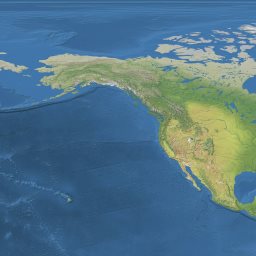
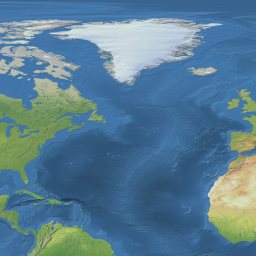
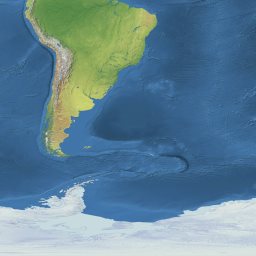
Quo Fuit places 3 dated presences for Fritz Haber across 3 places, from 1886 to 1892.
Each one keeps the sentence it was taken from and a link to its source.
Fritz Jakob Haber (9 December 1868 – 29 January 1934) was a German chemist who received the Nobel Prize in Chemistry in 1918 for his invention of the Haber process, a method used in industry to synthesize ammonia from nitrogen gas and hydrogen gas.Wikipedia, full article · CC BY-SA
Every dot is a place Fritz Haber is documented in, on a dated record. The interactive globe carries the full detail.
Where Fritz Haber was documented, and when
1886 to 1887period
Berlinattested“Haber was disappointed by his initial winter semester (1886–87) in Berlin, and arranged to attend Heidelberg University for the summer semester of 1887, where he studied under Robert Bunsen.”source: Wikipedia: Fritz Haber
May 1891month
University of Berlinattested“Haber received his doctorate cum laude from Friedrich Wilhelm University in May 1891, after presenting his work to a board of examiners from the University of Berlin, since Charlottenburg was not yet accredited to grant doctorates.”source: Wikipedia: Fritz Haber
1892year
Breslauattested“In the Fall of 1892, Haber returned again to Breslau to work in his father's company, but the two men continued to clash and Siegfried finally accepted that they could not work well together.”source: Wikipedia: Fritz Haber
Open Quo Fuit to see these 3 presences on the
globe, filter them by date, and follow the journey year by year.
In each of these, a source puts Fritz Haber and the place in the same dated sentence without stating
that Fritz Haber was there. They are kept apart from the timeline above for exactly that reason:
a mention is not a presence, and Quo Fuit does not quietly promote one into the other.
1889year
Breslaumentioned“Haber met Clara Immerwahr in Breslau in 1889, while he was serving his required year in the military.”source: Wikipedia: Fritz Haber
1892 to 1894period
University of Jenamentioned“Haber then sought an academic appointment, first working as an independent assistant to Ludwig Knorr at the University of Jena between 1892 and 1894.”source: Wikipedia: Fritz Haber
1894year
Karlsruhementioned“Engler referred Haber to a colleague in Karlsruhe, Hans Bunte, who made Haber an Assistent in 1894.”source: Wikipedia: Fritz Haber
1894 to 1911period
University of Karlsruhementioned“During his time at University of Karlsruhe from 1894 to 1911, Haber and his assistant Robert Le Rossignol invented the Haber–Bosch process, which is the catalytic formation of ammonia from hydrogen and atmospheric nitrogen under conditio…”source: Wikipedia: Fritz Haber
1896year
Silesiamentioned“In 1896, the university supported him in travelling to Silesia, Saxony, and Austria to learn about advances in dye technology.”source: Wikipedia: Fritz Haber
1906year
Karlsruhementioned“In 1906, Max Le Blanc, chair of the physical chemistry department at Karlsruhe, accepted a position at the University of Leipzig.”source: Wikipedia: Fritz Haber
1911 to 1933period
Dahlem (Berlin)mentioned“A large part of his work from 1911 to 1933 was done at the Kaiser Wilhelm Institute for Physical Chemistry and Electrochemistry at Berlin-Dahlem.”source: Wikipedia: Fritz Haber
1911 to 1933period
Berlinmentioned“A large part of his work from 1911 to 1933 was done at the Kaiser Wilhelm Institute for Physical Chemistry and Electrochemistry at Berlin-Dahlem.”source: Wikipedia: Fritz Haber
25 May 1915exact date
Second Battle of Ypresmentioned“In addition to leading the teams developing chlorine gas and other deadly gases for use in trench warfare, Haber was on hand personally when it was first released by the German military at the Second Battle of Ypres (22 April to 25 May 1…”source: Wikipedia: Fritz Haber
25 May 1915exact date
Belgiummentioned“In addition to leading the teams developing chlorine gas and other deadly gases for use in trench warfare, Haber was on hand personally when it was first released by the German military at the Second Battle of Ypres (22 April to 25 May 1…”source: Wikipedia: Fritz Haber
25 October 1917exact date
Berlinmentioned“Haber married his second wife, Charlotte Nathan, on 25 October 1917 in Berlin.”source: Wikipedia: Fritz Haber
1919 to 1923period
Germanymentioned“From 1919 to 1923 Haber continued to be involved in Germany's secret development of chemical weapons, working with Hugo Stoltzenberg, and helping both Spain and Russia in the development of chemical gases.”source: Wikipedia: Fritz Haber
1919 to 1925period
Japanmentioned“From 1919 to 1925, in response to a request made by German ambassador Wilhelm Solf to Japan for Japanese support for German scholars in times of financial hardship, a Japanese businessman named Hoshi Hajime, the president of Hoshi Pharma…”source: Wikipedia: Fritz Haber
1924year
Japanmentioned“Haber was asked to manage the fund, and was invited by Hoshi to Japan in 1924.”source: Wikipedia: Fritz Haber
Two people documented in the same place in the same year is a correlation, not a meeting.
Quo Fuit will never say they met without a source that says so.
How to read this page
Every line above is a dated fact taken from a source, with the sentence it came from and a link
back to it. Nothing is inferred, and a gap in the record is not evidence that someone was elsewhere.
A tag says how the fact is carried by its source: documented a structured,
explicitly dated record, attested a sentence that states the person was there,
mentioned a sentence that ties the person to the place without stating presence.
Sentences quoted from Wikipedia are available under CC BY-SA 4.0. Public domain books come from
Project Gutenberg. Quo Fuit claims no rights over these sources.
See Fritz Haber on a 3D globe, filter the record by date, and cross this life with another to find
where the two overlap.