Quo Fuit places 7 dated presences for Władysław Reymont across 6 places, from 1901 to 1925.
Each one keeps the sentence it was taken from and a link to its source.
Władysław Stanisław Reymont (born Rejment; 7 May 1867 – 5 December 1925) was a Polish novelist and the laureate of the 1924 Nobel Prize in Literature.Wikipedia, full article · CC BY-SA
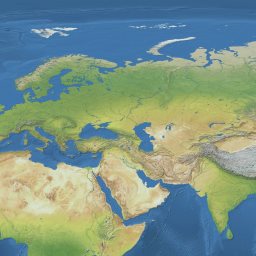
Every dot is a place Władysław Reymont is documented in, on a dated record. The interactive globe carries the full detail.
Where Władysław Reymont was documented, and when
1901 to 1908period
Franceattested“Thanks to her discipline, he marginally restrained his travel-mania, but never gave up either his stays in France (where he partly wrote Chłopi between 1901 and 1908) or in Zakopane.”source: Wikipedia: Władysław Reymont
1920year
Warsawattested“He would later buy a mansion in Kołaczkowo near Poznań in 1920, but still spent his winters in Warsaw or France.”source: Wikipedia: Władysław Reymont
1920year
Gmina Kołaczkowoattested“He would later buy a mansion in Kołaczkowo near Poznań in 1920, but still spent his winters in Warsaw or France.”source: Wikipedia: Władysław Reymont
1920year
Poznańattested“He would later buy a mansion in Kołaczkowo near Poznań in 1920, but still spent his winters in Warsaw or France.”source: Wikipedia: Władysław Reymont
1920year
Poznaattested“He would later buy a mansion in Kołaczkowo near Poznań in 1920, but still spent his winters in Warsaw or France.”source: Wikipedia: Władysław Reymont
December 1925month
Warsawattested“He died in Warsaw in December 1925 and was buried in the Powązki Cemetery.”source: Wikipedia: Władysław Reymont
December 1925month
Powązki Cemeteryattested“He died in Warsaw in December 1925 and was buried in the Powązki Cemetery.”source: Wikipedia: Władysław Reymont
Open Quo Fuit to see these 7 presences on the
globe, filter them by date, and follow the journey year by year.
Other places tied to Władysław Reymont in the record
In each of these, a source puts Władysław Reymont and the place in the same dated sentence without stating
that Władysław Reymont was there. They are kept apart from the timeline above for exactly that reason:
a mention is not a presence, and Quo Fuit does not quietly promote one into the other.
1888year
Parismentioned“He ran away twice more: in 1888 to Paris and London as a medium with a German spiritualist and then again to join a theatre troupe.”source: Wikipedia: Władysław Reymont
1892year
Warsawmentioned“When his Korespondencje (Correspondence) from Rogów, Koluszki and Skierniewice was accepted for publication by Głos (The Voice) in Warsaw in 1892, he returned to Warsaw, with several unpublished short stories and just a few rubles.”source: Wikipedia: Władysław Reymont
1892year
Rogów, Brzeziny Countymentioned“When his Korespondencje (Correspondence) from Rogów, Koluszki and Skierniewice was accepted for publication by Głos (The Voice) in Warsaw in 1892, he returned to Warsaw, with several unpublished short stories and just a few rubles.”source: Wikipedia: Władysław Reymont
1894 to 1895period
Częstochowamentioned“In 1894 he went on an eleven-day pilgrimage to Częstochowa and turned his experience there into a report entitled "Pielgrzymka do Jasnej Góry" (Pilgrimage to the Luminous Mount) published in 1895, and considered his classic example of tr…”source: Wikipedia: Władysław Reymont
1894 to 1895period
Jasna Góramentioned“In 1894 he went on an eleven-day pilgrimage to Częstochowa and turned his experience there into a report entitled "Pielgrzymka do Jasnej Góry" (Pilgrimage to the Luminous Mount) published in 1895, and considered his classic example of tr…”source: Wikipedia: Władysław Reymont
1899year
Francementioned“The earnings from this book Ziemia Obiecana (The Promised Land) (1899) enabled him to go on his next trip to France where he socialized with other exiled Poles (Jan Lorentowicz, Żeromski, Przybyszewski and Lucjan Rydel).”source: Wikipedia: Władysław Reymont
1900year
Warsawmentioned“However, in 1900 he was awarded 40,000 rubles in compensation from the Warsaw–Vienna Railway after an accident in which Reymont was severely injured.”source: Wikipedia: Władysław Reymont
1901 to 1908period
Zakopanementioned“Thanks to her discipline, he marginally restrained his travel-mania, but never gave up either his stays in France (where he partly wrote Chłopi between 1901 and 1908) or in Zakopane.”source: Wikipedia: Władysław Reymont
1912year
Sieradzmentioned“Despite his ambitions to become a landowner, which led to an unsuccessful attempt to manage an estate he bought in 1912 near Sieradz, the life of the land proved not to be for him.”source: Wikipedia: Władysław Reymont
1917year
Polish People's Republicmentioned“The story was a metaphor for the Bolshevik Revolution of 1917 and was banned from 1945 to 1989 in communist Poland, along with George Orwell's similar novella, Animal Farm (published in Britain in 1945).”source: Wikipedia: Władysław Reymont
1919year
United Statesmentioned“Rejmont also journeyed to the United States in 1919 at the (Polish) government's expense.”source: Wikipedia: Władysław Reymont
1925year
Krakówmentioned“In 1925, somewhat recovered, he went to a farmers' meeting in Wierzchosławice near Kraków, where Wincenty Witos welcomed him as a member of the Polish People's Party "Piast" and praised his writing skills.”source: Wikipedia: Władysław Reymont
1925year
Wierzchosławice, Lesser Poland Voivodeshipmentioned“In 1925, somewhat recovered, he went to a farmers' meeting in Wierzchosławice near Kraków, where Wincenty Witos welcomed him as a member of the Polish People's Party "Piast" and praised his writing skills.”source: Wikipedia: Władysław Reymont
Two people documented in the same place in the same year is a correlation, not a meeting.
Quo Fuit will never say they met without a source that says so.
How to read this page
Every line above is a dated fact taken from a source, with the sentence it came from and a link
back to it. Nothing is inferred, and a gap in the record is not evidence that someone was elsewhere.
A tag says how the fact is carried by its source: documented a structured,
explicitly dated record, attested a sentence that states the person was there,
mentioned a sentence that ties the person to the place without stating presence.
Sentences quoted from Wikipedia are available under CC BY-SA 4.0. Public domain books come from
Project Gutenberg. Quo Fuit claims no rights over these sources.
See Władysław Reymont on a 3D globe, filter the record by date, and cross this life with another to find
where the two overlap.