Quo Fuit places 7 dated presences for Wassily Kandinsky across 6 places, from 1909 to 1944.
Each one keeps the sentence it was taken from and a link to its source.
Wassily Wassilyevich Kandinsky ( – 13 December 1944) was a Russian painter and art theorist active in Germany during the late Belle Époque and Interwar eras.Wikipedia, full article · CC BY-SA
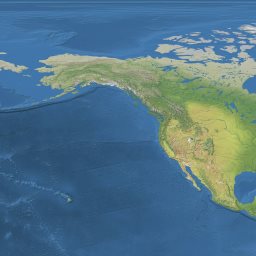
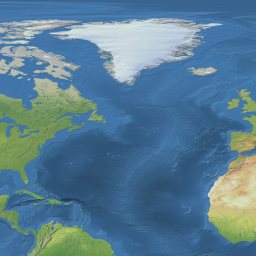
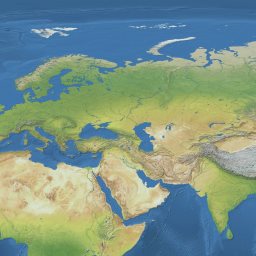
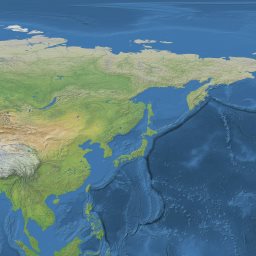
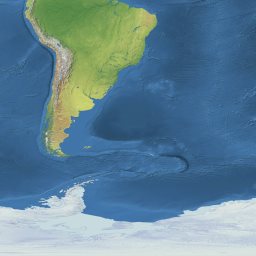
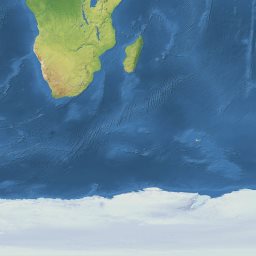
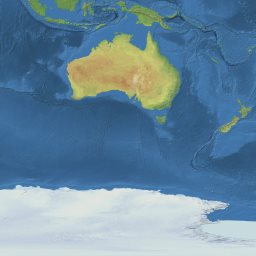
Every dot is a place Wassily Kandinsky is documented in, on a dated record. The interactive globe carries the full detail.
Where Wassily Kandinsky was documented, and when
1909year
Munichattested“Upon returning to Munich, Kandinsky founded the Neue Kunstler Vereinigung (New Artists' Association) in 1909.”source: Wikipedia: Wassily Kandinsky
1913year
Munichattested“Sadleir's interest in Kandinsky also led to Kandinsky's first works entering a British art collection; Sadleir's father, Michael Sadler, acquired several wood-prints and the abstract painting Fragment for Composition VII in 1913 followin…”source: Wikipedia: Wassily Kandinsky
1922 to 1933period
Bauhausattested“There, he taught at the Bauhaus school of art and architecture from 1922 until the Nazis closed it in 1933.”source: Wikipedia: Wassily Kandinsky
1923 to 1924period
United Statesattested“Kandinsky was one of Die Blaue Vier (The Blue Four), which was a group that was formed in 1923 with Paul Klee, Lyonel Feininger and Alexej von Jawlensky at the instigation of Galka Scheyer, who promoted their work in the United States fr…”source: Wikipedia: Wassily Kandinsky
1927year
Parisattested“Guggenheim Museum, New York City File:Vassily Kandinsky, 1927 - Molle rudesse.jpg|Soft Hard, 1927 File:Wassily Kandinsky - Inner Alliance - 1929.jpg|Inner Alliance, 1929, Albertina, Vienna Living in an apartment in Paris, Kandinsky creat…”source: Wikipedia: Wassily Kandinsky
1939year
Franceattested“He then moved to France with his wife, where he lived for the rest of his life, becoming a French citizen in 1939 and producing some of his most prominent art.”source: Wikipedia: Wassily Kandinsky
13 December 1944exact date
Neuilly-sur-Seineattested“He died in Neuilly-sur-Seine on 13 December 1944.”source: Wikipedia: Wassily Kandinsky
Open Quo Fuit to see these 7 presences on the
globe, filter them by date, and follow the journey year by year.
Other places tied to Wassily Kandinsky in the record
In each of these, a source puts Wassily Kandinsky and the place in the same dated sentence without stating
that Wassily Kandinsky was there. They are kept apart from the timeline above for exactly that reason:
a mention is not a presence, and Quo Fuit does not quietly promote one into the other.
1889year
Vologdamentioned“In 1889, at age 23, he was part of an ethnographic research group that travelled to the Vologda region north of Moscow.”source: Wikipedia: Wassily Kandinsky
1892year
University of Moscowmentioned“After graduating in 1892, Kandinsky married his cousin, Anja Chimiakina, and became a lecturer in Jurisprudence at the University of Moscow.”source: Wikipedia: Wassily Kandinsky
1896year
Academy of Fine Arts, Munichmentioned“In 1896, at the age of 30, Kandinsky gave up a promising career teaching law and economics to enroll in the Munich Academy where his teachers would eventually include Franz von Stuck.”source: Wikipedia: Wassily Kandinsky
1896year
Munichmentioned“In 1896, at the age of 30, Kandinsky gave up a promising career teaching law and economics to enroll in the Munich Academy where his teachers would eventually include Franz von Stuck.”source: Wikipedia: Wassily Kandinsky
1908 to 1909period
Munichmentioned“Guggenheim Museum, New York File:Vassily Kandinsky, 1908 - Houses in Munich.jpg|Houses in Munich, 1908, Von der Heydt Museum, Wuppertal File:Vassily Kandinsky, 1909 - Murnau train et château.jpg|Murnau, train & castle, 1909, Lenbachhaus,…”source: Wikipedia: Wassily Kandinsky
1909year
Budapestmentioned“In 1909, Wassily Kandinsky witnessed a presentation Aleksandra Unkovskaya made (at the Theosophical Congress in Budapest) regarding her innovative system in music education, sound-to-colour synesthesia or Chromesthesia which is a type of…”source: Wikipedia: Wassily Kandinsky
1911year
Munichmentioned“Published in Munich in 1911, Kandinsky's text Über das Geistige in der Kunst (Concerning the spiritual in art) defines three types of painting: impressions, improvisations and compositions.”source: Wikipedia: Wassily Kandinsky
1913 to 1923period
Leedsmentioned“These works were displayed in Leeds, either in the university or the premises of the Leeds Arts Club, between 1913 and 1923.”source: Wikipedia: Wassily Kandinsky
1914year
Russiamentioned“More of each were planned, but the outbreak of World War I in 1914 ended these plans and sent Kandinsky back to Russia via Switzerland and Sweden.”source: Wikipedia: Wassily Kandinsky
1914year
Switzerlandmentioned“More of each were planned, but the outbreak of World War I in 1914 ended these plans and sent Kandinsky back to Russia via Switzerland and Sweden.”source: Wikipedia: Wassily Kandinsky
Two people documented in the same place in the same year is a correlation, not a meeting.
Quo Fuit will never say they met without a source that says so.
How to read this page
Every line above is a dated fact taken from a source, with the sentence it came from and a link
back to it. Nothing is inferred, and a gap in the record is not evidence that someone was elsewhere.
A tag says how the fact is carried by its source: documented a structured,
explicitly dated record, attested a sentence that states the person was there,
mentioned a sentence that ties the person to the place without stating presence.
Sentences quoted from Wikipedia are available under CC BY-SA 4.0. Public domain books come from
Project Gutenberg. Quo Fuit claims no rights over these sources.
See Wassily Kandinsky on a 3D globe, filter the record by date, and cross this life with another to find
where the two overlap.