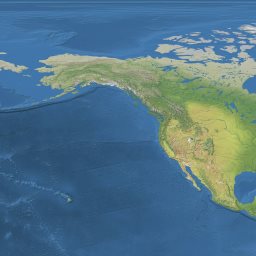
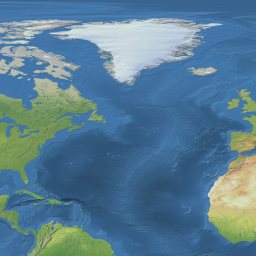
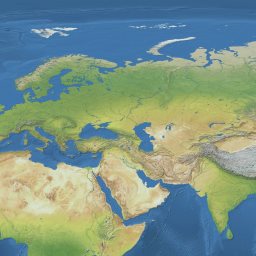
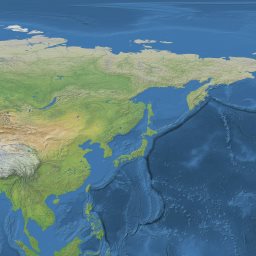
Quo Fuit places 3 dated presences for Vladimir Arnold across 3 places, from 1937 to 2010.
Each one keeps the sentence it was taken from and a link to its source.
Vladimir Igorevich Arnold (or Arnol'd;; 12 June 1937 – 3 June 2010) was a Soviet and Russian mathematician.Wikipedia, full article · CC BY-SA
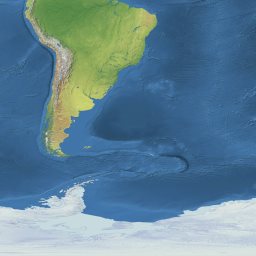
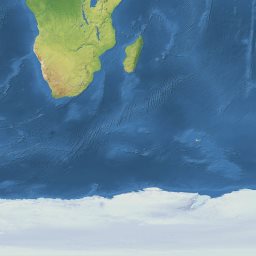
Every dot is a place Vladimir Arnold is documented in, on a dated record. The interactive globe carries the full detail.
Where Vladimir Arnold was documented, and when
12 June 1937exact date
Odessaattested“Vladimir Igorevich Arnold was born on 12 June 1937 in Odessa, Ukrainian SSR, Soviet Union (now Odesa, Ukraine).”source: Wikipedia: Vladimir Arnold
3 June 2010exact date
Moscowattested“For example, once at his seminar in Moscow, at the beginning of the school year, when he usually was formulating new problems, he said: Arnold died of acute pancreatitis on 3 June 2010 in Paris, nine days before his 73rd birthday.”source: Wikipedia: Vladimir Arnold
3 June 2010exact date
Parisattested“For example, once at his seminar in Moscow, at the beginning of the school year, when he usually was formulating new problems, he said: Arnold died of acute pancreatitis on 3 June 2010 in Paris, nine days before his 73rd birthday.”source: Wikipedia: Vladimir Arnold
Open Quo Fuit to see these 3 presences on the
globe, filter them by date, and follow the journey year by year.
Other places tied to Vladimir Arnold in the record
In each of these, a source puts Vladimir Arnold and the place in the same dated sentence without stating
that Vladimir Arnold was there. They are kept apart from the timeline above for exactly that reason:
a mention is not a presence, and Quo Fuit does not quietly promote one into the other.
1954year
Moscow State Universitymentioned“Arnold entered Moscow State University in 1954.”source: Wikipedia: Vladimir Arnold
Moscow State Universitymentioned“While a student of Andrey Kolmogorov at Moscow State University and still a teenager, Arnold showed in 1957 that any continuous function of several variables can be constructed with a finite number of two-variable functions, thereby solv…”source: Wikipedia: Vladimir Arnold
1957year
Moscowmentioned“While a student of Andrey Kolmogorov at Moscow State University and still a teenager, Arnold showed in 1957 that any continuous function of several variables can be constructed with a finite number of two-variable functions, thereby solv…”source: Wikipedia: Vladimir Arnold
1965year
Institut des Hautes Études Scientifiquesmentioned“He later said of it: "I am deeply indebted to Thom, whose singularity seminar at the Institut des Hautes Etudes Scientifiques, which I frequented throughout the year 1965, profoundly changed my mathematical universe." After this event, s…”source: Wikipedia: Vladimir Arnold
27 October 1965exact date
Parismentioned“According to Michèle Audin, the birth-date of symplectic topology was 27 October 1965, which is the day Arnold's paper "Sur une propriété topologique des applications globalement canoniques de la mécanique classique" was presented to the…”source: Wikipedia: Vladimir Arnold
1974year
Vancouvermentioned“He was a plenary speaker at both the 1974 and 1983 International Congress of Mathematicians in Vancouver and Warsaw, respectively.”source: Wikipedia: Vladimir Arnold
1974year
Sovietmentioned“Arnold was nominated for the 1974 Fields Medal, one of the highest honours a mathematician could receive, but interference from the Soviet government led to it being withdrawn.”source: Wikipedia: Vladimir Arnold
1999year
Parismentioned“In 1999 Arnold suffered a serious bicycle accident in Paris, resulting in a traumatic brain injury.”source: Wikipedia: Vladimir Arnold
Two people documented in the same place in the same year is a correlation, not a meeting.
Quo Fuit will never say they met without a source that says so.
How to read this page
Every line above is a dated fact taken from a source, with the sentence it came from and a link
back to it. Nothing is inferred, and a gap in the record is not evidence that someone was elsewhere.
A tag says how the fact is carried by its source: documented a structured,
explicitly dated record, attested a sentence that states the person was there,
mentioned a sentence that ties the person to the place without stating presence.
Sentences quoted from Wikipedia are available under CC BY-SA 4.0. Public domain books come from
Project Gutenberg. Quo Fuit claims no rights over these sources.
See Vladimir Arnold on a 3D globe, filter the record by date, and cross this life with another to find
where the two overlap.