Quo Fuit places 6 dated presences for Thomas Malory across 6 places, from 1425 to 1966.
Each one keeps the sentence it was taken from and a link to its source.
Sir Thomas Malory was an English writer, the author of Le Morte d'Arthur, the classic English-language chronicle of the Arthurian legend, compiled and in most cases translated from French sources.Wikipedia, full article · CC BY-SA
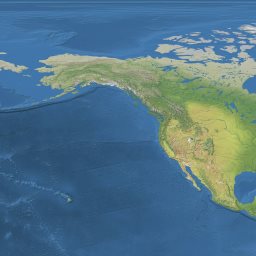
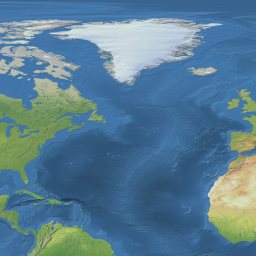
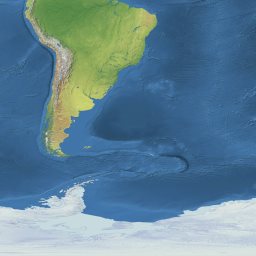
Every dot is a place Thomas Malory is documented in, on a dated record. The interactive globe carries the full detail.
Where Thomas Malory was documented, and when
6 December 1425exact date
Moreton Corbetattested“This Thomas Malory was born on 6 December 1425 at Moreton Corbet Castle, Shropshire, the eldest son of Sir William Mallory, member of Parliament for Cambridgeshire, who had married Margaret, the widow of Robert Corbet of Moreton Corbet.”source: Wikipedia: Thomas Malory
23 August 1451exact date
Nuneatonattested“Malory finally came to trial on 23 August 1451, in Nuneaton, a town in the heartland of Buckingham's power and a place where Malory found little favour as a supporter of the Beauchamps.”source: Wikipedia: Thomas Malory
14 March 1471exact date
Christ Church Greyfriarsattested“Malory died on 14 March 1471 and was buried in Christ Church Greyfriars, near Newgate Prison.”source: Wikipedia: Thomas Malory
1894year
Warwickshireattested“Since George Lyman Kittredge, a professor at Harvard, published the first significant investigation into Malory's identity in 1894, the primary candidate for authorship has been Thomas Malory of Newbold Revel in Warwickshire.”source: Wikipedia: Thomas Malory
1894year
Harvard Universityattested“Since George Lyman Kittredge, a professor at Harvard, published the first significant investigation into Malory's identity in 1894, the primary candidate for authorship has been Thomas Malory of Newbold Revel in Warwickshire.”source: Wikipedia: Thomas Malory
1966year
University of California, Los Angelesattested“This claim was put forward in 1966 in The Ill-Framed Knight: A Skeptical Inquiry into the Identity of Sir Thomas Malory by William Matthews, a British professor who taught at UCLA (and also transcribed the diary of Samuel Pepys).”source: Wikipedia: Thomas Malory
Open Quo Fuit to see these 6 presences on the
globe, filter them by date, and follow the journey year by year.
University of California, Los Angeles1 presence · 1966
Warwickshire1 presence · 1894
Other places tied to Thomas Malory in the record
In each of these, a source puts Thomas Malory and the place in the same dated sentence without stating
that Thomas Malory was there. They are kept apart from the timeline above for exactly that reason:
a mention is not a presence, and Quo Fuit does not quietly promote one into the other.
1414year
Calaismentioned“Kittredge accepted the details of Dugdale's history at face value: specifically, that he was commissioned to serve at Calais under Henry V; a campaign which took place in 1414–15.”source: Wikipedia: Thomas Malory
1436year
Calaismentioned“However, subsequent scholars have questioned this interpretation, suggesting that Dugdale's record was erroneous and that Malory instead served under Henry VI, at an action in Calais in 1436 – a brief mobilization which was disbanded wit…”source: Wikipedia: Thomas Malory
1443year
Warwickshirementioned“Despite the criminal charges against him, he seems to have remained in good standing with his peers because in that same year, Malory was elected by the men of Warwickshire to Parliament to serve as a knight of the shire for the rest of…”source: Wikipedia: Thomas Malory
1443year
Parliament of the United Kingdommentioned“Despite the criminal charges against him, he seems to have remained in good standing with his peers because in that same year, Malory was elected by the men of Warwickshire to Parliament to serve as a knight of the shire for the rest of…”source: Wikipedia: Thomas Malory
1450year
Coventrymentioned“He was also accused of breaking into the house of Hugh Smyth of Monks Kirby in 1450, stealing 40 pounds' worth of goods and raping Smyth's wife, and with attacking her again in Coventry eight weeks later.”source: Wikipedia: Thomas Malory
March 1452month
Marshalseamentioned“By March 1452, he was back in the Marshalsea, from which he escaped two months later, possibly by bribing the guards and gaolers.”source: Wikipedia: Thomas Malory
16 September 1469exact date
Lambeth Palacementioned“Martin's argument was based on a will made at Papworth on 16 September 1469 and proved at Lambeth Palace on 27 October the same year.”source: Wikipedia: Thomas Malory
1893year
Flintshirementioned“This theory received further support from Sir John Rhys, who proclaimed in 1893 that the alternative spelling indicated an area straddling the border between England and North Wales, Maleore in Flintshire and Maleor in Denbighshire.”source: Wikipedia: Thomas Malory
1893year
Denbighshirementioned“This theory received further support from Sir John Rhys, who proclaimed in 1893 that the alternative spelling indicated an area straddling the border between England and North Wales, Maleore in Flintshire and Maleor in Denbighshire.”source: Wikipedia: Thomas Malory
1934year
Newbold Revelmentioned“The discovery of the Winchester Manuscript in 1934 revealed that the author was in some form of imprisonment at the time of writing; this has generally been taken to support the candidate from Newbold Revel, though the support is ambiguo…”source: Wikipedia: Thomas Malory
Two people documented in the same place in the same year is a correlation, not a meeting.
Quo Fuit will never say they met without a source that says so.
How to read this page
Every line above is a dated fact taken from a source, with the sentence it came from and a link
back to it. Nothing is inferred, and a gap in the record is not evidence that someone was elsewhere.
A tag says how the fact is carried by its source: documented a structured,
explicitly dated record, attested a sentence that states the person was there,
mentioned a sentence that ties the person to the place without stating presence.
Sentences quoted from Wikipedia are available under CC BY-SA 4.0. Public domain books come from
Project Gutenberg. Quo Fuit claims no rights over these sources.
See Thomas Malory on a 3D globe, filter the record by date, and cross this life with another to find
where the two overlap.