Quo Fuit places 3 dated presences for Thomas J. Sargent across 3 places, from 1970 to 1997.
Each one keeps the sentence it was taken from and a link to its source.
Thomas John Sargent (born July 19, 1943) is an American economist and the W.R.Wikipedia, full article · CC BY-SA
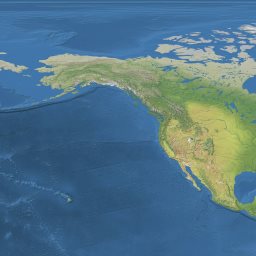
Every dot is a place Thomas J. Sargent is documented in, on a dated record. The interactive globe carries the full detail.
Where Thomas J. Sargent was documented, and when
1970 to 2009period
University of Pennsylvaniaattested“He held teaching positions at the University of Pennsylvania (1970–71), University of Minnesota (1971–87), University of Chicago (1991–98), Stanford University (1998–2002) and Princeton University (2009), and is currently a professor of…”source: Wikipedia: Thomas J. Sargent
1970 to 2009period
New York Universityattested“He held teaching positions at the University of Pennsylvania (1970–71), University of Minnesota (1971–87), University of Chicago (1991–98), Stanford University (1998–2002) and Princeton University (2009), and is currently a professor of…”source: Wikipedia: Thomas J. Sargent
1997 to 2011period
United States National Academy of Sciencesattested“In 1997, he won the Nemmers Prize in Economics In 2011, he was awarded the NAS Award for Scientific Reviewing from the National Academy of Sciences and, in September, he became the recipient of the 2011 CME Group-MSRI Prize in Innovative…”source: Wikipedia: Thomas J. Sargent
Open Quo Fuit to see these 3 presences on the
globe, filter them by date, and follow the journey year by year.
United States National Academy of Sciences1 presence · 1997
Other places tied to Thomas J. Sargent in the record
In each of these, a source puts Thomas J. Sargent and the place in the same dated sentence without stating
that Thomas J. Sargent was there. They are kept apart from the timeline above for exactly that reason:
a mention is not a presence, and Quo Fuit does not quietly promote one into the other.
1964 to 1968period
University of California, Berkeleymentioned“from the University of California, Berkeley in 1964, being the University Medalist as Most Distinguished Scholar in Class of 1964, and his PhD from Harvard in 1968, under supervision of John R.”source: Wikipedia: Thomas J. Sargent
1964 to 1968period
Harvard Universitymentioned“from the University of California, Berkeley in 1964, being the University Medalist as Most Distinguished Scholar in Class of 1964, and his PhD from Harvard in 1968, under supervision of John R.”source: Wikipedia: Thomas J. Sargent
1980year
United Statesmentioned“The two key questions the program addresses are why, in the 1950s and 1960s, unemployment was systematically lower in Europe than in the United States and why, for two and a half decades after 1980, unemployment has been systematically h…”source: Wikipedia: Thomas J. Sargent
1983year
United States National Academy of Sciencesmentioned“In 1983, Sargent was elected to the National Academy of Sciences and also the American Academy of Arts and Sciences.”source: Wikipedia: Thomas J. Sargent
1987year
Stanford Universitymentioned“He has been a senior fellow of the Hoover Institution at Stanford University since the year 1987.”source: Wikipedia: Thomas J. Sargent
Two people documented in the same place in the same year is a correlation, not a meeting.
Quo Fuit will never say they met without a source that says so.
How to read this page
Every line above is a dated fact taken from a source, with the sentence it came from and a link
back to it. Nothing is inferred, and a gap in the record is not evidence that someone was elsewhere.
A tag says how the fact is carried by its source: documented a structured,
explicitly dated record, attested a sentence that states the person was there,
mentioned a sentence that ties the person to the place without stating presence.
Sentences quoted from Wikipedia are available under CC BY-SA 4.0. Public domain books come from
Project Gutenberg. Quo Fuit claims no rights over these sources.
See Thomas J. Sargent on a 3D globe, filter the record by date, and cross this life with another to find
where the two overlap.