Quo Fuit places 4 dated presences for Theodor Fontane across 3 places, from 1839 to 1898.
Each one keeps the sentence it was taken from and a link to its source.
Theodor Fontane (30 December 1819 – 20 September 1898) was a German novelist and poet, regarded by many as the most important 19th-century German-language realist author.Wikipedia, full article · CC BY-SA
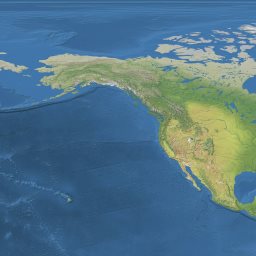
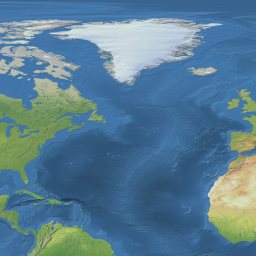
Every dot is a place Theodor Fontane is documented in, on a dated record. The interactive globe carries the full detail.
Where Theodor Fontane was documented, and when
December 1839month
Berlinattested“Fontane's first published work, the novella Geschwisterliebe (Sibling Love), was published in the Berlin Figaro in December 1839.”source: Wikipedia: Theodor Fontane
1854 to 1860period
Londonattested“These days one cannot survive as an honest man." Fontane's travel books about Britain include Ein Sommer in London (A Summer in London, 1854), Aus England, Studien und Briefe (From England: Studies and Letters, 1860) and Jenseit des Twee…”source: Wikipedia: Theodor Fontane
1854 to 1860period
Scotlandattested“These days one cannot survive as an honest man." Fontane's travel books about Britain include Ein Sommer in London (A Summer in London, 1854), Aus England, Studien und Briefe (From England: Studies and Letters, 1860) and Jenseit des Twee…”source: Wikipedia: Theodor Fontane
20 September 1898exact date
Berlinattested“He died in the evening of 20 September 1898 in Berlin.”source: Wikipedia: Theodor Fontane
Open Quo Fuit to see these 4 presences on the
globe, filter them by date, and follow the journey year by year.
Other places tied to Theodor Fontane in the record
In each of these, a source puts Theodor Fontane and the place in the same dated sentence without stating
that Theodor Fontane was there. They are kept apart from the timeline above for exactly that reason:
a mention is not a presence, and Quo Fuit does not quietly promote one into the other.
1839year
Londonmentioned“*Geschwisterliebe, 1839 *Zwei Post-Stationen, 1845 *James Monmouth, 1854 *Tuch und Locke, 1854 *Goldene Hochzeit, 1854 *Ein Sommer in London, 1854 *Aus England.”source: Wikipedia: Theodor Fontane
1850year
Londonmentioned“There he specialized in British affairs, and the agency made him for several years its correspondent in London, where he was later joined by Emilie, whom he had married in 1850, and their first two sons.”source: Wikipedia: Theodor Fontane
1861year
Havellandmentioned“*Balladen, 1861 *Archibald Douglas *Die Brück' am Tay (English translation, Wikisource (German)) *John Maynard *Herr von Ribbeck auf Ribbeck im Havelland (translated as Nick Ribbeck at Ribbeck in Havelland) *Aber es bleibt auf dem alten…”source: Wikipedia: Theodor Fontane
1870year
Vaucouleursmentioned“He went to the front to observe the Franco-Prussian War in 1870 and after being taken prisoner at Vaucouleurs remained in French captivity for three months.”source: Wikipedia: Theodor Fontane
Two people documented in the same place in the same year is a correlation, not a meeting.
Quo Fuit will never say they met without a source that says so.
How to read this page
Every line above is a dated fact taken from a source, with the sentence it came from and a link
back to it. Nothing is inferred, and a gap in the record is not evidence that someone was elsewhere.
A tag says how the fact is carried by its source: documented a structured,
explicitly dated record, attested a sentence that states the person was there,
mentioned a sentence that ties the person to the place without stating presence.
Sentences quoted from Wikipedia are available under CC BY-SA 4.0. Public domain books come from
Project Gutenberg. Quo Fuit claims no rights over these sources.
See Theodor Fontane on a 3D globe, filter the record by date, and cross this life with another to find
where the two overlap.