Quo Fuit places 3 dated presences for Stefan Dušan across 2 places, from 1312 to 1320.
Each one keeps the sentence it was taken from and a link to its source.
Stefan Uroš IV Dušan, also known as Dušan the Mighty (– 20 December 1355), was the King of Serbia from 8 September 1331 and Emperor of the Serbs, Greeks, Bulgarians and Albanians from 16 April 1346 until his death in 1355.Wikipedia, full article · CC BY-SA
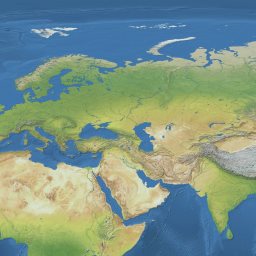
Every dot is a place Stefan Dušan is documented in, on a dated record. The interactive globe carries the full detail.
Constantinopleattested“In 1314 Dušan's father was exiled, and the family lived in Constantinople until his recall in 1320.”source: Wikipedia: Stefan Dušan
1320year
Serbiaattested“In 1320 Dečanski was permitted to return to Serbia and was given the appanage of 'Budimlje' (modern Berane), while his half-brother, Stefan Konstantin, held the province of Zeta.”source: Wikipedia: Stefan Dušan
Open Quo Fuit to see these 3 presences on the
globe, filter them by date, and follow the journey year by year.
In each of these, a source puts Stefan Dušan and the place in the same dated sentence without stating
that Stefan Dušan was there. They are kept apart from the timeline above for exactly that reason:
a mention is not a presence, and Quo Fuit does not quietly promote one into the other.
1324year
Hungarymentioned“Vladislav was defeated in battle in late 1324 and fled to Hungary, leaving the Serbian throne to Dečanski as undisputed "king of All Serbian and Maritime lands".”source: Wikipedia: Stefan Dušan
1331 to 1332period
Macedonia (region)mentioned“Serbia made some raids into the Macedonia region in late 1331, but a planned major attack on Byzantium was delayed as Dušan had to suppress revolts in Zeta in 1332.”source: Wikipedia: Stefan Dušan
1331year
Jerusalemmentioned“Dušan had his personal mercenary guard on his disposal, consisting of German knights led by Palman, commander of the Serbian "Alemannic Guard", who upon crossing Serbia to Jerusalem in 1331, became the leader of all mercenaries in the Se…”source: Wikipedia: Stefan Dušan
March 1331month
Serbiamentioned“The struggle between Dušan and Stefan Dečanski prevented Serbian intervention in Bulgaria on behalf of Anna and Ivan Stephen and they were overthrown by Ivan Alexander in March 1331, however Ivan Alexander of Bulgaria was aware of future…”source: Wikipedia: Stefan Dušan
March 1331month
Bulgariamentioned“The struggle between Dušan and Stefan Dečanski prevented Serbian intervention in Bulgaria on behalf of Anna and Ivan Stephen and they were overthrown by Ivan Alexander in March 1331, however Ivan Alexander of Bulgaria was aware of future…”source: Wikipedia: Stefan Dušan
26 August 1334exact date
Ohridmentioned“Peace was concluded on 26 August 1334, with the Byzantines recognizing Serbian gains in Ohrid, Prilep, Strumitsa, Siderokastron, Chermen and Prosek.”source: Wikipedia: Stefan Dušan
1337 to 1339period
Jerusalemmentioned“Between 1337 and 1339, Dušan became ill, and he gave his word that if he survived, he would build a church and monastery in Jerusalem.”source: Wikipedia: Stefan Dušan
16 April 1346exact date
Skopjementioned“On 16 April 1346 (Easter), Dušan convoked a huge assembly at Skopje, attended by the Serbian Archbishop Joanikije II, the Archbishop of Ochrid Nikolas I, the Bulgarian Patriarch Simeon, and various religious leaders of Mount Athos.”source: Wikipedia: Stefan Dušan
21 May 1349exact date
Skopjementioned“The Code was proclaimed on 21 May 1349 in Skopje, and contained 155 clauses, while 66 further clauses were added at Serres in 1353 or 1354.”source: Wikipedia: Stefan Dušan
21 May 1349exact date
Serres, Greecementioned“The Code was proclaimed on 21 May 1349 in Skopje, and contained 155 clauses, while 66 further clauses were added at Serres in 1353 or 1354.”source: Wikipedia: Stefan Dušan
1350year
Konavlementioned“In 1350, Dušan attacked Bosnia, seeking to regain the previously lost land of Hum and stop raids on his tributaries at Konavle.”source: Wikipedia: Stefan Dušan
1354year
Papal Statesmentioned“In 1354, Dušan reached out to the Papal States, offering to recognise Pope Innocent VI as the "father of all Christians" and to solidify a union between the Catholic and Serbian Church, in exchange for supporting Dušan in his plans for a…”source: Wikipedia: Stefan Dušan
How to read this page
Every line above is a dated fact taken from a source, with the sentence it came from and a link
back to it. Nothing is inferred, and a gap in the record is not evidence that someone was elsewhere.
A tag says how the fact is carried by its source: documented a structured,
explicitly dated record, attested a sentence that states the person was there,
mentioned a sentence that ties the person to the place without stating presence.
Sentences quoted from Wikipedia are available under CC BY-SA 4.0. Public domain books come from
Project Gutenberg. Quo Fuit claims no rights over these sources.
See Stefan Dušan on a 3D globe, filter the record by date, and cross this life with another to find
where the two overlap.