Quo Fuit places 4 dated presences for Shah Jahan across 3 places, from 1592 to 1623.
Each one keeps the sentence it was taken from and a link to its source.
Shah Jahan I (Shahab-ud-Din Muhammad Khurram; 5 January 1592 – 22 January 1666), also called Shah Jahan the Magnificent, was the fifth Mughal Emperor from 1628 until his deposition in 1658.Wikipedia, full article · CC BY-SA
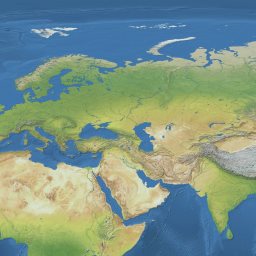
Every dot is a place Shah Jahan is documented in, on a dated record. The interactive globe carries the full detail.
Where Shah Jahan was documented, and when
5 January 1592exact date
Lahoreattested“He was born on 5 January 1592 in Lahore, present-day Pakistan, as the ninth child and third son of Prince Salim (later known as 'Jahangir' upon his accession) and his chief consort, Jagat Gosain.”source: Wikipedia: Shah Jahan
8 April 1619exact date
Agraattested“On the death of Jagat Gosain in Akbarabad on 8 April 1619, he is recorded to be inconsolable by Jahangir and mourned for 21 days.”source: Wikipedia: Shah Jahan
November 1623month
Agraattested“In November 1623, he found safe asylum in Bengal Subah after he was driven from Agra and the Deccan.”source: Wikipedia: Shah Jahan
November 1623month
Bengalattested“In November 1623, he found safe asylum in Bengal Subah after he was driven from Agra and the Deccan.”source: Wikipedia: Shah Jahan
Open Quo Fuit to see these 4 presences on the
globe, filter them by date, and follow the journey year by year.
In each of these, a source puts Shah Jahan and the place in the same dated sentence without stating
that Shah Jahan was there. They are kept apart from the timeline above for exactly that reason:
a mention is not a presence, and Quo Fuit does not quietly promote one into the other.
1616year
Deccan Plateaumentioned“In 1616, on Khurram's departure to Deccan, Jahangir awarded him the title Shah Sultan Khurram.”source: Wikipedia: Shah Jahan
1617year
Deccan Plateaumentioned“In 1617, Khurram was directed to deal with the Lodis in the Deccan to secure the Empire's southern borders and to restore imperial control over the region.”source: Wikipedia: Shah Jahan
1618year
Mughal Empirementioned“Holden writes, "He was flattered by some, envied by others, loved by none." In 1618, Shah Jahan was given the first copy of Tuzk-e-Jahangiri by his father, who considered him "the first of all my sons in everything." Inheritance in the M…”source: Wikipedia: Shah Jahan
1627year
Mughal Empirementioned“After the death of Jahangir in 1627, a struggle developed between Khurram and his half-brother, Shahryar Mirza, for the succession to the Mughal throne.”source: Wikipedia: Shah Jahan
1630 to 1632period
Deccan Plateaumentioned“A famine broke out in 1630–1632 in Deccan, Gujarat and Khandesh as a result of three main crop failures.”source: Wikipedia: Shah Jahan
1631year
Hugli-Chinsuramentioned“Shah Jahan gave orders in 1631 to Qasim Khan, the Mughal viceroy of Bengal, to drive out the Portuguese from their trading post at Port Hooghly.”source: Wikipedia: Shah Jahan
1647year
Thattamentioned“The Shah Jahan Mosque in Thatta, Sindh province of Pakistan (100 km / 60 miles from Karachi) was built during the reign of Shah Jahan in 1647.”source: Wikipedia: Shah Jahan
1647year
Karachimentioned“The Shah Jahan Mosque in Thatta, Sindh province of Pakistan (100 km / 60 miles from Karachi) was built during the reign of Shah Jahan in 1647.”source: Wikipedia: Shah Jahan
1658year
Mughal Empirementioned“After Shah Jahan fell ill in 1658, his daughter Jahanara Begum had a significant influence in the Mughal administration.”source: Wikipedia: Shah Jahan
How to read this page
Every line above is a dated fact taken from a source, with the sentence it came from and a link
back to it. Nothing is inferred, and a gap in the record is not evidence that someone was elsewhere.
A tag says how the fact is carried by its source: documented a structured,
explicitly dated record, attested a sentence that states the person was there,
mentioned a sentence that ties the person to the place without stating presence.
Sentences quoted from Wikipedia are available under CC BY-SA 4.0. Public domain books come from
Project Gutenberg. Quo Fuit claims no rights over these sources.
See Shah Jahan on a 3D globe, filter the record by date, and cross this life with another to find
where the two overlap.