Quo Fuit places 5 dated presences for Rosa Bonheur across 5 places, from 1822 to 1899.
Each one keeps the sentence it was taken from and a link to its source.
Rosa Bonheur (born Marie-Rosalie Bonheur; 16 March 1822 – 25 May 1899) was a French artist known best as a painter of animals (animalière).Wikipedia, full article · CC BY-SA
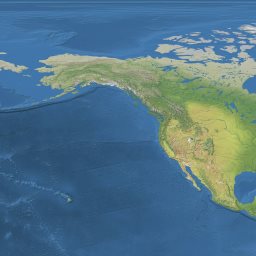
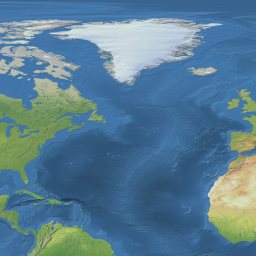
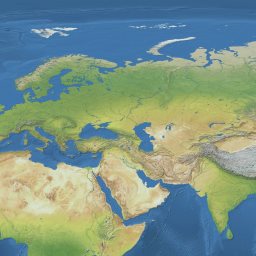
Every dot is a place Rosa Bonheur is documented in, on a dated record. The interactive globe carries the full detail.
Where Rosa Bonheur was documented, and when
16 March 1822exact date
Bordeauxattested“Bonheur was born on 16 March 1822 in Bordeaux, Gironde, the oldest child in a family of artists.”source: Wikipedia: Rosa Bonheur
1828year
Parisattested“Bonheur moved to Paris in 1828 at the age of six with her mother and siblings, after her father had gone ahead of them to establish a residence and income there.”source: Wikipedia: Rosa Bonheur
1893year
Museum of Science and Industry (Chicago)attested“Bonheur exhibited her work at the Palace of Fine Arts and The Woman's Building at the 1893 World's Columbian Exposition in Chicago, Illinois.”source: Wikipedia: Rosa Bonheur
1893year
Chicagoattested“Bonheur exhibited her work at the Palace of Fine Arts and The Woman's Building at the 1893 World's Columbian Exposition in Chicago, Illinois.”source: Wikipedia: Rosa Bonheur
25 May 1899exact date
Thomeryattested“Bonheur died on 25 May 1899, at the age of 77, at Thomery (By), France.”source: Wikipedia: Rosa Bonheur
Open Quo Fuit to see these 5 presences on the
globe, filter them by date, and follow the journey year by year.
Museum of Science and Industry (Chicago)1 presence · 1893
Thomery1 presence · 1899
Other places tied to Rosa Bonheur in the record
In each of these, a source puts Rosa Bonheur and the place in the same dated sentence without stating
that Rosa Bonheur was there. They are kept apart from the timeline above for exactly that reason:
a mention is not a presence, and Quo Fuit does not quietly promote one into the other.
1849year
Parismentioned“This even resulted in the commissioning of Ploughing in the Nivernais from the state, which was exhibited in 1849 and is now on display in the Musée d'Orsay located in Paris.”source: Wikipedia: Rosa Bonheur
1849year
Nivernaismentioned“This even resulted in the commissioning of Ploughing in the Nivernais from the state, which was exhibited in 1849 and is now on display in the Musée d'Orsay located in Paris.”source: Wikipedia: Rosa Bonheur
1849 to 1887period
Auvergnementioned“* Ploughing in the Nivernais, 1849 * The Horse Fair, 1852–1855 * Haymaking in the Auvergne, 1853–1855 * The Highland Shepherd, 1859 * A Family of Deer, 1865 * Changing meadows (Changement de pâturages), 1868 * The Monarch of the Herd, 18…”source: Wikipedia: Rosa Bonheur
1853year
Parismentioned“Bonheur's first major success can be attributed to The Horse Fair, which was first displayed at the Paris Salon in 1853.”source: Wikipedia: Rosa Bonheur
1855year
Englandmentioned“By 1855, Gambart had bought The Horse Fair for forty thousand francs so that he could display the painting in an exhibition of French art located in England.”source: Wikipedia: Rosa Bonheur
1856year
Englandmentioned“In 1856, Bonheur traveled to England and Scotland with Micas, where she met Queen Victoria, John Ruskin, and other major British artists.”source: Wikipedia: Rosa Bonheur
1859year
Château de Bymentioned“In 1859, her success enabled her to move to the Château de By near Fontainebleau, not far from Paris, where she lived for the rest of her life.”source: Wikipedia: Rosa Bonheur
1859year
Fontainebleaumentioned“In 1859, her success enabled her to move to the Château de By near Fontainebleau, not far from Paris, where she lived for the rest of her life.”source: Wikipedia: Rosa Bonheur
1859year
Parismentioned“In 1859, her success enabled her to move to the Château de By near Fontainebleau, not far from Paris, where she lived for the rest of her life.”source: Wikipedia: Rosa Bonheur
1865 to 1894period
Englandmentioned“Though she was more popular in England than in her native France, she was decorated with the French Legion of Honour by Empress Eugénie in 1865, and was promoted to Officer of the Order in 1894.”source: Wikipedia: Rosa Bonheur
1889year
Parismentioned“In 1889 and 1890, she developed a friendship with American sculptor Cyrus Dallin, who was studying in Paris.”source: Wikipedia: Rosa Bonheur
24 June 1889exact date
Père Lachaise Cemeterymentioned“She was buried together with Nathalie Micas (1824 – 24 June 1889), her lifelong companion and lover, at Père Lachaise Cemetery, Paris.”source: Wikipedia: Rosa Bonheur
1900year
Parismentioned“Many of her paintings, which had not previously been shown publicly, were sold at auction in Paris in 1900.”source: Wikipedia: Rosa Bonheur
Two people documented in the same place in the same year is a correlation, not a meeting.
Quo Fuit will never say they met without a source that says so.
How to read this page
Every line above is a dated fact taken from a source, with the sentence it came from and a link
back to it. Nothing is inferred, and a gap in the record is not evidence that someone was elsewhere.
A tag says how the fact is carried by its source: documented a structured,
explicitly dated record, attested a sentence that states the person was there,
mentioned a sentence that ties the person to the place without stating presence.
Sentences quoted from Wikipedia are available under CC BY-SA 4.0. Public domain books come from
Project Gutenberg. Quo Fuit claims no rights over these sources.
See Rosa Bonheur on a 3D globe, filter the record by date, and cross this life with another to find
where the two overlap.