Quo Fuit places 5 dated presences for Richard Walther Darré across 5 places, from 1914 to 1953.
Each one keeps the sentence it was taken from and a link to its source.
Richard Walther Darré (born Ricardo Walther Óscar Darré; 14 July 1895 – 5 September 1953) was one of the leading Nazi "blood and soil" ideologists and served as Reich Minister of Food and Agriculture.Wikipedia, full article · CC BY-SA
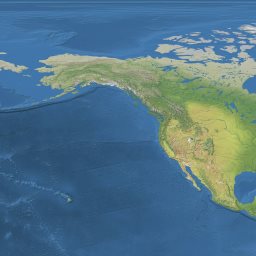
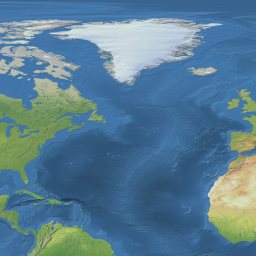
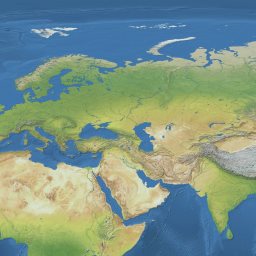
Every dot is a place Richard Walther Darré is documented in, on a dated record. The interactive globe carries the full detail.
Where Richard Walther Darré was documented, and when
1914year
Gummersbachattested“Richard (as he was known in the family) then spent two years at the Oberrealschule in Gummersbach, followed in early 1914 by the Kolonialschule at Witzenhausen, south of Göttingen, for training officials for the German colonies, which aw…”source: Wikipedia: Richard Walther Darré
1914year
Witzenhausenattested“Richard (as he was known in the family) then spent two years at the Oberrealschule in Gummersbach, followed in early 1914 by the Kolonialschule at Witzenhausen, south of Göttingen, for training officials for the German colonies, which aw…”source: Wikipedia: Richard Walther Darré
1922year
University of Halleattested“In 1922, he moved to the University of Halle to continue his studies.”source: Wikipedia: Richard Walther Darré
1950year
Bad Harzburgattested“He was released in 1950 and spent his final years in Bad Harzburg.”source: Wikipedia: Richard Walther Darré
Other places tied to Richard Walther Darré in the record
In each of these, a source puts Richard Walther Darré and the place in the same dated sentence without stating
that Richard Walther Darré was there. They are kept apart from the timeline above for exactly that reason:
a mention is not a presence, and Quo Fuit does not quietly promote one into the other.
1911year
Wimbledon, Londonmentioned“In 1911, he attended King's College School in Wimbledon as an exchange student.”source: Wikipedia: Richard Walther Darré
Eastern Europementioned“The German historian Klaus Hildebrand described Darré together with Himmler and Alfred Rosenberg as one of the leaders of the "agrarian" fraction within the NSDAP who championed anti-industrial and anti-urban "blood and soil" ideology, e…”source: Wikipedia: Richard Walther Darré
May 1942month
Berlinmentioned“However, Darré was effectively sidelined from May 1942 and retired to his hunting lodge in the Schorfheide forest outside Berlin until the end of the Nazi regime.”source: Wikipedia: Richard Walther Darré
May 1942month
Schorfheide-Chorin Biosphere Reservementioned“However, Darré was effectively sidelined from May 1942 and retired to his hunting lodge in the Schorfheide forest outside Berlin until the end of the Nazi regime.”source: Wikipedia: Richard Walther Darré
April 1945month
Flak-Kaserne Ludwigsburgmentioned“In April 1945, the American authorities arrested Darré, interned him at Flak-Kaserne Ludwigsburg and tried him at the Subsequent Nuremberg Trials, as one of 21 defendants in the Ministries Trial, also known as the Wilhelmstrasse Trial (1…”source: Wikipedia: Richard Walther Darré
How to read this page
Every line above is a dated fact taken from a source, with the sentence it came from and a link
back to it. Nothing is inferred, and a gap in the record is not evidence that someone was elsewhere.
A tag says how the fact is carried by its source: documented a structured,
explicitly dated record, attested a sentence that states the person was there,
mentioned a sentence that ties the person to the place without stating presence.
Sentences quoted from Wikipedia are available under CC BY-SA 4.0. Public domain books come from
Project Gutenberg. Quo Fuit claims no rights over these sources.
See Richard Walther Darré on a 3D globe, filter the record by date, and cross this life with another to find
where the two overlap.