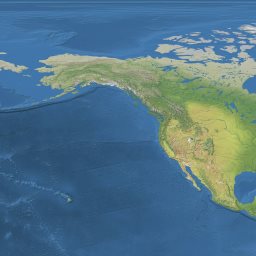
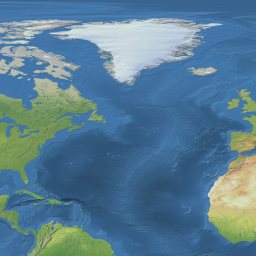
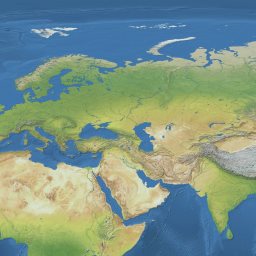
Quo Fuit places 4 dated presences for Richard III of England across 4 places, from 1452 to 1483.
Each one keeps the sentence it was taken from and a link to its source.
Richard III (2 October 1452 – 22 August 1485) was King of England from 26 June 1483 until his death in 1485.Wikipedia, full article · CC BY-SA
Every dot is a place Richard III of England is documented in, on a dated record. The interactive globe carries the full detail.
Where Richard III of England was documented, and when
2 October 1452exact date
Fotheringhay Castleattested“Richard was born on 2 October 1452 at Fotheringhay Castle in Northamptonshire, the eleventh of the twelve children of Richard, 3rd Duke of York, and Cecily Neville, and the youngest to survive infancy.”source: Wikipedia: Richard III of England
2 October 1452exact date
Northamptonshireattested“Richard was born on 2 October 1452 at Fotheringhay Castle in Northamptonshire, the eleventh of the twelve children of Richard, 3rd Duke of York, and Cecily Neville, and the youngest to survive infancy.”source: Wikipedia: Richard III of England
June 1473month
Middlehamattested“In June 1473, Richard persuaded his mother-in-law to leave the sanctuary and come to live under his protection at Middleham.”source: Wikipedia: Richard III of England
1483year
Bishopsgateattested“Within the year 1483, Richard had moved himself to the grandeur of Crosby Hall, London, then in Bishopsgate in the City of London.”source: Wikipedia: Richard III of England
Open Quo Fuit to see these 4 presences on the
globe, filter them by date, and follow the journey year by year.
Places Richard III of England is documented in
Bishopsgate1 presence · 1483
Fotheringhay Castle1 presence · 1452
Middleham1 presence · 1473
Northamptonshire1 presence · 1452
Other places tied to Richard III of England in the record
In each of these, a source puts Richard III of England and the place in the same dated sentence without stating
that Richard III of England was there. They are kept apart from the timeline above for exactly that reason:
a mention is not a presence, and Quo Fuit does not quietly promote one into the other.
30 December 1460exact date
Battle of Wakefieldmentioned“When their father and elder brother Edmund, Earl of Rutland, were killed at the Battle of Wakefield on 30 December 1460, Richard and George were sent by their mother to the Low Countries.”source: Wikipedia: Richard III of England
1461 to 1468period
Middlehammentioned“With some interruptions, Richard stayed at Middleham either from late 1461 until early 1465, when he was 12 or from 1465 until his coming of age in 1468, when he turned 16.”source: Wikipedia: Richard III of England
1470year
Doncastermentioned“Following Warwick's 1470 rebellion, before which he had made peace with Margaret of Anjou and promised the restoration of Henry VI to the English throne, Richard, the Baron Hastings and Anthony Woodville, 2nd Earl Rivers, escaped capture…”source: Wikipedia: Richard III of England
October 1470month
Burgundy (region)mentioned“Richard and Edward were forced to flee to Burgundy in October 1470 after Warwick defected to the side of the former Lancastrian queen Margaret of Anjou.”source: Wikipedia: Richard III of England
Battle of Barnetmentioned“Edward died at the Battle of Tewkesbury on 4 May 1471, while Warwick had died at the Battle of Barnet on 14 April 1471.”source: Wikipedia: Richard III of England
4 May 1471exact date
Battle of Tewkesburymentioned“Edward died at the Battle of Tewkesbury on 4 May 1471, while Warwick had died at the Battle of Barnet on 14 April 1471.”source: Wikipedia: Richard III of England
12 July 1472exact date
Battle of Tewkesburymentioned“Following a decisive Yorkist victory over the Lancastrians at the Battle of Tewkesbury, Richard married Anne Neville on 12 July 1472.”source: Wikipedia: Richard III of England
4 July 1475exact date
Calaismentioned“At least in part resentful of King Louis XI's previous support of his Lancastrian opponents, and possibly in support of his brother-in-law Charles the Bold, Duke of Burgundy, Edward went to parliament in October 1472 for funding a milita…”source: Wikipedia: Richard III of England
24 August 1482exact date
Kingdom of Scotlandmentioned“The castle held out until 24 August 1482, when Richard recaptured Berwick-upon-Tweed from the Kingdom of Scotland.”source: Wikipedia: Richard III of England
1485year
Parismentioned“Henry fled to Paris, where he secured support from the French regent Anne of Beaujeu, who supplied troops for an invasion in 1485.”source: Wikipedia: Richard III of England
22 August 1485exact date
Battle of Bosworth Fieldmentioned“On 22 August 1485, Richard met the outnumbered forces of Henry Tudor at the Battle of Bosworth Field.”source: Wikipedia: Richard III of England
How to read this page
Every line above is a dated fact taken from a source, with the sentence it came from and a link
back to it. Nothing is inferred, and a gap in the record is not evidence that someone was elsewhere.
A tag says how the fact is carried by its source: documented a structured,
explicitly dated record, attested a sentence that states the person was there,
mentioned a sentence that ties the person to the place without stating presence.
Sentences quoted from Wikipedia are available under CC BY-SA 4.0. Public domain books come from
Project Gutenberg. Quo Fuit claims no rights over these sources.
See Richard III of England on a 3D globe, filter the record by date, and cross this life with another to find
where the two overlap.