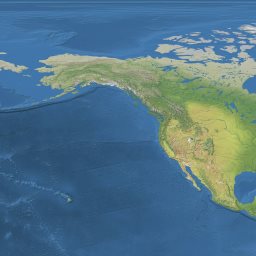
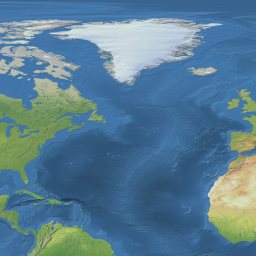
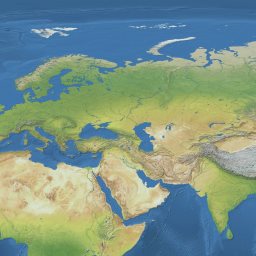
Quo Fuit places 11 dated presences for Przemysł II across 7 places, from 1257 to 1294.
Each one keeps the sentence it was taken from and a link to its source.
Przemysł II ( also given in English and Latin as Premyslas or Premislaus or in Polish as '; 14 October 1257 – 8 February 1296) was the Duke of Poznań from 1257–1279, of Greater Poland from 1279 to 1296, of Kraków from 1290 to 1291, and Gdańsk Pomerania (Pomerelia) from 1294 to 1296, and then King ofWikipedia, full article · CC BY-SA
Every dot is a place Przemysł II is documented in, on a dated record. The interactive globe carries the full detail.
Where Przemysł II was documented, and when
14 October 1257exact date
Poznańattested“Przemysł II was born on 14 October 1257 in Poznań as the fifth child and only son of Duke Przemysł I of Greater Poland and his wife Elisabeth of Wrocław, daughter of Duke Henry II the Pious of Silesia.”source: Wikipedia: Przemysł II
14 October 1257exact date
Poznaattested“Przemysł II was born on 14 October 1257 in Poznań as the fifth child and only son of Duke Przemysł I of Greater Poland and his wife Elisabeth of Wrocław, daughter of Duke Henry II the Pious of Silesia.”source: Wikipedia: Przemysł II
1265year
Mecklenburgattested“The story of the chronicler was as follows: Przemysł II, at the instigation of his mother Elizabeth of Wrocław (who is well known to have died in 1265, a long time before the marriage of her son), asked his wife for a divorce and returne…”source: Wikipedia: Przemysł II
16 January 1265exact date
Modrzeattested“On 16 January 1265 Dowager Duchess Elisabeth died at her estate in Modrze, and the orphaned Przemysł together with his sisters were later cared for by their uncle.”source: Wikipedia: Przemysł II
1281year
Lubinattested“The first talks between Przemysł II and Mestwin II about the latter's succession probably occurred around 1281, on the occasion of the arrival of the Duke of Pomerelia in Greater Poland to visit the Benedictine Abbey in Lubin.”source: Wikipedia: Przemysł II
December 1283month
Gnieznoattested“In December 1283 in Gniezno, at the age of 22 or 23 years, Ludgarda, wife of Przemysł II, died unexpectedly.”source: Wikipedia: Przemysł II
December 1283month
Poznańattested“So when in mid-December 1283 Ludgarda died suddenly and separated (evidenced by her death in Gniezno, away from Przemysł II's court in Poznań), raising suspicion that the death of the duchess was unnatural.”source: Wikipedia: Przemysł II
December 1283month
Poznaattested“So when in mid-December 1283 Ludgarda died suddenly and separated (evidenced by her death in Gniezno, away from Przemysł II's court in Poznań), raising suspicion that the death of the duchess was unnatural.”source: Wikipedia: Przemysł II
1 September 1288exact date
Poznańattested“The first and only child of Przemysł II was born in Poznań on 1 September 1288: a daughter, named Richeza, who later became queen of Bohemia and Poland as the wife of Wenceslaus II and after his death, of Rudolf I.”source: Wikipedia: Przemysł II
1 September 1288exact date
Poznaattested“The first and only child of Przemysł II was born in Poznań on 1 September 1288: a daughter, named Richeza, who later became queen of Bohemia and Poland as the wife of Wenceslaus II and after his death, of Rudolf I.”source: Wikipedia: Przemysł II
25 December 1294exact date
Gdańskattested“It is unknown if he was present when Mestwin II died on 25 December 1294 in Gdańsk; however, there is no doubt that Przemysł II took part in his funeral.”source: Wikipedia: Przemysł II
Open Quo Fuit to see these 11 presences on the
globe, filter them by date, and follow the journey year by year.
Places Przemysł II is documented in
Pozna3 presences · 1257 to 1288
Poznań3 presences · 1257 to 1288
Gdańsk1 presence · 1294
Gniezno1 presence · 1283
Lubin1 presence · 1281
Mecklenburg1 presence · 1265
Modrze1 presence · 1265
Other places tied to Przemysł II in the record
In each of these, a source puts Przemysł II and the place in the same dated sentence without stating
that Przemysł II was there. They are kept apart from the timeline above for exactly that reason:
a mention is not a presence, and Quo Fuit does not quietly promote one into the other.
1271year
Pomeraniamentioned“At first an ally of the Margraves of Brandenburg, Mestwin II could expel his brother and uncles from Pomerania and became sole ruler in 1271, but shortly after he was defeated and even imprisoned by them; this caused him to cede the prov…”source: Wikipedia: Przemysł II
1271year
Kaliszmentioned“The event took place in the Franciscan church in Kalisz and was extremely important because after twelve years (since the death in 1271 of Archbishop Janusz Tarnowa) Poland wasn't a fully recognized prelate.”source: Wikipedia: Przemysł II
1274year
Poznańmentioned“The alliance between Greater Poland and Pomerania was directed against Brandenburg and, in 1274, resulted in more than one retaliatory expedition against Greater Poland; taken by surprise, the princes watched how, without major obstacles…”source: Wikipedia: Przemysł II
1274year
Poznamentioned“The alliance between Greater Poland and Pomerania was directed against Brandenburg and, in 1274, resulted in more than one retaliatory expedition against Greater Poland; taken by surprise, the princes watched how, without major obstacles…”source: Wikipedia: Przemysł II
1277 to 1296period
Poznańmentioned“Those enjoying a little less support included the Benedictines (especially the monastery of Lubin, who received privileges in the years 1277, 1294, 1296), and Dominicans (his friary in Poznań received in 1277 the right to fishing on the…”source: Wikipedia: Przemysł II
1277 to 1296period
Poznamentioned“Those enjoying a little less support included the Benedictines (especially the monastery of Lubin, who received privileges in the years 1277, 1294, 1296), and Dominicans (his friary in Poznań received in 1277 the right to fishing on the…”source: Wikipedia: Przemysł II
18 February 1277exact date
Wrocławmentioned“This alliance was maintained without significant changes, and only as a result of the events that took place on 18 February 1277 in the town of Jelcz near Wrocław, the Duke of Poznań was forced to explicitly stand at the side of the Wroc…”source: Wikipedia: Przemysł II
24 April 1277exact date
Ząbkowice Śląskiementioned“The battle took place on 24 April 1277 in the village of Stolec near Ząbkowice Śląskie, and, according to modern historiography, was extremely bloody and lasted almost the entire day.”source: Wikipedia: Przemysł II
5 July 1277exact date
Lubinmentioned“Whatever the truth was, by 5 July 1277, Przemysł II was in Lubin.”source: Wikipedia: Przemysł II
14 April 1279exact date
Kaliszmentioned“"Maximus trumphator de Teutonicis" (in: The highest winner on the Germans, died on 13 or 14 April 1279 in Kalisz.”source: Wikipedia: Przemysł II
1280 to 1294period
Poznańmentioned“In addition to the privileges granted to Poznań and Kalisz, other individual privileges given to Pyzdry in 1283 (exemption from paying customs duties merchants in Greater Poland), to Rogoźno in 1280 (implementation of the German law) and…”source: Wikipedia: Przemysł II
1280 to 1294period
Rogoźnomentioned“In addition to the privileges granted to Poznań and Kalisz, other individual privileges given to Pyzdry in 1283 (exemption from paying customs duties merchants in Greater Poland), to Rogoźno in 1280 (implementation of the German law) and…”source: Wikipedia: Przemysł II
1280 to 1294period
Pyzdrymentioned“In addition to the privileges granted to Poznań and Kalisz, other individual privileges given to Pyzdry in 1283 (exemption from paying customs duties merchants in Greater Poland), to Rogoźno in 1280 (implementation of the German law) and…”source: Wikipedia: Przemysł II
1280 to 1294period
Poznamentioned“In addition to the privileges granted to Poznań and Kalisz, other individual privileges given to Pyzdry in 1283 (exemption from paying customs duties merchants in Greater Poland), to Rogoźno in 1280 (implementation of the German law) and…”source: Wikipedia: Przemysł II
Every line above is a dated fact taken from a source, with the sentence it came from and a link
back to it. Nothing is inferred, and a gap in the record is not evidence that someone was elsewhere.
A tag says how the fact is carried by its source: documented a structured,
explicitly dated record, attested a sentence that states the person was there,
mentioned a sentence that ties the person to the place without stating presence.
Sentences quoted from Wikipedia are available under CC BY-SA 4.0. Public domain books come from
Project Gutenberg. Quo Fuit claims no rights over these sources.
See Przemysł II on a 3D globe, filter the record by date, and cross this life with another to find
where the two overlap.