Quo Fuit places 3 dated presences for Philippe I, Duke of Orléans across 3 places, from 1640 to 1662.
Each one keeps the sentence it was taken from and a link to its source.
Monsieur Philippe I, Duke of Orléans (21 September 1640 – 9 June 1701) was the younger son of King Louis XIII of France and Anne of Austria, and the younger brother of King Louis XIV.Wikipedia, full article · CC BY-SA
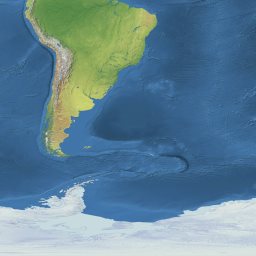
Every dot is a place Philippe I, Duke of Orléans is documented in, on a dated record. The interactive globe carries the full detail.
Where Philippe I, Duke of Orléans was documented, and when
21 September 1640exact date
Château de Saint-Germain-en-Layeattested“Philippe de Bourbon was born on 21 September 1640 at the Château de Saint-Germain-en-Laye in the town of Saint-Germain-en-Laye, France, the day before his mother Anne's 39th birthday.”source: Wikipedia: Philippe I, Duke of Orléans
1646year
Hôtel de Villeroy (Paris, 1st arrondissement)attested“From 1646 on Philippe spent some of his childhood at the Hôtel de Villeroy ("Cremerie de Paris"), house of Nicolas de Villeroy, tutor of his brother Louis XIV.”source: Wikipedia: Philippe I, Duke of Orléans
26 March 1662exact date
Châlons-en-Champagneattested“The couple had three children, in addition to four miscarriages and one stillbirth: #Marie Louise d'Orléans (26 March 1662 – 12 February 1689) married Charles II of Spain, no issue #Miscarriage (1663) #Philippe Charles d'Orléans, Duke of…”source: Wikipedia: Philippe I, Duke of Orléans
Open Quo Fuit to see these 3 presences on the
globe, filter them by date, and follow the journey year by year.
Places Philippe I, Duke of Orléans is documented in
Châlons-en-Champagne1 presence · 1662
Château de Saint-Germain-en-Laye1 presence · 1640
Hôtel de Villeroy (Paris, 1st arrondissement)1 presence · 1646
Other places tied to Philippe I, Duke of Orléans in the record
In each of these, a source puts Philippe I, Duke of Orléans and the place in the same dated sentence without stating
that Philippe I, Duke of Orléans was there. They are kept apart from the timeline above for exactly that reason:
a mention is not a presence, and Quo Fuit does not quietly promote one into the other.
1647year
Palais-Royalmentioned“In the autumn of 1647, at age seven, Philippe caught smallpox, but recovered and convalesced at the Palais-Royal.”source: Wikipedia: Philippe I, Duke of Orléans
11 May 1648exact date
Palais-Royalmentioned“A year later, he was taken from the care of women and, on 11 May 1648 carried out his first official ceremony when the ceremonies omitted during his baptism were performed at the Palais-Royal.”source: Wikipedia: Philippe I, Duke of Orléans
1660year
Englandmentioned“In 1660, after the restoration of the House of Stuart to the throne of England under her brother Charles II, Princess Henrietta returned to England to visit her sister, the Princess of Orange, who later caught smallpox and died.”source: Wikipedia: Philippe I, Duke of Orléans
1660year
Saint-Cloudmentioned“As early as 1660, Philippe also ordered Antoine Lepautre to begin extensions at Saint-Cloud; later he became contrôleur général of Philippe's properties.”source: Wikipedia: Philippe I, Duke of Orléans
1661year
Palace of Fontainebleaumentioned“Henrietta's flirting with the king started early in the summer of 1661 while the newlyweds were staying at the Palace of Fontainebleau for the summer.”source: Wikipedia: Philippe I, Duke of Orléans
Fontainebleaumentioned“In 1664, Henrietta gave birth at Fontainebleau to a son who was given the title Duke of Valois.”source: Wikipedia: Philippe I, Duke of Orléans
1667year
Saint-Cloudmentioned“Philippe took part in the War of Devolution in 1667 while Henrietta remained at Saint-Cloud due to her pregnancy.”source: Wikipedia: Philippe I, Duke of Orléans
January 1670month
Lyonmentioned“In January 1670, Philippe's wife prevailed upon the king to imprison the chevalier, first near Lyon, then in the Mediterranean island-fortress of Château d'If.”source: Wikipedia: Philippe I, Duke of Orléans
January 1670month
Mediterraneanmentioned“In January 1670, Philippe's wife prevailed upon the king to imprison the chevalier, first near Lyon, then in the Mediterranean island-fortress of Château d'If.”source: Wikipedia: Philippe I, Duke of Orléans
1 June 1670exact date
Francementioned“Henrietta is best known to political historians in France for her part in negotiating the Secret Treaty of Dover, an offensive and defensive treaty between England and France signed at Dover on 1 June 1670.”source: Wikipedia: Philippe I, Duke of Orléans
1 June 1670exact date
Dovermentioned“Henrietta is best known to political historians in France for her part in negotiating the Secret Treaty of Dover, an offensive and defensive treaty between England and France signed at Dover on 1 June 1670.”source: Wikipedia: Philippe I, Duke of Orléans
Two people documented in the same place in the same year is a correlation, not a meeting.
Quo Fuit will never say they met without a source that says so.
How to read this page
Every line above is a dated fact taken from a source, with the sentence it came from and a link
back to it. Nothing is inferred, and a gap in the record is not evidence that someone was elsewhere.
A tag says how the fact is carried by its source: documented a structured,
explicitly dated record, attested a sentence that states the person was there,
mentioned a sentence that ties the person to the place without stating presence.
Sentences quoted from Wikipedia are available under CC BY-SA 4.0. Public domain books come from
Project Gutenberg. Quo Fuit claims no rights over these sources.
See Philippe I, Duke of Orléans on a 3D globe, filter the record by date, and cross this life with another to find
where the two overlap.