Quo Fuit places 20 dated presences for Nicolaus Copernicus across 11 places, from 1473 to 1541.
Each one keeps the sentence it was taken from and a link to its source.
Nicolaus Copernicus (19 February 1473 – 24 May 1543) was a Renaissance polymath who formulated a model of the universe that placed the Sun rather than Earth at its center.Wikipedia, full article · CC BY-SA
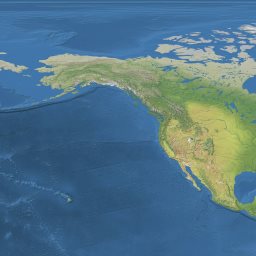
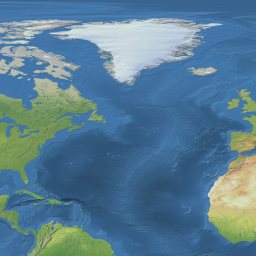
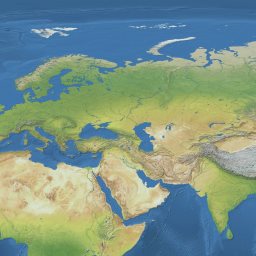
Every dot is a place Nicolaus Copernicus is documented in, on a dated record. The interactive globe carries the full detail.
Where Nicolaus Copernicus was documented, and when
19 February 1473exact date
Bolognaattested“Nicolaus Copernicus was born on 19 February 1473 in the city of Toruń (Thorn), in the province of Royal Prussia, in the Crown of the Kingdom of Poland, to German-speaking parents.”source: Wikipedia: Nicolaus Copernicus
1491year
University of Bolognaattested“According to a later but credible tradition (Jan Brożek), Copernicus was a pupil of Albert Brudzewski, who by then (from 1491) was a professor of Aristotelian philosophy but taught astronomy privately outside the university; Copernicus b…”source: Wikipedia: Nicolaus Copernicus
1495 to 1499period
Bolognaattested“He familiarized himself with Greek language and culture with the aid of Theodorus Gaza's grammar (1495) and Johannes Baptista Chrestonius's dictionary (1499), expanding his studies of antiquity, begun at Bologna, to the writings of Bessa…”source: Wikipedia: Nicolaus Copernicus
26 August 1495exact date
Krakówattested“Without taking a degree, probably in the fall of 1495, Copernicus left Kraków for the court of his uncle Watzenrode, who in 1489 had been elevated to Prince-Bishop of Warmia and soon (before November 1495) sought to place his nephew in t…”source: Wikipedia: Nicolaus Copernicus
26 August 1495exact date
Warmiaattested“Without taking a degree, probably in the fall of 1495, Copernicus left Kraków for the court of his uncle Watzenrode, who in 1489 had been elevated to Prince-Bishop of Warmia and soon (before November 1495) sought to place his nephew in t…”source: Wikipedia: Nicolaus Copernicus
1496 to 1503period
Bolognaattested“During his three-year stay at Bologna, which occurred between fall 1496 and spring 1501, Copernicus seems to have devoted himself less keenly to studying canon law (he received his doctorate in canon law only after seven years, following…”source: Wikipedia: Nicolaus Copernicus
1496 to 1503period
Italyattested“During his three-year stay at Bologna, which occurred between fall 1496 and spring 1501, Copernicus seems to have devoted himself less keenly to studying canon law (he received his doctorate in canon law only after seven years, following…”source: Wikipedia: Nicolaus Copernicus
1500year
Romeattested“Copernicus spent the jubilee year 1500 in Rome, where he arrived with his brother Andrew that spring, doubtless to perform an apprenticeship at the Papal Curia.”source: Wikipedia: Nicolaus Copernicus
1501year
Bolognaattested“On his return journey doubtless stopping briefly at Bologna, in mid-1501 Copernicus arrived back in Warmia.”source: Wikipedia: Nicolaus Copernicus
1501year
Warmiaattested“On his return journey doubtless stopping briefly at Bologna, in mid-1501 Copernicus arrived back in Warmia.”source: Wikipedia: Nicolaus Copernicus
31 May 1503exact date
Ferraraattested“As the time approached for Copernicus to return home, in spring 1503 he journeyed to Ferrara where, on 31 May 1503, having passed the obligatory examinations, he was granted the degree of Doctor of Canon Law (Nicolaus Copernich de Prusia…”source: Wikipedia: Nicolaus Copernicus
1510 to 1512period
Fromborkattested“In 1510 or 1512 Copernicus moved to Frombork, a town to the northwest at the Vistula Lagoon on the Baltic Sea coast.”source: Wikipedia: Nicolaus Copernicus
1510 to 1512period
Vistula Lagoonattested“In 1510 or 1512 Copernicus moved to Frombork, a town to the northwest at the Vistula Lagoon on the Baltic Sea coast.”source: Wikipedia: Nicolaus Copernicus
1512year
Krakówattested“Copernicus's first poetic work was a Greek epigram, composed probably during a visit to Kraków, for Johannes Dantiscus's epithalamium for Barbara Zapolya's 1512 wedding to King Zygmunt I the Old.”source: Wikipedia: Nicolaus Copernicus
Other places tied to Nicolaus Copernicus in the record
In each of these, a source puts Nicolaus Copernicus and the place in the same dated sentence without stating
that Nicolaus Copernicus was there. They are kept apart from the timeline above for exactly that reason:
a mention is not a presence, and Quo Fuit does not quietly promote one into the other.
1480year
Toruńmentioned“During his childhood, about 1480, the name of his father (and thus of the future astronomer) was recorded in Thorn as Niclas Koppernigk.”source: Wikipedia: Nicolaus Copernicus
6 January 1497exact date
Silesiamentioned“Meanwhile, leaving Warmia in mid-1496—possibly with the retinue of the chapter's chancellor, Jerzy Pranghe, who was going to Italy—in the fall, possibly in October, Copernicus arrived in Bologna and a few months later (after 6 January 14…”source: Wikipedia: Nicolaus Copernicus
6 January 1497exact date
Bolognamentioned“Meanwhile, leaving Warmia in mid-1496—possibly with the retinue of the chapter's chancellor, Jerzy Pranghe, who was going to Italy—in the fall, possibly in October, Copernicus arrived in Bologna and a few months later (after 6 January 14…”source: Wikipedia: Nicolaus Copernicus
6 January 1497exact date
Italymentioned“Meanwhile, leaving Warmia in mid-1496—possibly with the retinue of the chapter's chancellor, Jerzy Pranghe, who was going to Italy—in the fall, possibly in October, Copernicus arrived in Bologna and a few months later (after 6 January 14…”source: Wikipedia: Nicolaus Copernicus
20 October 1497exact date
Warmiamentioned“On 20 October 1497, Copernicus, by proxy, formally succeeded to the Warmia canonry which had been granted to him two years earlier.”source: Wikipedia: Nicolaus Copernicus
6 November 1500exact date
Bolognamentioned“Here, too, however, he continued his astronomical work begun at Bologna, observing, for example, a lunar eclipse on the night of 5–6 November 1500.”source: Wikipedia: Nicolaus Copernicus
1503year
Warmiamentioned“No doubt it was soon after (at latest, in fall 1503) that he left Italy for good to return to Warmia.”source: Wikipedia: Nicolaus Copernicus
1503year
Italymentioned“No doubt it was soon after (at latest, in fall 1503) that he left Italy for good to return to Warmia.”source: Wikipedia: Nicolaus Copernicus
10 January 1503exact date
Paduamentioned“To this, by a document dated 10 January 1503 at Padua, he would add a sinecure at the Collegiate Church of the Holy Cross and St.”source: Wikipedia: Nicolaus Copernicus
June 1503month
University of Paduamentioned“This time he studied at the University of Padua, famous as a seat of medical learning, and—except for a brief visit to Ferrara in May–June 1503 to pass examinations for, and receive, his doctorate in canon law—he remained at Padua from f…”source: Wikipedia: Nicolaus Copernicus
June 1503month
University of Bolognamentioned“This time he studied at the University of Padua, famous as a seat of medical learning, and—except for a brief visit to Ferrara in May–June 1503 to pass examinations for, and receive, his doctorate in canon law—he remained at Padua from f…”source: Wikipedia: Nicolaus Copernicus
1504year
Malborkmentioned“From the beginning of 1504, Copernicus accompanied Watzenrode to sessions of the Royal Prussian diet held at Malbork and Elbląg and, write Dobrzycki and Hajdukiewicz, "participated ...”source: Wikipedia: Nicolaus Copernicus
1504 to 1512period
Toruńmentioned“in all the more important events in the complex diplomatic game that ambitious politician and statesman played in defense of the particular interests of Prussia and Warmia, between hostility to the [Teutonic] Order and loyalty to the Pol…”source: Wikipedia: Nicolaus Copernicus
1504 to 1512period
Krakówmentioned“in all the more important events in the complex diplomatic game that ambitious politician and statesman played in defense of the particular interests of Prussia and Warmia, between hostility to the [Teutonic] Order and loyalty to the Pol…”source: Wikipedia: Nicolaus Copernicus
Two people documented in the same place in the same year is a correlation, not a meeting.
Quo Fuit will never say they met without a source that says so.
How to read this page
Every line above is a dated fact taken from a source, with the sentence it came from and a link
back to it. Nothing is inferred, and a gap in the record is not evidence that someone was elsewhere.
A tag says how the fact is carried by its source: documented a structured,
explicitly dated record, attested a sentence that states the person was there,
mentioned a sentence that ties the person to the place without stating presence.
Sentences quoted from Wikipedia are available under CC BY-SA 4.0. Public domain books come from
Project Gutenberg. Quo Fuit claims no rights over these sources.
See Nicolaus Copernicus on a 3D globe, filter the record by date, and cross this life with another to find
where the two overlap.