Quo Fuit places 5 dated presences for Namık Kemal across 4 places, from 1840 to 1888.
Each one keeps the sentence it was taken from and a link to its source.
Namık Kemal (21 December 1840 – 2 December 1888) was an Ottoman writer, poet, democrat, intellectual, reformer, journalist, playwright, and political activist who was influential in the formation of the Young Ottomans and their struggle for governmental reform in the Ottoman Empire during the late TWikipedia, full article · CC BY-SA
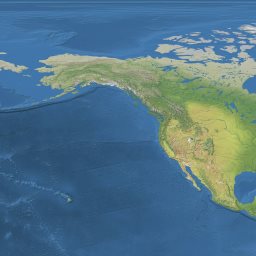
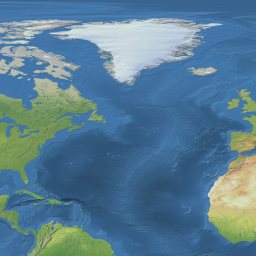
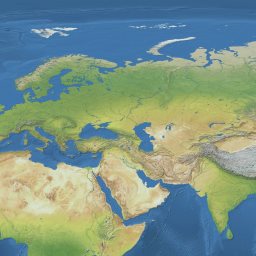
Every dot is a place Namık Kemal is documented in, on a dated record. The interactive globe carries the full detail.
Where Namık Kemal was documented, and when
21 December 1840exact date
Tekirdağattested“An Ottoman subject, Namık Kemal was born in Tekirdağ (present-day Turkey, then part of the Ottoman Empire) on 21 December 1840, to mother Fatma Zehra Hanım and father Mustafa Asım Bey, the chief astrologer in the Sultan's Palace.”source: Wikipedia: Namık Kemal
1867year
Parisattested“As a result of his criticism of the government, Namık Kemal was exiled from the Ottoman Empire in 1867 and fled to Paris where many other exiled Young Ottomans had found refuge.”source: Wikipedia: Namık Kemal
1869 to 1870period
Istanbulattested“In 1869 or 1870, Kemal was allowed to return to Constantinople and proceeded to write for a number of Young Ottoman-run newspapers, and eventually published one of his own, İbret ("Admonition"), in which he addressed more intellectual, s…”source: Wikipedia: Namık Kemal
1888year
Chiosattested“Thus, for the third time, Kemal was removed from Constantinople by being forced into an administrative position in Chios, where he would die in 1888.”source: Wikipedia: Namık Kemal
1888year
Istanbulattested“Thus, for the third time, Kemal was removed from Constantinople by being forced into an administrative position in Chios, where he would die in 1888.”source: Wikipedia: Namık Kemal
Open Quo Fuit to see these 5 presences on the
globe, filter them by date, and follow the journey year by year.
In each of these, a source puts Namık Kemal and the place in the same dated sentence without stating
that Namık Kemal was there. They are kept apart from the timeline above for exactly that reason:
a mention is not a presence, and Quo Fuit does not quietly promote one into the other.
1868year
Parismentioned“In 1868, after being forced to seek refuge in Paris, Kemal began to handle the publication of the newspaper Hürriyet ("Liberty"), which also espoused the purpose of the Young Ottomans.”source: Wikipedia: Namık Kemal
1873 to 1876period
Cyprusmentioned“During this second exile, Kemal took refuge in Cyprus, in a building known as the Namık Kemal Dungeon in Famagusta, where he remained for three years between 1873 and 1876.”source: Wikipedia: Namık Kemal
1873 to 1876period
Famagustamentioned“During this second exile, Kemal took refuge in Cyprus, in a building known as the Namık Kemal Dungeon in Famagusta, where he remained for three years between 1873 and 1876.”source: Wikipedia: Namık Kemal
Two people documented in the same place in the same year is a correlation, not a meeting.
Quo Fuit will never say they met without a source that says so.
How to read this page
Every line above is a dated fact taken from a source, with the sentence it came from and a link
back to it. Nothing is inferred, and a gap in the record is not evidence that someone was elsewhere.
A tag says how the fact is carried by its source: documented a structured,
explicitly dated record, attested a sentence that states the person was there,
mentioned a sentence that ties the person to the place without stating presence.
Sentences quoted from Wikipedia are available under CC BY-SA 4.0. Public domain books come from
Project Gutenberg. Quo Fuit claims no rights over these sources.
See Namık Kemal on a 3D globe, filter the record by date, and cross this life with another to find
where the two overlap.