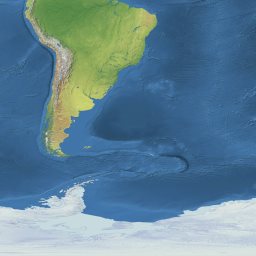
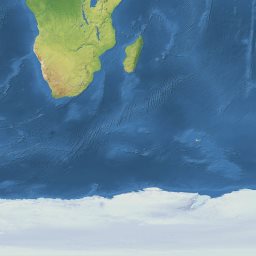
Quo Fuit places 7 dated presences for Mobutu Sese Seko across 6 places, from 1930 to 1997.
Each one keeps the sentence it was taken from and a link to its source.
Mobutu Sese Seko Nkuku Ngbendu wa za Banga (born Joseph-Désiré Mobutu; 14 October 1930 – 7 September 1997), often shortened to Mobutu Sese Seko or Mobutu and also known by his initials MSS, was a Congolese politician and military officer who was the first and only president of Zaire from 1971 to 1997.Wikipedia, full article · CC BY-SA
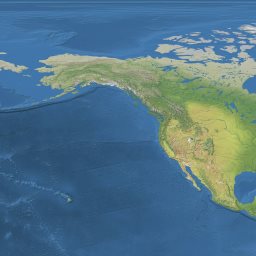
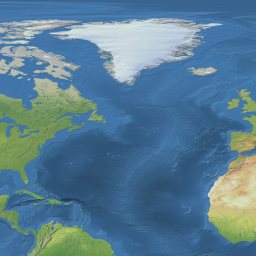
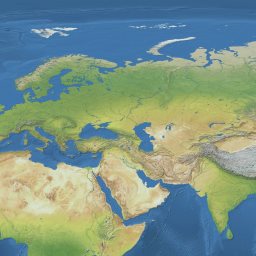
Every dot is a place Mobutu Sese Seko is documented in, on a dated record. The interactive globe carries the full detail.
Where Mobutu Sese Seko was documented, and when
1930year
Lisalaattested“Mobutu, a member of the Ngbandi ethnic group, was born in 1930 in Lisala, Belgian Congo.”source: Wikipedia: Mobutu Sese Seko
1971year
Zaireattested“In 1971, Finance Minister Valéry Giscard d'Estaing paid a visit to Zaire; later, after becoming France's president, he would develop a close personal relationship with President Mobutu, and under his leadership, France became one of the…”source: Wikipedia: Mobutu Sese Seko
1973year
South Africaattested“Upon returning home, both his politics and rhetoric became markedly more radical; it was around this time that Mobutu began criticizing Belgium and the United States (the latter for not doing enough, in Mobutu's opinion, to combat white…”source: Wikipedia: Mobutu Sese Seko
1974year
Soviet Unionattested“In 1974, Mobutu made a surprise visit to both China and North Korea, during the time he was originally scheduled to visit the Soviet Union.”source: Wikipedia: Mobutu Sese Seko
22 October 1977exact date
Genolierattested“She died of heart failure on 22 October 1977 in Genolier, Switzerland, at the age of 36.”source: Wikipedia: Mobutu Sese Seko
November 1996month
Zaireattested“When Mobutu's government issued an order in November 1996 forcing Tutsis to leave Zaire on penalty of death, the ethnic Tutsis in Zaire, known as Banyamulenge, were the focal point of a rebellion.”source: Wikipedia: Mobutu Sese Seko
Other places tied to Mobutu Sese Seko in the record
In each of these, a source puts Mobutu Sese Seko and the place in the same dated sentence without stating
that Mobutu Sese Seko was there. They are kept apart from the timeline above for exactly that reason:
a mention is not a presence, and Quo Fuit does not quietly promote one into the other.
1949year
Kinshasamentioned“In 1949 Mobutu stowed away aboard a boat, travelling downriver to Léopoldville, where he met a girl.”source: Wikipedia: Mobutu Sese Seko
1958year
Belgiummentioned“Two years later, he went to Belgium to cover the 1958 World Exposition and stayed to receive training in journalism.”source: Wikipedia: Mobutu Sese Seko
1960year
Brusselsmentioned“During the 1960 talks in Brussels on Congolese independence, the US embassy held a reception for the Congolese delegation.”source: Wikipedia: Mobutu Sese Seko
5 July 1960exact date
Kinshasamentioned“On 5 July 1960, soldiers of the Force Publique stationed at Camp Léopold II in Léopoldville, dissatisfied with their all-white leadership and working conditions, mutinied.”source: Wikipedia: Mobutu Sese Seko
1964 to 1968period
Brazzavillementioned“When a chief takes a decision, he decides – period." In 1968, Pierre Mulele, Lumumba's Minister of Education and a rebel leader during the 1964 Simba rebellion, was lured out of exile in Brazzaville on the belief that he would receive am…”source: Wikipedia: Mobutu Sese Seko
1970year
Kinshasamentioned“In 1970 King Baudouin of Belgium made a highly successful state visit to Kinshasa.”source: Wikipedia: Mobutu Sese Seko
1973 to 1974period
Zairiansmentioned“In 1973–1974, Mobutu launched his "Zairianization" campaign, nationalising foreign owned businesses that were handed over to Zairians.”source: Wikipedia: Mobutu Sese Seko
1974year
Chinamentioned“Seeking an alternative source of support as the auditors for the IMF discovered major corruption within the Zairian finances, Mobutu visited China in 1974 and returned wearing a Mao jacket and the new title of Citoyen Mobutu ("Citizen Mo…”source: Wikipedia: Mobutu Sese Seko
1974year
Zairianmentioned“Seeking an alternative source of support as the auditors for the IMF discovered major corruption within the Zairian finances, Mobutu visited China in 1974 and returned wearing a Mao jacket and the new title of Citoyen Mobutu ("Citizen Mo…”source: Wikipedia: Mobutu Sese Seko
1974year
Belgiummentioned“However, Mobutu tore up the treaty in 1974 in protest at Belgium's refusal to ban an anti-Mobutu book written by left-wing lawyer Jules Chomé.”source: Wikipedia: Mobutu Sese Seko
1974 to 1996period
Kinshasamentioned“Mobutu also featured in the 1996 American documentary When We Were Kings, which centred on the famed Rumble in the Jungle boxing bout between George Foreman and Muhammad Ali for the 1974 heavyweight championship of the world which took p…”source: Wikipedia: Mobutu Sese Seko
20 May 1976exact date
Kinshasamentioned“In a speech that he delivered on 20 May 1976 in a football stadium in Kinshasa that was filled with some 70,000 people, Mobutu openly accepted petty corruption, stating: "If you want to steal, steal a little in a nice way, but if you ste…”source: Wikipedia: Mobutu Sese Seko
1978year
Zairementioned“In a 1978 agreement with OTRAG, Mobutu gave the company a 25-year rented plot of land in Zaire.”source: Wikipedia: Mobutu Sese Seko
1980year
Zairementioned“In 1980, the US House of Representatives voted to terminate military aid to Zaire, but the US Senate reinstated the funds, in response to pressure from Carter and American business interests in Zaire.”source: Wikipedia: Mobutu Sese Seko
Two people documented in the same place in the same year is a correlation, not a meeting.
Quo Fuit will never say they met without a source that says so.
How to read this page
Every line above is a dated fact taken from a source, with the sentence it came from and a link
back to it. Nothing is inferred, and a gap in the record is not evidence that someone was elsewhere.
A tag says how the fact is carried by its source: documented a structured,
explicitly dated record, attested a sentence that states the person was there,
mentioned a sentence that ties the person to the place without stating presence.
Sentences quoted from Wikipedia are available under CC BY-SA 4.0. Public domain books come from
Project Gutenberg. Quo Fuit claims no rights over these sources.
See Mobutu Sese Seko on a 3D globe, filter the record by date, and cross this life with another to find
where the two overlap.