Quo Fuit places 4 dated presences for Mieczysław Weinberg across 3 places, from 1919 to 1996.
Each one keeps the sentence it was taken from and a link to its source.
Mieczysław Weinberg (December 8, 1919 – February 26, 1996) was a Polish, Soviet, and Russian composer and pianist.Wikipedia, full article · CC BY-SA
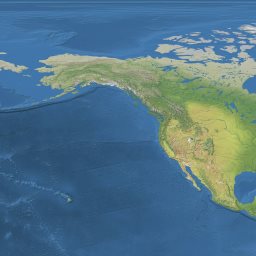
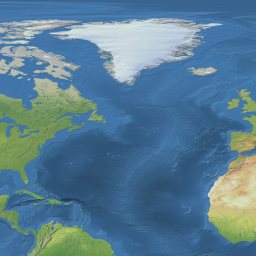
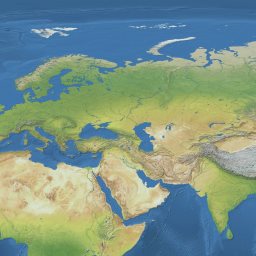
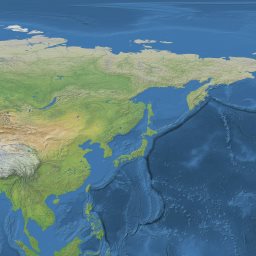
Every dot is a place Mieczysław Weinberg is documented in, on a dated record. The interactive globe carries the full detail.
Where Mieczysław Weinberg was documented, and when
Second Polish Republicattested“In May 1938, Weinberg was introduced by Turczyński to his friend, the pianist Josef Hofmann, who held the post of honorary professor at the conservatory and who was then touring Poland.”source: Wikipedia: Mieczysław Weinberg
1943year
Moscowattested“Following Weinberg's move to Moscow in 1943, he no longer dealt with privation and successfully integrated into the city's musical culture.”source: Wikipedia: Mieczysław Weinberg
Other places tied to Mieczysław Weinberg in the record
In each of these, a source puts Mieczysław Weinberg and the place in the same dated sentence without stating
that Mieczysław Weinberg was there. They are kept apart from the timeline above for exactly that reason:
a mention is not a presence, and Quo Fuit does not quietly promote one into the other.
1917 to 1970period
Sovietmentioned“Belated recognition outside of Russia finally came at the very end of Weinberg's life, facilitated by Tommy Persson, a Swedish judge who learned about the composer from reading Boris Schwartz's Music and Musical Life in Soviet Russia: 19…”source: Wikipedia: Mieczysław Weinberg
October 1931month
Warsawmentioned“His teacher noted his precocity and enrolled him at the Warsaw Conservatory in October 1931, where she felt his talent would be more suitably developed.”source: Wikipedia: Mieczysław Weinberg
1939year
Soviet Unionmentioned“The name was the result of legal expediency and his personal indifference when he sought to cross the border into the Soviet Union in 1939: The order came to let the refugees in.”source: Wikipedia: Mieczysław Weinberg
June 1940month
Moscowmentioned“This led to Weinberg being sent to Moscow as one of the participating delegates for the Festival of Byelorussian Art in June 1940.”source: Wikipedia: Mieczysław Weinberg
July 1941month
Taskentmentioned“In spite of these challenges, when Weinberg and Klumov disembarked in Taskent in July 1941, they were determined to secure employment and ration cards for themselves.”source: Wikipedia: Mieczysław Weinberg
9 May 1945exact date
Soviet Unionmentioned“The announcement that proclaimed the Allied victory in Europe was broadcast over all radio stations in the Soviet Union on the night of May 9, 1945.”source: Wikipedia: Mieczysław Weinberg
February 1950month
GOSETmentioned“Benjamin Zuskin, Mikhoels' successor at GOSET, was arrested in February 1950.”source: Wikipedia: Mieczysław Weinberg
1963year
Soviet Unionmentioned“The novel was translated into Russian and published in the Soviet Union in 1963.”source: Wikipedia: Mieczysław Weinberg
1964year
Soviet Unionmentioned“A 1964 issue of the bi-monthly music magazine ' mentioned that he was a highly regarded composer in the Soviet Union whose name was often mentioned in connection with Shostakovich.”source: Wikipedia: Mieczysław Weinberg
1966year
Second Polish Republicmentioned“It was not until 1966, during his only subsequent trip to Poland, that he learned from surviving former neighbors that his family had been murdered at the Trawniki concentration camp.”source: Wikipedia: Mieczysław Weinberg
1966year
Trawniki concentration campmentioned“It was not until 1966, during his only subsequent trip to Poland, that he learned from surviving former neighbors that his family had been murdered at the Trawniki concentration camp.”source: Wikipedia: Mieczysław Weinberg
1966year
Trawnikimentioned“It was not until 1966, during his only subsequent trip to Poland, that he learned from surviving former neighbors that his family had been murdered at the Trawniki concentration camp.”source: Wikipedia: Mieczysław Weinberg
1970 to 1972period
Israelmentioned“Weinberg divorced his wife Natalya in 1970 after dithering on the matter for a long period; she and their daughter emigrated to Israel in 1972.”source: Wikipedia: Mieczysław Weinberg
8 December 1994exact date
Embassy of Poland, Moscowmentioned“On December 8, 1994, Weinberg received at his apartment a delegation from the Polish Embassy in Russia, who awarded him the Meritorious Activist of Culture.”source: Wikipedia: Mieczysław Weinberg
Two people documented in the same place in the same year is a correlation, not a meeting.
Quo Fuit will never say they met without a source that says so.
How to read this page
Every line above is a dated fact taken from a source, with the sentence it came from and a link
back to it. Nothing is inferred, and a gap in the record is not evidence that someone was elsewhere.
A tag says how the fact is carried by its source: documented a structured,
explicitly dated record, attested a sentence that states the person was there,
mentioned a sentence that ties the person to the place without stating presence.
Sentences quoted from Wikipedia are available under CC BY-SA 4.0. Public domain books come from
Project Gutenberg. Quo Fuit claims no rights over these sources.
See Mieczysław Weinberg on a 3D globe, filter the record by date, and cross this life with another to find
where the two overlap.