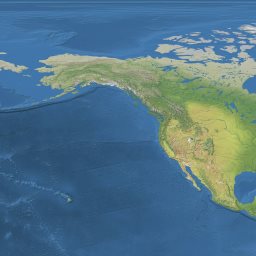
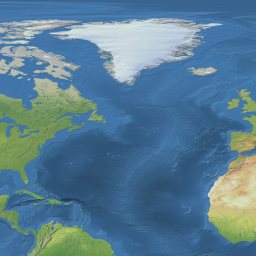
Quo Fuit places 7 dated presences for Michael R. Douglas across 6 places, from 1961 to 2012.
Each one keeps the sentence it was taken from and a link to its source.
Michael R. Douglas (born November 19, 1961) is an American theoretical physicist, best known for his work in string theory and mathematical physics.Wikipedia, full article · CC BY-SA
Every dot is a place Michael R. Douglas is documented in, on a dated record. The interactive globe carries the full detail.
University of Chicagoattested“After completing his PhD, Douglas was a postdoc at the University of Chicago for one year, then moved to Rutgers University in 1989 with Dan Friedan and Steve Shenker to help start the New High Energy Theory Center (NHETC).”source: Wikipedia: Michael R. Douglas
1989year
Rutgers Universityattested“After completing his PhD, Douglas was a postdoc at the University of Chicago for one year, then moved to Rutgers University in 1989 with Dan Friedan and Steve Shenker to help start the New High Energy Theory Center (NHETC).”source: Wikipedia: Michael R. Douglas
1995 to 1998period
Institut des Hautes Études Scientifiquesattested“He became an associate professor at Rutgers in 1995, and left for a year in 1997–1998 to take up a permanent position at the Institut des Hautes Études Scientifiques.”source: Wikipedia: Michael R. Douglas
1995 to 1998period
Rutgersattested“He became an associate professor at Rutgers in 1995, and left for a year in 1997–1998 to take up a permanent position at the Institut des Hautes Études Scientifiques.”source: Wikipedia: Michael R. Douglas
2008year
Rutgersattested“In 2008, Douglas moved from Rutgers to become the first permanent member of the Simons Center for Geometry and Physics, a research center at Stony Brook University.”source: Wikipedia: Michael R. Douglas
Institut des Hautes Études Scientifiques1 presence · 1995
Providence1 presence · 2012
Rutgers University1 presence · 1989
Other places tied to Michael R. Douglas in the record
In each of these, a source puts Michael R. Douglas and the place in the same dated sentence without stating
that Michael R. Douglas was there. They are kept apart from the timeline above for exactly that reason:
a mention is not a presence, and Quo Fuit does not quietly promote one into the other.
1988year
California Institute of Technologymentioned“He then went to Caltech and received a PhD in physics in 1988 under John Schwarz, one of the developers and leading researchers in superstring theory.”source: Wikipedia: Michael R. Douglas
2000year
Rutgersmentioned“He then returned to Rutgers and in 2000 became the director of the NHETC.”source: Wikipedia: Michael R. Douglas
2000year
California Institute of Technologymentioned“Douglas received the 2000 Sackler Prize in theoretical physics and has been a Gordon Moore Visiting Scholar at Caltech and a Clay Mathematics Institute Mathematical Emissary.”source: Wikipedia: Michael R. Douglas
2020year
Harvard Universitymentioned“He returned to academia in 2020 and is presently a long-term visitor at the Center of Mathematical Sciences and Applications at Harvard University, doing research on machine learning and its applications in scientific research.”source: Wikipedia: Michael R. Douglas
Two people documented in the same place in the same year is a correlation, not a meeting.
Quo Fuit will never say they met without a source that says so.
How to read this page
Every line above is a dated fact taken from a source, with the sentence it came from and a link
back to it. Nothing is inferred, and a gap in the record is not evidence that someone was elsewhere.
A tag says how the fact is carried by its source: documented a structured,
explicitly dated record, attested a sentence that states the person was there,
mentioned a sentence that ties the person to the place without stating presence.
Sentences quoted from Wikipedia are available under CC BY-SA 4.0. Public domain books come from
Project Gutenberg. Quo Fuit claims no rights over these sources.
See Michael R. Douglas on a 3D globe, filter the record by date, and cross this life with another to find
where the two overlap.