Quo Fuit places 7 dated presences for Maxim Gorky across 6 places, from 1892 to 1932.
Each one keeps the sentence it was taken from and a link to its source.
Alexei Maximovich Peshkov (– 18 June 1936), popularly known as Maxim Gorky, was a Russian and Soviet writer, journalist, and proponent of socialism.Wikipedia, full article · CC BY-SA
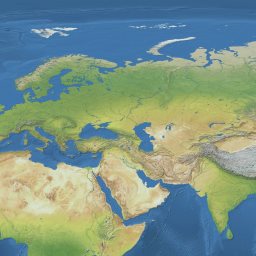
Every dot is a place Maxim Gorky is documented in, on a dated record. The interactive globe carries the full detail.
Where Maxim Gorky was documented, and when
1892year
Tiflisattested“He started using the pseudonym "Gorky" (from горький; literally "bitter") in 1892, when his first short story, "Makar Chudra", was published by the newspaper Kavkaz (The Caucasus) in Tiflis where he spent several weeks doing menial jobs,…”source: Wikipedia: Maxim Gorky
1906 to 1913period
Southern Italyattested“From 1906 to 1913, Gorky lived on the island of Capri in southern Italy, partly for health reasons and partly to escape the increasingly repressive atmosphere in Russia.”source: Wikipedia: Maxim Gorky
1906 to 1913period
Russiaattested“From 1906 to 1913, Gorky lived on the island of Capri in southern Italy, partly for health reasons and partly to escape the increasingly repressive atmosphere in Russia.”source: Wikipedia: Maxim Gorky
1922 to 1932period
Capriattested“He was denied permission by Italy's fascist government to return to Capri, but was permitted to settle in Sorrento, where he lived from 1922 to 1932, with an extended household that included Moura Budberg, his ex-wife Andreyeva, her love…”source: Wikipedia: Maxim Gorky
1922 to 1932period
Sorrentoattested“He was denied permission by Italy's fascist government to return to Capri, but was permitted to settle in Sorrento, where he lived from 1922 to 1932, with an extended household that included Moura Budberg, his ex-wife Andreyeva, her love…”source: Wikipedia: Maxim Gorky
May 1928month
Sorrentoattested“He paid his first visit in May 1928 – at the very time when the regime was staging its first show trial since 1922, the so-called Shakhty Trial of 53 engineers employed in the coal industry, one of whom, Pyotr Osadchy, had visited Gorky…”source: Wikipedia: Maxim Gorky
1932year
USSRattested“He was also appointed President of the Union of Soviet Writers, founded in 1932, to coincide with his return to the USSR.”source: Wikipedia: Maxim Gorky
Open Quo Fuit to see these 7 presences on the
globe, filter them by date, and follow the journey year by year.
In each of these, a source puts Maxim Gorky and the place in the same dated sentence without stating
that Maxim Gorky was there. They are kept apart from the timeline above for exactly that reason:
a mention is not a presence, and Quo Fuit does not quietly promote one into the other.
1862 to 1905period
Peter and Paul Fortressmentioned“While briefly imprisoned in Peter and Paul Fortress during the abortive 1905 Russian Revolution, Gorky wrote the play Children of the Sun, nominally set during an 1862 cholera epidemic, but universally understood to relate to present-day…”source: Wikipedia: Maxim Gorky
December 1887month
Russian Empirementioned“After an attempt at suicide in December 1887 he travelled on foot across the Russian Empire for five years, changing jobs and accumulating impressions used later in his writing.”source: Wikipedia: Maxim Gorky
1904year
Nizhny Novgorodmentioned“In 1904, having severed his relationship with the Moscow Art Theatre in the wake of conflict with Vladimir Nemirovich-Danchenko, Gorky returned to Nizhny Novgorod to establish a theatre of his own.”source: Wikipedia: Maxim Gorky
1906year
United Statesmentioned“In 1906, the Bolsheviks sent him on a fund-raising trip to the United States with Ivan Narodny.”source: Wikipedia: Maxim Gorky
1906year
New York Citymentioned“In 1906, Maxim Gorky visited New York City at the invitation of Mark Twain and other writers.”source: Wikipedia: Maxim Gorky
1917year
Saint Petersburgmentioned“During World War I, his apartment in Petrograd was turned into a Bolshevik staff room, and his politics remained close to the Bolsheviks throughout the revolutionary period of 1917.”source: Wikipedia: Maxim Gorky
1918year
Russiamentioned“A further strain on Gorky's relations with the Bolsheviks occurred when his newspaper Novaya Zhizn (New Life) fell prey to Bolshevik censorship during the ensuing civil war, around which time Gorky published a collection of essays critic…”source: Wikipedia: Maxim Gorky
September 1921month
Russiamentioned“Gorky left Russia in September 1921, for Berlin.”source: Wikipedia: Maxim Gorky
20 June 1929exact date
Solovki prison campmentioned“Most tellingly, Solzhenitsyn and Dmitry Likhachov document a visit, on 20 June 1929 to Solovki, the "original" forced labour camp (strictly the Solovetsky Islands), and the model upon which thousands of others were constructed.”source: Wikipedia: Maxim Gorky
1930year
Sorrentomentioned“Pogrebinsky was Gorky's guest in Sorrento for four weeks in 1930.”source: Wikipedia: Maxim Gorky
December 1934month
Moscowmentioned“With the increase of Stalinist repression and especially after the assassination of Sergei Kirov in December 1934, Gorky was placed under unannounced house arrest in his house near Moscow in Gorki10 (the name of the place is a completely…”source: Wikipedia: Maxim Gorky
June 1936month
USSRmentioned“Before his death from a lingering illness in June 1936, he was visited at home by Stalin, Yagoda, and other leading communists, and by Moura Budberg, who had chosen not to return to the USSR with him but was permitted to stay for his fun…”source: Wikipedia: Maxim Gorky
Two people documented in the same place in the same year is a correlation, not a meeting.
Quo Fuit will never say they met without a source that says so.
How to read this page
Every line above is a dated fact taken from a source, with the sentence it came from and a link
back to it. Nothing is inferred, and a gap in the record is not evidence that someone was elsewhere.
A tag says how the fact is carried by its source: documented a structured,
explicitly dated record, attested a sentence that states the person was there,
mentioned a sentence that ties the person to the place without stating presence.
Sentences quoted from Wikipedia are available under CC BY-SA 4.0. Public domain books come from
Project Gutenberg. Quo Fuit claims no rights over these sources.
See Maxim Gorky on a 3D globe, filter the record by date, and cross this life with another to find
where the two overlap.