Quo Fuit places 4 dated presences for Max Ernst across 4 places, from 1919 to 1976.
Each one keeps the sentence it was taken from and a link to its source.
Max Ernst (2 April 1891 – 1 April 1976) was a German-born painter, sculptor, printmaker, graphic artist, and poet.Wikipedia, full article · CC BY-SA
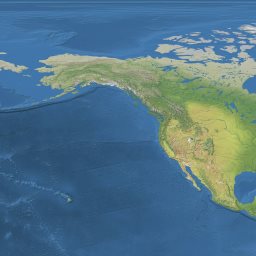
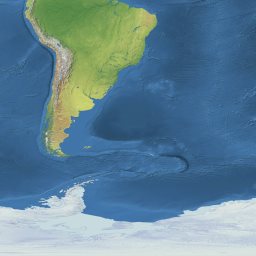
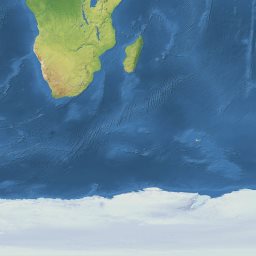
Every dot is a place Max Ernst is documented in, on a dated record. The interactive globe carries the full detail.
Where Max Ernst was documented, and when
1919year
Munichattested“In 1919, he visited Paul Klee in Munich and studied paintings by Giorgio de Chirico.”source: Wikipedia: Max Ernst
1923year
Eaubonneattested“In 1923, the Éluards moved to a new home in Eaubonne north of Paris, where Ernst painted numerous murals.”source: Wikipedia: Max Ernst
1 April 1976exact date
Père Lachaise Cemeteryattested“He died at the age of 84 on 1 April 1976 in Paris and was interred at Père Lachaise Cemetery.”source: Wikipedia: Max Ernst
1 April 1976exact date
Parisattested“He died at the age of 84 on 1 April 1976 in Paris and was interred at Père Lachaise Cemetery.”source: Wikipedia: Max Ernst
Open Quo Fuit to see these 4 presences on the
globe, filter them by date, and follow the journey year by year.
In each of these, a source puts Max Ernst and the place in the same dated sentence without stating
that Max Ernst was there. They are kept apart from the timeline above for exactly that reason:
a mention is not a presence, and Quo Fuit does not quietly promote one into the other.
1909year
University of Bonnmentioned“In 1909, Max Ernst enrolled in the University of Bonn, to read philosophy, art history, literature, psychology, and psychiatry.”source: Wikipedia: Max Ernst
1913year
Colognementioned“His work was exhibited that year together with that of the Das Junge Rheinland group, at Galerie Feldman in Cologne, and then in several group exhibitions in 1913.”source: Wikipedia: Max Ernst
1914year
Colognementioned“In 1914, Ernst met Hans Arp in Cologne.”source: Wikipedia: Max Ernst
1918year
Colognementioned“In 1918, Ernst was demobilised and returned to Cologne.”source: Wikipedia: Max Ernst
1922year
Francementioned“In 1922, unable to secure the necessary papers, Ernst entered France illegally and settled into a ménage à trois with Éluard and his wife Gala in the Paris suburb of Saint-Brice, leaving behind his wife and son.”source: Wikipedia: Max Ernst
1922year
Parismentioned“In 1922, unable to secure the necessary papers, Ernst entered France illegally and settled into a ménage à trois with Éluard and his wife Gala in the Paris suburb of Saint-Brice, leaving behind his wife and son.”source: Wikipedia: Max Ernst
1924year
Parismentioned“He returned to Paris in late 1924 and soon signed a contract with Jacques Viot which allowed him to paint full-time.”source: Wikipedia: Max Ernst
September 1939month
Camp des Millesmentioned“In September 1939, the outbreak of World War II caused Ernst, being German, to be interned as an "undesirable foreigner" in Camp des Milles, near Aix-en-Provence, along with fellow surrealist, Hans Bellmer, who had recently emigrated to…”source: Wikipedia: Max Ernst
September 1939month
Aix-en-Provencementioned“In September 1939, the outbreak of World War II caused Ernst, being German, to be interned as an "undesirable foreigner" in Camp des Milles, near Aix-en-Provence, along with fellow surrealist, Hans Bellmer, who had recently emigrated to…”source: Wikipedia: Max Ernst
September 1939month
Parismentioned“In September 1939, the outbreak of World War II caused Ernst, being German, to be interned as an "undesirable foreigner" in Camp des Milles, near Aix-en-Provence, along with fellow surrealist, Hans Bellmer, who had recently emigrated to…”source: Wikipedia: Max Ernst
1941year
United Statesmentioned“Ernst and Guggenheim arrived in the United States in 1941 and were married at the end of the year.”source: Wikipedia: Max Ernst
1946 to 1953period
Sedona, Arizonamentioned“The couple made their home in Sedona, Arizona from 1946 to 1953, where the high desert landscapes inspired them and recalled Ernst's earlier imagery.”source: Wikipedia: Max Ernst
1954year
Venice Biennalementioned“In 1954 he was awarded the Grand Prize for painting at the Venice Biennale.”source: Wikipedia: Max Ernst
Two people documented in the same place in the same year is a correlation, not a meeting.
Quo Fuit will never say they met without a source that says so.
How to read this page
Every line above is a dated fact taken from a source, with the sentence it came from and a link
back to it. Nothing is inferred, and a gap in the record is not evidence that someone was elsewhere.
A tag says how the fact is carried by its source: documented a structured,
explicitly dated record, attested a sentence that states the person was there,
mentioned a sentence that ties the person to the place without stating presence.
Sentences quoted from Wikipedia are available under CC BY-SA 4.0. Public domain books come from
Project Gutenberg. Quo Fuit claims no rights over these sources.
See Max Ernst on a 3D globe, filter the record by date, and cross this life with another to find
where the two overlap.