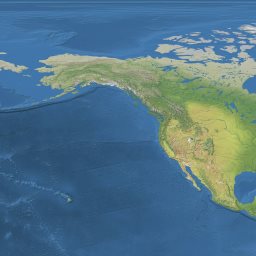
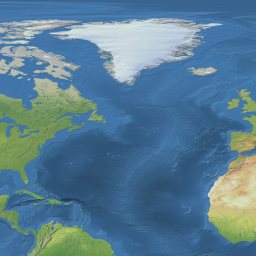
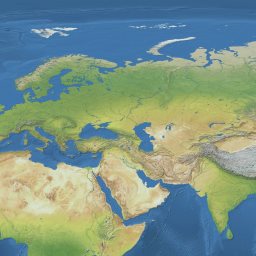
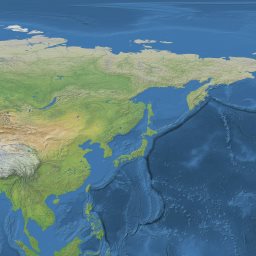
Quo Fuit places 7 dated presences for Maria Reiche across 6 places, from 1903 to 1998.
Each one keeps the sentence it was taken from and a link to its source.
Maria Reiche Grosse-Neumann (15 May 1903 – 8 June 1998) was a German-born Peruvian mathematician, archaeologist, and technical translator.Wikipedia, full article · CC BY-SA
Every dot is a place Maria Reiche is documented in, on a dated record. The interactive globe carries the full detail.
Where Maria Reiche was documented, and when
15 May 1903exact date
Dresdenattested“Maria Reiche was born in Dresden on 15 May 1903 to Felix Reiche Grosse and Ana Elizabeth Neumann.”source: Wikipedia: Maria Reiche
1932year
Cuscoattested“In 1932 as a young woman, she went to Peru to work as a governess and tutor for the children of the German consul in Cusco.”source: Wikipedia: Maria Reiche
1932year
Peruattested“In 1932 as a young woman, she went to Peru to work as a governess and tutor for the children of the German consul in Cusco.”source: Wikipedia: Maria Reiche
1948year
Peruattested“After Kosok left in 1948, after his second study period in Peru, Reiche continued the work and mapped the area.”source: Wikipedia: Maria Reiche
8 June 1998exact date
Santiago de Surcoattested“Maria Reiche died of ovarian cancer on 8 June 1998, at Fuerza Aérea del Perú (Peruvian Air Force) Hospital, at Las Palmas Air Base in Santiago de Surco, Lima, Peru.”source: Wikipedia: Maria Reiche
8 June 1998exact date
Las Palmas Air Baseattested“Maria Reiche died of ovarian cancer on 8 June 1998, at Fuerza Aérea del Perú (Peruvian Air Force) Hospital, at Las Palmas Air Base in Santiago de Surco, Lima, Peru.”source: Wikipedia: Maria Reiche
8 June 1998exact date
Santiagoattested“Maria Reiche died of ovarian cancer on 8 June 1998, at Fuerza Aérea del Perú (Peruvian Air Force) Hospital, at Las Palmas Air Base in Santiago de Surco, Lima, Peru.”source: Wikipedia: Maria Reiche
Open Quo Fuit to see these 7 presences on the
globe, filter them by date, and follow the journey year by year.
In each of these, a source puts Maria Reiche and the place in the same dated sentence without stating
that Maria Reiche was there. They are kept apart from the timeline above for exactly that reason:
a mention is not a presence, and Quo Fuit does not quietly promote one into the other.
1934year
Cuscomentioned“In 1934, while still in Cusco, she accidentally stabbed herself with a cactus and lost a finger to gangrene.”source: Wikipedia: Maria Reiche
1939year
Limamentioned“In 1939, she became a teacher in Lima and also worked on scientific translations.”source: Wikipedia: Maria Reiche
1940year
Long Island Universitymentioned“In 1940, Reiche became an assistant to Paul Kosok, an American historian from Long Island University in Brooklyn, New York, who was studying ancient irrigation systems in Peru.”source: Wikipedia: Maria Reiche
1940year
Brooklyn, New Yorkmentioned“In 1940, Reiche became an assistant to Paul Kosok, an American historian from Long Island University in Brooklyn, New York, who was studying ancient irrigation systems in Peru.”source: Wikipedia: Maria Reiche
1940year
Perumentioned“In 1940, Reiche became an assistant to Paul Kosok, an American historian from Long Island University in Brooklyn, New York, who was studying ancient irrigation systems in Peru.”source: Wikipedia: Maria Reiche
How to read this page
Every line above is a dated fact taken from a source, with the sentence it came from and a link
back to it. Nothing is inferred, and a gap in the record is not evidence that someone was elsewhere.
A tag says how the fact is carried by its source: documented a structured,
explicitly dated record, attested a sentence that states the person was there,
mentioned a sentence that ties the person to the place without stating presence.
Sentences quoted from Wikipedia are available under CC BY-SA 4.0. Public domain books come from
Project Gutenberg. Quo Fuit claims no rights over these sources.
See Maria Reiche on a 3D globe, filter the record by date, and cross this life with another to find
where the two overlap.