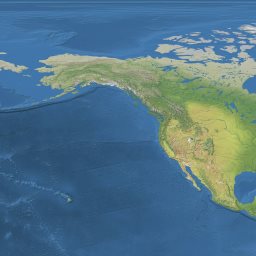
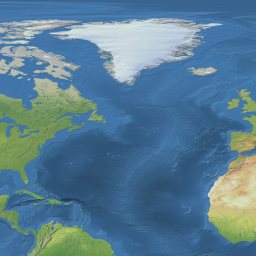
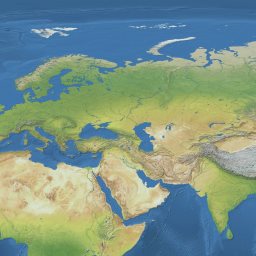
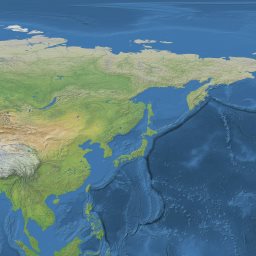
Quo Fuit places 7 dated presences for Luca Marenzio across 6 places, from 1568 to 1599.
Each one keeps the sentence it was taken from and a link to its source.
Luca Marenzio (also Marentio; October 18, 1553 or 1554 – August 22, 1599) was an Italian composer and singer of the late Renaissance.Wikipedia, full article · CC BY-SA
Every dot is a place Luca Marenzio is documented in, on a dated record. The interactive globe carries the full detail.
Where Luca Marenzio was documented, and when
1568year
Mantuaattested“He may also have gone with Contino to Mantua in 1568 when Contino began serving the Mantuan Gonzaga family; later in his life, Marenzio mentioned having spent five years in Mantua in the service of the Gonzaga family, but was unspecific…”source: Wikipedia: Luca Marenzio
1580 to 1581period
Ferraraattested“Marenzio had the opportunity to travel with Luigi in winter to spring 1580–1581 to Ferrara, the home of the Este family and one of the principal centers for composition of progressive secular music in the late 16th century.”source: Wikipedia: Luca Marenzio
1581 to 1586period
Italyattested“He also became known as an expert lutenist, as indicated in a letter of 1581 from a singer to Luigi d'Este; and by the time the cardinal died in 1586, Marenzio had become internationally famous as a composer, with his numerous books of m…”source: Wikipedia: Luca Marenzio
1581 to 1586period
Netherlandsattested“He also became known as an expert lutenist, as indicated in a letter of 1581 from a singer to Luigi d'Este; and by the time the cardinal died in 1586, Marenzio had become internationally famous as a composer, with his numerous books of m…”source: Wikipedia: Luca Marenzio
1583year
Parisattested“Several times during his tenure with Luigi, he tried to find other work: he applied for the post of maestro di cappella at the court of Mantua; and once, in 1583, Luigi considered sending him to Paris as a gift to King Henry III of Franc…”source: Wikipedia: Luca Marenzio
30 November 1589exact date
Romeattested“On November 30, 1589 Marenzio returned to Rome, where he served several patrons, while retaining considerable independence; he lived in the Orsini palace until 1593, in the service of Virginio Orsini, the nephew of the Grand Duke of Tusc…”source: Wikipedia: Luca Marenzio
22 August 1599exact date
Romeattested“Marenzio did not live long after reaching Rome; he died on August 22, 1599, in the care of his brother at the garden of the Villa Medici on Monte Pincio.”source: Wikipedia: Luca Marenzio
Open Quo Fuit to see these 7 presences on the
globe, filter them by date, and follow the journey year by year.
In each of these, a source puts Luca Marenzio and the place in the same dated sentence without stating
that Luca Marenzio was there. They are kept apart from the timeline above for exactly that reason:
a mention is not a presence, and Quo Fuit does not quietly promote one into the other.
1565 to 1567period
Bresciamentioned“He may have had some early musical training under Giovanni Contino, who was maestro di cappella at Brescia Cathedral from 1565 to 1567.”source: Wikipedia: Luca Marenzio
July 1578month
Bresciamentioned“Following his time in Brescia and Mantua, he went to Rome, where he was employed by Cardinal Cristoforo Madruzzo until July 1578, evidently as a singer.”source: Wikipedia: Luca Marenzio
July 1578month
Romementioned“Following his time in Brescia and Mantua, he went to Rome, where he was employed by Cardinal Cristoforo Madruzzo until July 1578, evidently as a singer.”source: Wikipedia: Luca Marenzio
1587year
Florencementioned“By the end of 1587, Marenzio had entered into the service of Ferdinando I de' Medici in Florence, where he stayed for two years.”source: Wikipedia: Luca Marenzio
1587year
Romementioned“It is highly probable that he was already in the service of Ferdinando while the latter was still a cardinal living in Rome, and that he followed him to Florence when he succeeded to the granducal throne in 1587.”source: Wikipedia: Luca Marenzio
1588year
Englandmentioned“As an example, when Nicholas Yonge published his Musica transalpina in 1588 in England, the first collection of Italian madrigals to be published there, Marenzio had the second-largest number of madrigals in the collection (after Alfonso…”source: Wikipedia: Luca Marenzio
1595year
Italymentioned“In 1595 John Dowland came to Italy to meet Marenzio; the two had exchanged letters when Dowland was still in England.”source: Wikipedia: Luca Marenzio
1595year
Englandmentioned“In 1595 John Dowland came to Italy to meet Marenzio; the two had exchanged letters when Dowland was still in England.”source: Wikipedia: Luca Marenzio
October 1596month
Polandmentioned“He went to Poland in between late 1595 and early 1596, staying at least through October 1596, accepting a position as maestro di cappella at the court of Sigismund III Vasa in Warsaw; his predecessor, Annibale Stabile, had just died afte…”source: Wikipedia: Luca Marenzio
October 1596month
Warsawmentioned“He went to Poland in between late 1595 and early 1596, staying at least through October 1596, accepting a position as maestro di cappella at the court of Sigismund III Vasa in Warsaw; his predecessor, Annibale Stabile, had just died afte…”source: Wikipedia: Luca Marenzio
Two people documented in the same place in the same year is a correlation, not a meeting.
Quo Fuit will never say they met without a source that says so.
How to read this page
Every line above is a dated fact taken from a source, with the sentence it came from and a link
back to it. Nothing is inferred, and a gap in the record is not evidence that someone was elsewhere.
A tag says how the fact is carried by its source: documented a structured,
explicitly dated record, attested a sentence that states the person was there,
mentioned a sentence that ties the person to the place without stating presence.
Sentences quoted from Wikipedia are available under CC BY-SA 4.0. Public domain books come from
Project Gutenberg. Quo Fuit claims no rights over these sources.
See Luca Marenzio on a 3D globe, filter the record by date, and cross this life with another to find
where the two overlap.