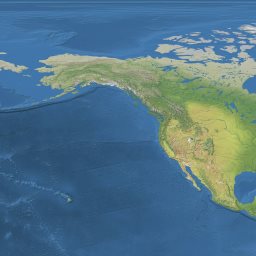
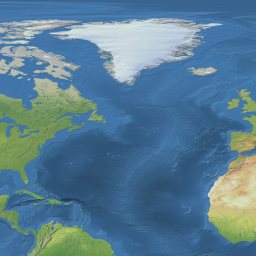
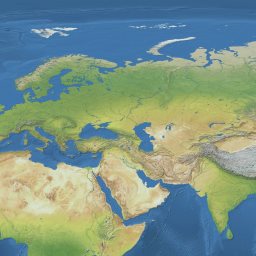
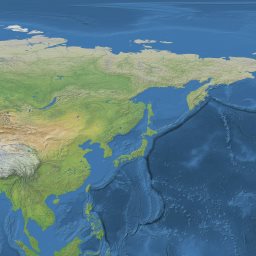
Quo Fuit places 4 dated presences for Karen Blixen across 3 places, from 1885 to 1962.
Each one keeps the sentence it was taken from and a link to its source.
Baroness Karen Christentze von Blixen-Finecke (born Dinesen; 17 April 1885 – 7 September 1962) was a Danish author who wrote in Danish and English.Wikipedia, full article · CC BY-SA
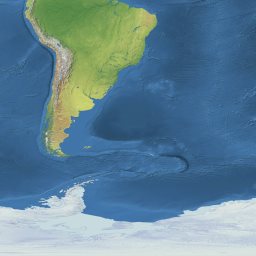
Every dot is a place Karen Blixen is documented in, on a dated record. The interactive globe carries the full detail.
Where Karen Blixen was documented, and when
17 April 1885exact date
Rungstedlundattested“Karen Christentze Dinesen was born on 17 April 1885 in Rungstedlund, north of Copenhagen.”source: Wikipedia: Karen Blixen
1902 to 1906period
Copenhagenattested“In 1902, she attended Charlotte Sode's art school in Copenhagen before continuing her studies at the Royal Danish Academy of Fine Arts under Viggo Johansen from 1903 to 1906.”source: Wikipedia: Karen Blixen
August 1931month
Denmarkattested“The family corporation sold the land to a residential developer, and Karen returned to Denmark in August 1931 to live with her mother.”source: Wikipedia: Karen Blixen
7 September 1962exact date
Rungstedlundattested“Donelson concluded: "Whatever her belief about her illness, the disease suited the artist's design for creating her own personal legend." Unable to eat, Blixen died on 7 September 1962 at Rungstedlund, her family's estate, at the age of…”source: Wikipedia: Karen Blixen
Open Quo Fuit to see these 4 presences on the
globe, filter them by date, and follow the journey year by year.
In each of these, a source puts Karen Blixen and the place in the same dated sentence without stating
that Karen Blixen was there. They are kept apart from the timeline above for exactly that reason:
a mention is not a presence, and Quo Fuit does not quietly promote one into the other.
1898year
Switzerlandmentioned“In 1898, Dinesen and her two sisters spent a year in Switzerland, where she learned to speak French.”source: Wikipedia: Karen Blixen
14 January 1914exact date
Mombasamentioned“Soon after Dinesen arrived in Kenya, which at the time was part of British East Africa, she and Blixen were married in Mombasa on 14 January 1914.”source: Wikipedia: Karen Blixen
14 January 1914exact date
Kenyamentioned“Soon after Dinesen arrived in Kenya, which at the time was part of British East Africa, she and Blixen were married in Mombasa on 14 January 1914.”source: Wikipedia: Karen Blixen
June 1915month
Denmarkmentioned“She returned to Denmark in June 1915 for treatment with the newly discovered antibiotic Salvarsan which proved helpful.”source: Wikipedia: Karen Blixen
1916year
Ngong Hillsmentioned“Nevertheless, in 1916, the Karen Coffee Company purchased a larger farm, Mbogani, near the Ngong Hills to the south–west of Nairobi.”source: Wikipedia: Karen Blixen
5 April 1918exact date
Muthaiga Country Clubmentioned“On 5 April 1918, Bror and Karen were introduced at the Muthaiga Club to the English big game hunter Denys Finch Hatton (1887–1931).”source: Wikipedia: Karen Blixen
1921year
Kenyamentioned“Blixen had reported severe bouts of abdominal pain as early as 1921, while she was still in Kenya.”source: Wikipedia: Karen Blixen
1934year
United Statesmentioned“The book was published in the United States in 1934 under the pseudonym Isak Dinesen, though the publisher refused to give Blixen an advance and discouraged the use of a pseudonym.”source: Wikipedia: Karen Blixen
1956year
Copenhagenmentioned“In 1956 when she was diagnosed with the stomach ulcer, Professor Torben Knudtzon performed surgery at Copenhagen University Hospital, but by that time, she was in her seventies, and already in poor health.”source: Wikipedia: Karen Blixen
1959year
United Statesmentioned“In 1959, Blixen made her only trip to the United States.”source: Wikipedia: Karen Blixen
1960year
Denmarkmentioned“After returning to Denmark, Blixen resumed working, despite severe illness, finishing the African sketches Shadows on the Grass in 1960.”source: Wikipedia: Karen Blixen
How to read this page
Every line above is a dated fact taken from a source, with the sentence it came from and a link
back to it. Nothing is inferred, and a gap in the record is not evidence that someone was elsewhere.
A tag says how the fact is carried by its source: documented a structured,
explicitly dated record, attested a sentence that states the person was there,
mentioned a sentence that ties the person to the place without stating presence.
Sentences quoted from Wikipedia are available under CC BY-SA 4.0. Public domain books come from
Project Gutenberg. Quo Fuit claims no rights over these sources.
See Karen Blixen on a 3D globe, filter the record by date, and cross this life with another to find
where the two overlap.