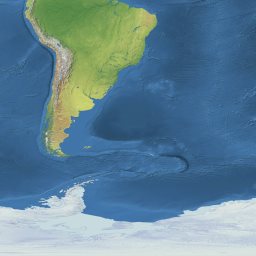
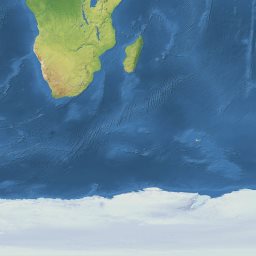
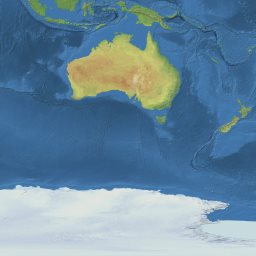
Quo Fuit places 6 dated presences for Juan Manuel Fangio across 5 places, from 1911 to 1995.
Each one keeps the sentence it was taken from and a link to its source.
Juan Manuel Fangio (24 June 1911 – 17 July 1995) was an Argentine racing driver, who competed in Formula One from to.Wikipedia, full article · CC BY-SA
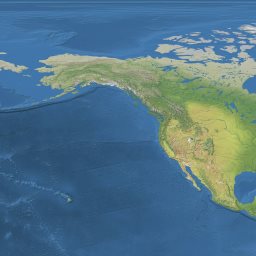
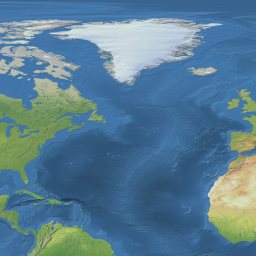
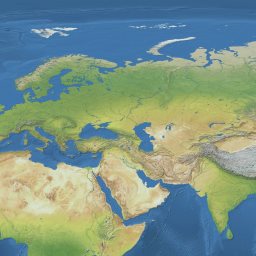
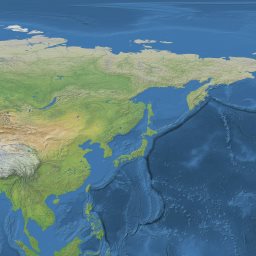
Every dot is a place Juan Manuel Fangio is documented in, on a dated record. The interactive globe carries the full detail.
Where Juan Manuel Fangio was documented, and when
24 June 1911exact date
Balcarce, Buenos Airesattested“Fangio was born in Balcarce on 24 June 1911, San Juan's Day, at 12:10 am.”source: Wikipedia: Juan Manuel Fangio
25 June 1942exact date
Balcarce, Buenos Airesattested“Born 4 years after Espinoza (on June 25, 1942, the day after Fangio's 31st birthday), Vázquez claimed to be the fruit of an extramarital relationship between his mother, Catalina Basili, and Fangio, whom he met when Rubén's maternal half…”source: Wikipedia: Juan Manuel Fangio
1952year
Argentinaattested“He was taken to a hospital in Milan with multiple injuries, the most serious being a broken neck, and spent the rest of 1952 recovering in Argentina.”source: Wikipedia: Juan Manuel Fangio
1952year
Milanattested“He was taken to a hospital in Milan with multiple injuries, the most serious being a broken neck, and spent the rest of 1952 recovering in Argentina.”source: Wikipedia: Juan Manuel Fangio
1956year
Scuderia Ferrariattested“In 1956, Fangio moved to Ferrari to win his fourth title.”source: Wikipedia: Juan Manuel Fangio
17 July 1995exact date
Buenos Airesattested“Fangio died on 17 July 1995 at 84 years old at 4:10 AM UTC-3 in Buenos Aires.”source: Wikipedia: Juan Manuel Fangio
Open Quo Fuit to see these 6 presences on the
globe, filter them by date, and follow the journey year by year.
Other places tied to Juan Manuel Fangio in the record
In each of these, a source puts Juan Manuel Fangio and the place in the same dated sentence without stating
that Juan Manuel Fangio was there. They are kept apart from the timeline above for exactly that reason:
a mention is not a presence, and Quo Fuit does not quietly promote one into the other.
1932year
Buenos Airesmentioned“In 1932 he was enlisted at the Campo de Mayo cadet school near Buenos Aires.”source: Wikipedia: Juan Manuel Fangio
1936year
Argentinamentioned“He began his racing career in Argentina in 1936, driving a 1929 that he had rebuilt.”source: Wikipedia: Juan Manuel Fangio
1940year
Argentinamentioned“During his time racing in Argentina, Fangio drove Chevrolet cars and was Argentine National Champion in 1940 and 1941.”source: Wikipedia: Juan Manuel Fangio
1946year
Morónmentioned“In 1946, Fangio returned to racing with two races in Morón and Tandil driving a Ford T.”source: Wikipedia: Juan Manuel Fangio
1948year
Reims-Gueuxmentioned“Fangio's first Grand Prix race was the 1948 French Grand Prix at Reims, where he started his Simca Gordini from 11th on the grid but retired.”source: Wikipedia: Juan Manuel Fangio
October 1948month
Buenos Airesmentioned“In October 1948, Fangio however suffered a personal tragedy in another gruelling race, this time 1948 South American Grand Prix, another point-to-point race from Buenos Aires to Caracas, Venezuela—a 20-day event covering a distance of th…”source: Wikipedia: Juan Manuel Fangio
October 1948month
Caracasmentioned“In October 1948, Fangio however suffered a personal tragedy in another gruelling race, this time 1948 South American Grand Prix, another point-to-point race from Buenos Aires to Caracas, Venezuela—a 20-day event covering a distance of th…”source: Wikipedia: Juan Manuel Fangio
1950year
Pescaramentioned“At Pescara in 1950, going down a long straight called the Flying Kilometer, he was clocked doing 194 mph (310 km/h) in his Alfa.”source: Wikipedia: Juan Manuel Fangio
1950 to 1953period
Mexicomentioned“He ended 1953 by winning the dauntingly dangerous and difficult 2,000 mi (3,200 km) Carrera Panamericana in Mexico driving a Lancia D24; Fangio was able to win this 5-day open public road rally that started at the Guatemala-Mexico border…”source: Wikipedia: Juan Manuel Fangio
1950 to 1953period
Ciudad Juarezmentioned“He ended 1953 by winning the dauntingly dangerous and difficult 2,000 mi (3,200 km) Carrera Panamericana in Mexico driving a Lancia D24; Fangio was able to win this 5-day open public road rally that started at the Guatemala-Mexico border…”source: Wikipedia: Juan Manuel Fangio
1951year
Pedralbes Circuitmentioned“Fangio won three more championship races for Alfa in 1951 in the Swiss, French and Spanish Grands Prix, and with the new 4.5-litre Ferraris taking points off his teammates Farina and various others, Fangio took the title at the final rac…”source: Wikipedia: Juan Manuel Fangio
1951year
Spainmentioned“Fangio won three more championship races for Alfa in 1951 in the Swiss, French and Spanish Grands Prix, and with the new 4.5-litre Ferraris taking points off his teammates Farina and various others, Fangio took the title at the final rac…”source: Wikipedia: Juan Manuel Fangio
1951year
Pedralbesmentioned“Fangio won three more championship races for Alfa in 1951 in the Swiss, French and Spanish Grands Prix, and with the new 4.5-litre Ferraris taking points off his teammates Farina and various others, Fangio took the title at the final rac…”source: Wikipedia: Juan Manuel Fangio
1951 to 1981period
Autodromo Nazionale Monzamentioned“In 1981, Fangio travelled to Monza for the Italian Grand Prix, where he was reunited with his Tipo 159 Alfa Romeo from 1951 and the 1954 Lancia D50 for a couple of demonstrative laps.”source: Wikipedia: Juan Manuel Fangio
Two people documented in the same place in the same year is a correlation, not a meeting.
Quo Fuit will never say they met without a source that says so.
How to read this page
Every line above is a dated fact taken from a source, with the sentence it came from and a link
back to it. Nothing is inferred, and a gap in the record is not evidence that someone was elsewhere.
A tag says how the fact is carried by its source: documented a structured,
explicitly dated record, attested a sentence that states the person was there,
mentioned a sentence that ties the person to the place without stating presence.
Sentences quoted from Wikipedia are available under CC BY-SA 4.0. Public domain books come from
Project Gutenberg. Quo Fuit claims no rights over these sources.
See Juan Manuel Fangio on a 3D globe, filter the record by date, and cross this life with another to find
where the two overlap.