Quo Fuit places 17 dated presences for Joseph Joachim across 13 places, from 1834 to 1907.
Each one keeps the sentence it was taken from and a link to its source.
Joseph Joachim (28 June 1831 – 15 August 1907) was a Hungarian violinist, conductor, composer and teacher who made an international career, based in Hanover and Berlin.Wikipedia, full article · CC BY-SA
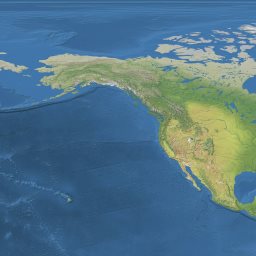
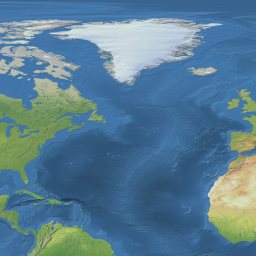
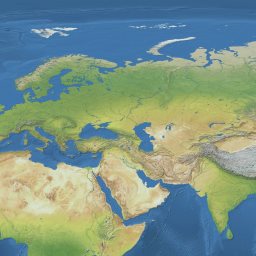
Every dot is a place Joseph Joachim is documented in, on a dated record. The interactive globe carries the full detail.
Where Joseph Joachim was documented, and when
1834 to 1859period
Pest, Hungaryattested“Fleischhauer (born 1834), Hofconcertmeister in Meiningen * Sam Franko * Richard Gompertz (born 1859), professor of violin at the Royal College of Music, London * Jakob Grün, born in Pest, 1837; Joachim resigned a position to protest his…”source: Wikipedia: Joseph Joachim
1834 to 1859period
Meiningenattested“Fleischhauer (born 1834), Hofconcertmeister in Meiningen * Sam Franko * Richard Gompertz (born 1859), professor of violin at the Royal College of Music, London * Jakob Grün, born in Pest, 1837; Joachim resigned a position to protest his…”source: Wikipedia: Joseph Joachim
1835 to 1847period
Leipzigattested“At the age of 18, "in the whole of Germany" Joachim had no equal, either in the rendering of Bach or in the concertos of Beethoven and Mendelssohn; while as quartet player, "he had no cause to fear rivalry." Following Mendelssohn's death…”source: Wikipedia: Joseph Joachim
1839year
University of Music and Performing Arts, Viennaattested“(Serwaczyński later moved back to Lublin, Poland, where he taught Wieniawski.) In 1839, Joachim continued his studies at the Vienna Conservatory (briefly with Miska Hauser and Georg Hellmesberger, Sr.; finally – and most significantly –…”source: Wikipedia: Joseph Joachim
1839year
Lublinattested“(Serwaczyński later moved back to Lublin, Poland, where he taught Wieniawski.) In 1839, Joachim continued his studies at the Vienna Conservatory (briefly with Miska Hauser and Georg Hellmesberger, Sr.; finally – and most significantly –…”source: Wikipedia: Joseph Joachim
1839year
Viennaattested“(Serwaczyński later moved back to Lublin, Poland, where he taught Wieniawski.) In 1839, Joachim continued his studies at the Vienna Conservatory (briefly with Miska Hauser and Georg Hellmesberger, Sr.; finally – and most significantly –…”source: Wikipedia: Joseph Joachim
1853year
Berlinattested“Moreira de Sá (1853–1924), Portuguese violinist and teacher; director of the "Conservatório de Música do Porto"; director and founder of the "Orpheon Portuense"; studied with Joachim in Berlin * Andreas Moser (1859–1925), violinist and a…”source: Wikipedia: Joseph Joachim
1855year
Berlinattested“* Gustav Holländer (born 1855), solo violinist * Rebecca Wilder Holmes (1871–1953), American violinist and music professor at Smith College * Jenő Hubay, Hungarian violinist, composer * Bronisław Huberman * Karl Klingler, violinist of th…”source: Wikipedia: Joseph Joachim
1855year
Smith Collegeattested“* Gustav Holländer (born 1855), solo violinist * Rebecca Wilder Holmes (1871–1953), American violinist and music professor at Smith College * Jenő Hubay, Hungarian violinist, composer * Bronisław Huberman * Karl Klingler, violinist of th…”source: Wikipedia: Joseph Joachim
1859year
Breslauattested“* Karel (Carl) Halíř (1859–1909), Bohemian violinist, member of the Joachim Quartet * Willy Hess * Gustav Hille * (born 1843), Concertmaster in Breslau * Theodore Holland (1878–1947), British composer and teacher.”source: Wikipedia: Joseph Joachim
1859year
Leipzigattested“* Tivadar Nachéz (1859–1930) * Johannes Palaschko (1877–1932) * Henri Petri, Concertmaster in Leipzig * Lili Petschnikoff (1874–1957), American violinist * Maximilian Pilzer, Concertmaster of the New York Philharmonic (1915–1917), * Enri…”source: Wikipedia: Joseph Joachim
1859year
Leicesterattested“* Tivadar Nachéz (1859–1930) * Johannes Palaschko (1877–1932) * Henri Petri, Concertmaster in Leipzig * Lili Petschnikoff (1874–1957), American violinist * Maximilian Pilzer, Concertmaster of the New York Philharmonic (1915–1917), * Enri…”source: Wikipedia: Joseph Joachim
1866year
Berlinattested“In 1866, as a result of the Austro-Prussian War, in which Prussia and its capital Berlin became the dominant German state and city, Joachim moved to Berlin, where he was invited to help found, and to become the first director of, a new d…”source: Wikipedia: Joseph Joachim
January 1867month
Edinburghattested“About a performance of it in Liverpool 11 February she had written in her diary that it was "warmly received, much to my surprise as the public here is far less receptive than that in London." In January 1867 there had been a tour to Edi…”source: Wikipedia: Joseph Joachim
In each of these, a source puts Joseph Joachim and the place in the same dated sentence without stating
that Joseph Joachim was there. They are kept apart from the timeline above for exactly that reason:
a mention is not a presence, and Quo Fuit does not quietly promote one into the other.
1833 to 1873period
Pest, Hungarymentioned“In 1833 his family moved to Pest, which in 1873 was united with Buda and Óbuda to form Budapest.”source: Wikipedia: Joseph Joachim
1836year
Pest, Hungarymentioned“There from 1836 (age 5) he studied violin with the Polish violinist , the concertmaster of the opera in Pest, said to be the best violinist in Pest.”source: Wikipedia: Joseph Joachim
1843year
Leipzigmentioned“In 1843 he was taken by his cousin, Fanny Figdor, who later married "a Leipzig merchant" named Wittgenstein, to live and study in Leipzig.”source: Wikipedia: Joseph Joachim
1848year
Weimarmentioned“In 1848, the pianist and composer Franz Liszt took up residence in Weimar, where Goethe and Schiller had lived.”source: Wikipedia: Joseph Joachim
October 1850month
Weimarmentioned“1850); premiered in Weimar under Franz Liszt in October 1850 * WoO, Fantasie über irische [schottische] Motive (ca.”source: Wikipedia: Joseph Joachim
1852year
Hanovermentioned“In 1852 he moved to Hanover, at the same time dissociating himself from the musical ideals of the 'New German School' (Liszt, Richard Wagner, Hector Berlioz, and their followers, as defined by journalist Franz Brendel).”source: Wikipedia: Joseph Joachim
May 1852month
Londonmentioned“1852); premiered in London in May 1852 * In 1855 Joachim orchestrated the Schubert Grand Duo piano duet into a "Symphony in C." * Beethoven, Concerto in D major, Op.”source: Wikipedia: Joseph Joachim
August 1857month
Weimarmentioned“"The worship of Wagner's music permeating musical taste in Weimar was to Joachim inordinate and unacceptable." Joachim's break with Liszt became final in August 1857, when he wrote to his former mentor: "I am completely out of sympathy w…”source: Wikipedia: Joseph Joachim
November 1857month
Dresdenmentioned“For example, in October–November 1857 they took a recital tour together to Dresden, Leipzig, and Munich.”source: Wikipedia: Joseph Joachim
1858year
Englandmentioned“He visited England in each year 1858, 1859, 1862 largely at the behest of his friend William Sterndale Bennett, and for several decades thereafter.”source: Wikipedia: Joseph Joachim
Bremen Cathedralmentioned“On Good Friday, 10 April 1868, Joachim and his wife joined their friend, Johannes Brahms, in the celebration of one of Brahms' greatest triumphs, the first complete performance of his German Requiem at the Bremen Cathedral.”source: Wikipedia: Joseph Joachim
March 1877month
Cambridgementioned“In March 1877, Joachim received an honorary Doctorate of Music from Cambridge University.”source: Wikipedia: Joseph Joachim
27 February 1882exact date
Londonmentioned“She wrote to Brahms 27 February 1882 from London that the piece had received "much applause".”source: Wikipedia: Joseph Joachim
Two people documented in the same place in the same year is a correlation, not a meeting.
Quo Fuit will never say they met without a source that says so.
How to read this page
Every line above is a dated fact taken from a source, with the sentence it came from and a link
back to it. Nothing is inferred, and a gap in the record is not evidence that someone was elsewhere.
A tag says how the fact is carried by its source: documented a structured,
explicitly dated record, attested a sentence that states the person was there,
mentioned a sentence that ties the person to the place without stating presence.
Sentences quoted from Wikipedia are available under CC BY-SA 4.0. Public domain books come from
Project Gutenberg. Quo Fuit claims no rights over these sources.
See Joseph Joachim on a 3D globe, filter the record by date, and cross this life with another to find
where the two overlap.