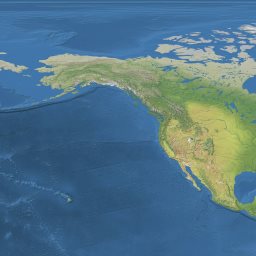
Quo Fuit places 4 dated presences for Joseph Haydn across 2 places, from 1740 to 1795.
Each one keeps the sentence it was taken from and a link to its source.
Franz Joseph Haydn (31 March 1732 to 31 May 1809) was an Austrian composer of the Classical period.Wikipedia, full article · CC BY-SA
Every dot is a place Joseph Haydn is documented in, on a dated record. The interactive globe carries the full detail.
Where Joseph Haydn was documented, and when
1740year
Viennaattested“Haydn passed his audition with Reutter, and after several months of further training moved to Vienna (1740), where he worked for the next nine years as a chorister.”source: Wikipedia: Joseph Haydn
1782year
Londonattested“Since the death of Johann Christian Bach in 1782, Haydn's music had dominated the concert scene in London; per Jones, "hardly a concert did not feature a work by him".”source: Wikipedia: Joseph Haydn
1790year
Londonattested“Rosen writes of the Oxford Symphony, "With this work and with Mozart's Prague, the classical symphony finally attained the grandeur of the great public genres of the Baroque, oratorio and opera." While travelling to London in 1790, Haydn…”source: Wikipedia: Joseph Haydn
1795year
Viennaattested“The return to Vienna in 1795 marked the last turning point in Haydn's career.”source: Wikipedia: Joseph Haydn
Open Quo Fuit to see these 4 presences on the
globe, filter them by date, and follow the journey year by year.
In each of these, a source puts Joseph Haydn and the place in the same dated sentence without stating
that Joseph Haydn was there. They are kept apart from the timeline above for exactly that reason:
a mention is not a presence, and Quo Fuit does not quietly promote one into the other.
1754 to 1756period
Viennamentioned“Between 1754 and 1756 Haydn also worked freelance for the court in Vienna.”source: Wikipedia: Joseph Haydn
1775year
Esterházamentioned“Around 1775, the prince abandoned the baryton and took up a new hobby: opera productions, previously a sporadic event for special occasions, became the focus of musical life at court, and the opera theatre the prince had built at Esterhá…”source: Wikipedia: Joseph Haydn
1784year
Viennamentioned“Another friend in Vienna was Wolfgang Amadeus Mozart, whom Haydn had met sometime around 1784.”source: Wikipedia: Joseph Haydn
1785 to 1786period
Cádizmentioned“Haydn also composed in response to commissions from abroad: the Paris symphonies (1785–1786) and the original orchestral version of The Seven Last Words of Christ (1786), a commission from Cádiz, Spain.”source: Wikipedia: Joseph Haydn
1785year
Viennamentioned“In 1785 Haydn was admitted to the same Masonic lodge as Mozart, the "Zur wahren Eintracht" in Vienna.”source: Wikipedia: Joseph Haydn
1788year
Viennamentioned“In Vienna in 1788 Haydn bought himself a fortepiano made by Wenzel Schantz.”source: Wikipedia: Joseph Haydn
15 December 1790exact date
Calaismentioned“After fond farewells from Mozart and other friends, Haydn departed from Vienna with Salomon on 15 December 1790, arriving in Calais in time to cross the English Channel on New Year's Day of 1791.”source: Wikipedia: Joseph Haydn
15 December 1790exact date
Viennamentioned“After fond farewells from Mozart and other friends, Haydn departed from Vienna with Salomon on 15 December 1790, arriving in Calais in time to cross the English Channel on New Year's Day of 1791.”source: Wikipedia: Joseph Haydn
1792 to 1814period
Bonnmentioned“When Beethoven left Bonn for Vienna in 1792, his patron, Count Ferdinand Ernst Gabriel von Waldstein, wrote "You will receive the spirit of Mozart from the hands of Haydn." In 1814 E.”source: Wikipedia: Joseph Haydn
1794 to 1795period
Englandmentioned“By the time he arrived on his second journey to England (1794–1795), Haydn had become a familiar figure on the London concert scene.”source: Wikipedia: Joseph Haydn
1797year
Londonmentioned“Directly inspired by hearing audiences sing God Save the King in London, in 1797 Haydn wrote a patriotic "Emperor's Hymn" "", ("God Save Emperor Francis").”source: Wikipedia: Joseph Haydn
26 December 1803exact date
Eisenstadtmentioned“Haydn's last summer in Eisenstadt was in 1803, and his last appearance before the public as a conductor was a charity performance of The Seven Last Words on 26 December 1803.”source: Wikipedia: Joseph Haydn
Two people documented in the same place in the same year is a correlation, not a meeting.
Quo Fuit will never say they met without a source that says so.
How to read this page
Every line above is a dated fact taken from a source, with the sentence it came from and a link
back to it. Nothing is inferred, and a gap in the record is not evidence that someone was elsewhere.
A tag says how the fact is carried by its source: documented a structured,
explicitly dated record, attested a sentence that states the person was there,
mentioned a sentence that ties the person to the place without stating presence.
Sentences quoted from Wikipedia are available under CC BY-SA 4.0. Public domain books come from
Project Gutenberg. Quo Fuit claims no rights over these sources.
See Joseph Haydn on a 3D globe, filter the record by date, and cross this life with another to find
where the two overlap.