Quo Fuit places 4 dated presences for John Ray across 4 places, from 1627 to 1666.
Each one keeps the sentence it was taken from and a link to its source.
John Ray (29 November 1627 – 17 January 1705) was an English Christian naturalist and one of the earliest English parson-naturalists.Wikipedia, full article · CC BY-SA
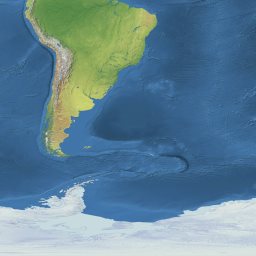
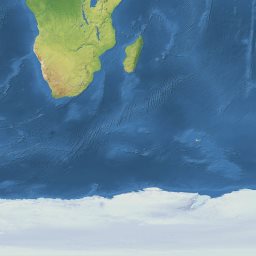
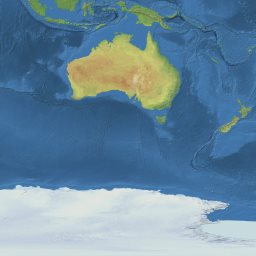
Every dot is a place John Ray is documented in, on a dated record. The interactive globe carries the full detail.
Where John Ray was documented, and when
29 November 1627exact date
Essexattested“John Ray was born in the village of Black Notley in Essex in the Kingdom of England on 29 November 1627.”source: Wikipedia: John Ray
1660year
Cambridgeattested“At Cambridge, Ray spent much of his time in the study of natural history, a subject which would occupy him for most of his life, from 1660 to the beginning of the eighteenth century.”source: Wikipedia: John Ray
March 1666month
Montpellierattested“In the spring of 1663 Ray started together with Willughby and two other pupils (Philip Skippon and Nathaniel Bacon) on a tour through Europe, from which he returned in March 1666, parting from Willughby at Montpellier, whence the latter…”source: Wikipedia: John Ray
March 1666month
Spainattested“In the spring of 1663 Ray started together with Willughby and two other pupils (Philip Skippon and Nathaniel Bacon) on a tour through Europe, from which he returned in March 1666, parting from Willughby at Montpellier, whence the latter…”source: Wikipedia: John Ray
Open Quo Fuit to see these 4 presences on the
globe, filter them by date, and follow the journey year by year.
In each of these, a source puts John Ray and the place in the same dated sentence without stating
that John Ray was there. They are kept apart from the timeline above for exactly that reason:
a mention is not a presence, and Quo Fuit does not quietly promote one into the other.
23 December 1660exact date
St Mary the Great with St Michael, Cambridgementioned“He held many college offices, becoming successively lecturer in Greek (1651), mathematics (1653), and humanity (1655), praelector (1657), junior dean (1657), and college steward (1659 and 1660); and according to the habit of the time, he…”source: Wikipedia: John Ray
1671year
Royal Societymentioned“In 1671 he presented the research of Francis Jessop on formic acid to the Royal Society.”source: Wikipedia: John Ray
1673 to 1677period
Essexmentioned“In 1673, Ray married Margaret Oakley of Launton in Oxfordshire; in 1676 he went to Middleton Hall near Tamworth, and in 1677 to Falborne (or Faulkbourne) Hall in Essex.”source: Wikipedia: John Ray
1673 to 1677period
Oxfordshirementioned“In 1673, Ray married Margaret Oakley of Launton in Oxfordshire; in 1676 he went to Middleton Hall near Tamworth, and in 1677 to Falborne (or Faulkbourne) Hall in Essex.”source: Wikipedia: John Ray
1673 to 1677period
Middleton Hall, Warwickshirementioned“In 1673, Ray married Margaret Oakley of Launton in Oxfordshire; in 1676 he went to Middleton Hall near Tamworth, and in 1677 to Falborne (or Faulkbourne) Hall in Essex.”source: Wikipedia: John Ray
1673 to 1677period
Tamworth, Staffordshirementioned“In 1673, Ray married Margaret Oakley of Launton in Oxfordshire; in 1676 he went to Middleton Hall near Tamworth, and in 1677 to Falborne (or Faulkbourne) Hall in Essex.”source: Wikipedia: John Ray
1679year
Black Notleymentioned“Finally, in 1679, he removed to his birthplace at Black Notley, where he afterwards remained.”source: Wikipedia: John Ray
How to read this page
Every line above is a dated fact taken from a source, with the sentence it came from and a link
back to it. Nothing is inferred, and a gap in the record is not evidence that someone was elsewhere.
A tag says how the fact is carried by its source: documented a structured,
explicitly dated record, attested a sentence that states the person was there,
mentioned a sentence that ties the person to the place without stating presence.
Sentences quoted from Wikipedia are available under CC BY-SA 4.0. Public domain books come from
Project Gutenberg. Quo Fuit claims no rights over these sources.
See John Ray on a 3D globe, filter the record by date, and cross this life with another to find
where the two overlap.