Quo Fuit places 9 dated presences for John of Gaunt across 9 places, from 1340 to 1399.
Each one keeps the sentence it was taken from and a link to its source.
John of Gaunt, Duke of Lancaster (6 March 1340 – 3 February 1399), was an English prince, military leader and statesman.Wikipedia, full article · CC BY-SA
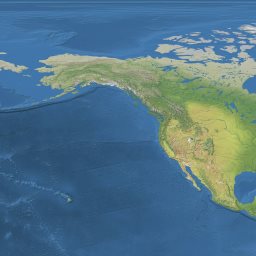
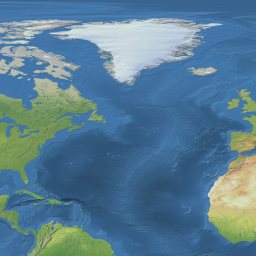
Every dot is a place John of Gaunt is documented in, on a dated record. The interactive globe carries the full detail.
Where John of Gaunt was documented, and when
March 1340month
Saint Bavo's Abbeyattested“John was the son of Edward III of England and Philippa of Hainault, and was born in Ghent in Flanders, most likely at Saint Bavo's Abbey, in March 1340.”source: Wikipedia: John of Gaunt
March 1340month
Ghentattested“John was the son of Edward III of England and Philippa of Hainault, and was born in Ghent in Flanders, most likely at Saint Bavo's Abbey, in March 1340.”source: Wikipedia: John of Gaunt
March 1340month
County of Flandersattested“John was the son of Edward III of England and Philippa of Hainault, and was born in Ghent in Flanders, most likely at Saint Bavo's Abbey, in March 1340.”source: Wikipedia: John of Gaunt
1361year
Northern Englandattested“Upon the death of his father-in-law, the Duke of Lancaster, in 1361, John received half his lands, the title "Earl of Lancaster", and the distinction of being the greatest landowner in Northern England as heir to the Palatinate of Lancas…”source: Wikipedia: John of Gaunt
1374year
Franceattested“On his return from France in 1374, John took a more decisive and persistent role in the direction of English foreign policy.”source: Wikipedia: John of Gaunt
March 1390month
Englandattested“Only four months after his return to England, in March 1390, Richard II formally invested Gaunt with the Duchy of Aquitaine, thus providing him with the overseas territory he had long desired.”source: Wikipedia: John of Gaunt
13 January 1396exact date
Lincoln Cathedralattested“On 13 January 1396, two years after the death of Constance of Castile, Katherine and John of Gaunt married in Lincoln Cathedral.”source: Wikipedia: John of Gaunt
3 February 1399exact date
Leicester Castleattested“John of Gaunt died of natural causes on 3 February 1399 at Leicester Castle, with his third wife Katherine by his side.”source: Wikipedia: John of Gaunt
3 February 1399exact date
Leicesterattested“John of Gaunt died of natural causes on 3 February 1399 at Leicester Castle, with his third wife Katherine by his side.”source: Wikipedia: John of Gaunt
Open Quo Fuit to see these 9 presences on the
globe, filter them by date, and follow the journey year by year.
In each of these, a source puts John of Gaunt and the place in the same dated sentence without stating
that John of Gaunt was there. They are kept apart from the timeline above for exactly that reason:
a mention is not a presence, and Quo Fuit does not quietly promote one into the other.
1359year
Reading Abbeymentioned“John married his first wife, Blanche of Lancaster, in 1359 at Reading Abbey as a part of the efforts of Edward III to arrange matches for his sons with wealthy heiresses.”source: Wikipedia: John of Gaunt
12 September 1368exact date
Tutbury Castlementioned“Blanche died on 12 September 1368 at Tutbury Castle, shortly after the birth of her last child while her husband was overseas.”source: Wikipedia: John of Gaunt
1369year
Calaismentioned“On the resumption of war with France in 1369, John was sent to Calais with Humphrey de Bohun, Earl of Hereford, and a small English army with which he raided into northern France.”source: Wikipedia: John of Gaunt
1370year
Aquitainementioned“In the summer of 1370, John was sent with a small army to Aquitaine to reinforce his ailing elder brother, the Black Prince, and his younger brother Edmund of Langley, Duke of York, Earl of Cambridge.”source: Wikipedia: John of Gaunt
September 1370month
Siege of Limogesmentioned“With them, he participated in the Siege of Limoges (September 1370).”source: Wikipedia: John of Gaunt
1371year
Crown of Castilementioned“;Constance of Castile In 1371, John married Infanta Constance of Castile, daughter of King Peter of Castile, thus giving him a claim to the Crown of Castile, which he would pursue.”source: Wikipedia: John of Gaunt
September 1371month
Englandmentioned“Though he attempted to defend the duchy against French encroachment for nearly a year, lack of resources and money meant he could do little but husband what small territory the English still controlled, and he resigned the command in Sep…”source: Wikipedia: John of Gaunt
September 1371month
Roquefort, Landesmentioned“Just before leaving Aquitaine, he married the Infanta Constance of Castile in September 1371 at Roquefort, near Bordeaux, Guyenne.”source: Wikipedia: John of Gaunt
September 1371month
Bordeauxmentioned“Just before leaving Aquitaine, he married the Infanta Constance of Castile in September 1371 at Roquefort, near Bordeaux, Guyenne.”source: Wikipedia: John of Gaunt
1372year
Crown of Castilementioned“As claimant to the throne of Castile and León from 1372, he impaled the arms of that kingdom (Gules, a castle or, quartering Argent, a lion rampant purpure) with his own.”source: Wikipedia: John of Gaunt
1373year
Francementioned“He began to advocate peace negotiations; indeed, as early as 1373, during his great raid through France, he made contact with , brother and political adviser of Pope Gregory XI, to let the pope know he would be interested in a diplomatic…”source: Wikipedia: John of Gaunt
December 1373month
Calaismentioned“Probably John's most notable feat of arms occurred in August–December 1373, when he attempted to relieve Aquitaine by the landward route, leading an army of some 9,000 mounted men from Calais on a great chevauchée from northeastern to so…”source: Wikipedia: John of Gaunt
April 1374month
Englandmentioned“John had no funds with which to pay them, and despite his entreaties, none were sent from England, so in April 1374, he abandoned the enterprise and sailed for home.”source: Wikipedia: John of Gaunt
1377year
Londonmentioned“There was organised opposition to his measures and rioting in London in 1377; John of Gaunt's arms were reversed or defaced wherever they were displayed, and protestors pasted up lampoons on his supposedly dubious birth.”source: Wikipedia: John of Gaunt
Every line above is a dated fact taken from a source, with the sentence it came from and a link
back to it. Nothing is inferred, and a gap in the record is not evidence that someone was elsewhere.
A tag says how the fact is carried by its source: documented a structured,
explicitly dated record, attested a sentence that states the person was there,
mentioned a sentence that ties the person to the place without stating presence.
Sentences quoted from Wikipedia are available under CC BY-SA 4.0. Public domain books come from
Project Gutenberg. Quo Fuit claims no rights over these sources.
See John of Gaunt on a 3D globe, filter the record by date, and cross this life with another to find
where the two overlap.