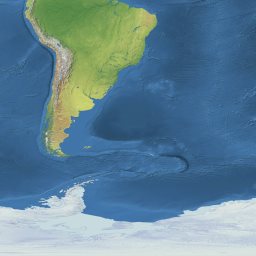
Quo Fuit places 3 dated presences for John Balliol across 2 places, from 1301 to 1314.
Each one keeps the sentence it was taken from and a link to its source.
John (de) Balliol ( – late 1314), known derisively as Toom Tabard (meaning 'empty coat'), was King of Scots from 1292 to 1296.Wikipedia, full article · CC BY-SA
Every dot is a place John Balliol is documented in, on a dated record. The interactive globe carries the full detail.
Where John Balliol was documented, and when
1301year
Hélicourtattested“He was released around the summer of 1301 and lived the rest of his life on his family's ancestral estates at Hélicourt, Picardy.”source: Wikipedia: John Balliol
1314year
Hélicourtattested“Balliol died in late 1314 at his family's château at Hélicourt in France.”source: Wikipedia: John Balliol
1314year
Franceattested“Balliol died in late 1314 at his family's château at Hélicourt in France.”source: Wikipedia: John Balliol
Open Quo Fuit to see these 3 presences on the
globe, filter them by date, and follow the journey year by year.
In each of these, a source puts John Balliol and the place in the same dated sentence without stating
that John Balliol was there. They are kept apart from the timeline above for exactly that reason:
a mention is not a presence, and Quo Fuit does not quietly promote one into the other.
1284year
Scone, Scotlandmentioned“In 1284 Balliol had attended a parliament at Scone, which had recognised Margaret, Maid of Norway, as heir presumptive to her grandfather, King Alexander III.”source: Wikipedia: John Balliol
6 June 1291exact date
Berwick-upon-Tweedmentioned“He submitted his claim to the Scottish auditors with King Edward I of England as the administrator of the court, at Berwick-upon-Tweed, on 6 June 1291.”source: Wikipedia: John Balliol
17 November 1292exact date
Scone, Scotlandmentioned“The Scottish auditors' decision in favour of Balliol was pronounced in the Great Hall of Berwick Castle on 17 November 1292, and he was inaugurated accordingly King of Scotland at Scone, 30 November 1292, St.”source: Wikipedia: John Balliol
27 April 1296exact date
Dunbarmentioned“The Scots were defeated at Dunbar and the English took Dunbar Castle on 27 April 1296.”source: Wikipedia: John Balliol
10 July 1296exact date
Stracathromentioned“John abdicated at Stracathro, near Montrose, on 10 July 1296.”source: Wikipedia: John Balliol
10 July 1296exact date
Montrose, Angusmentioned“John abdicated at Stracathro, near Montrose, on 10 July 1296.”source: Wikipedia: John Balliol
July 1299month
Tower of Londonmentioned“Balliol was imprisoned in the Tower of London until allowed to go to France in July 1299.”source: Wikipedia: John Balliol
July 1299month
Francementioned“Balliol was imprisoned in the Tower of London until allowed to go to France in July 1299.”source: Wikipedia: John Balliol
How to read this page
Every line above is a dated fact taken from a source, with the sentence it came from and a link
back to it. Nothing is inferred, and a gap in the record is not evidence that someone was elsewhere.
A tag says how the fact is carried by its source: documented a structured,
explicitly dated record, attested a sentence that states the person was there,
mentioned a sentence that ties the person to the place without stating presence.
Sentences quoted from Wikipedia are available under CC BY-SA 4.0. Public domain books come from
Project Gutenberg. Quo Fuit claims no rights over these sources.
See John Balliol on a 3D globe, filter the record by date, and cross this life with another to find
where the two overlap.