Quo Fuit places 6 dated presences for Johann Joachim Winckelmann across 6 places, from 1728 to 1768.
Each one keeps the sentence it was taken from and a link to its source.
Johann Joachim Winckelmann (9 December 1717 to 8 June 1768) was a German art historian and archaeologist.Wikipedia, full article · CC BY-SA
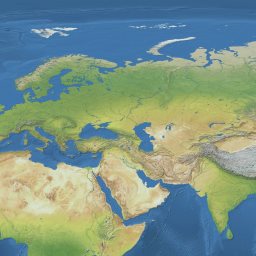
Every dot is a place Johann Joachim Winckelmann is documented in, on a dated record. The interactive globe carries the full detail.
Where Johann Joachim Winckelmann was documented, and when
1728year
Romeattested“With the aid of his new friend, the painter Anton Raphael Mengs (1728–79), with whom he first lived in Rome, Winckelmann devoted himself to the study of Roman antiquities and gradually acquired an unrivalled knowledge of ancient art.”source: Wikipedia: Johann Joachim Winckelmann
1743 to 1748period
Altmarkattested“From 1743 to 1748, he was the deputy headmaster of the gymnasium of Seehausen in the Altmark but Winckelmann felt that work with children was not his true calling.”source: Wikipedia: Johann Joachim Winckelmann
1760year
Paestumattested“In 1760, Winckelmann's Description des pierres gravées du feu Baron de Stosch [Description of incised gems of the late Baron of Stosch] appeared, followed in 1762 by his Anmerkungen über die Baukunst der Alten ("Observations on the Archi…”source: Wikipedia: Johann Joachim Winckelmann
1762year
Herculaneumattested“Winckelmann's study Sendschreiben von den Herculanischen Entdeckungen ("Letter about the Discoveries at Herculaneum") was published in 1762, and two years later Nachrichten von den neuesten Herculanischen Entdeckungen ("Report on the Lat…”source: Wikipedia: Johann Joachim Winckelmann
1765year
Naplesattested“Winckelmann visited Naples again, in 1765 and 1767, and wrote for the use of the electoral prince and princess of Saxony his Briefe an Bianconi, which were published, eleven years after his death, in the Antologia romana.”source: Wikipedia: Johann Joachim Winckelmann
1768year
Italyattested“In 1768, Winckelmann journeyed north over the Alps, but Tyrol depressed him and he decided to return to Italy.”source: Wikipedia: Johann Joachim Winckelmann
Open Quo Fuit to see these 6 presences on the
globe, filter them by date, and follow the journey year by year.
Places Johann Joachim Winckelmann is documented in
Other places tied to Johann Joachim Winckelmann in the record
In each of these, a source puts Johann Joachim Winckelmann and the place in the same dated sentence without stating
that Johann Joachim Winckelmann was there. They are kept apart from the timeline above for exactly that reason:
a mention is not a presence, and Quo Fuit does not quietly promote one into the other.
1738year
University of Hallementioned“Later in Rome, when he had become a famous scholar, he wrote: "One gets spoiled here; but God owed me this; in my youth I suffered too much." Winckelmann attended the Köllnisches Gymnasium in Berlin and the Altstädtisches Gymnasium at Sa…”source: Wikipedia: Johann Joachim Winckelmann
1738year
Berlinmentioned“Later in Rome, when he had become a famous scholar, he wrote: "One gets spoiled here; but God owed me this; in my youth I suffered too much." Winckelmann attended the Köllnisches Gymnasium in Berlin and the Altstädtisches Gymnasium at Sa…”source: Wikipedia: Johann Joachim Winckelmann
1738year
Salzwedelmentioned“Later in Rome, when he had become a famous scholar, he wrote: "One gets spoiled here; but God owed me this; in my youth I suffered too much." Winckelmann attended the Köllnisches Gymnasium in Berlin and the Altstädtisches Gymnasium at Sa…”source: Wikipedia: Johann Joachim Winckelmann
1738year
Romementioned“Later in Rome, when he had become a famous scholar, he wrote: "One gets spoiled here; but God owed me this; in my youth I suffered too much." Winckelmann attended the Köllnisches Gymnasium in Berlin and the Altstädtisches Gymnasium at Sa…”source: Wikipedia: Johann Joachim Winckelmann
1740year
University of Jenamentioned“With the intention of becoming a physician, in 1740 Winckelmann attended medical classes at Jena.”source: Wikipedia: Johann Joachim Winckelmann
1751year
Saxonymentioned“In 1751, the papal nuncio in Saxony, Alberico Archinto, visited Nöthnitz and was highly impressed by Winckelmann.”source: Wikipedia: Johann Joachim Winckelmann
Dresdenmentioned“Originally, Winckelmann planned to stay in Italy only two years with the help of the grant from Dresden, but the outbreak of the Seven Years' War (1756–1763) changed his plans.”source: Wikipedia: Johann Joachim Winckelmann
1756 to 1763period
Italymentioned“Originally, Winckelmann planned to stay in Italy only two years with the help of the grant from Dresden, but the outbreak of the Seven Years' War (1756–1763) changed his plans.”source: Wikipedia: Johann Joachim Winckelmann
1758 to 1762period
Naplesmentioned“In 1758 and 1762, he visited Naples to observe the archaeological excavations being conducted at Pompeii and Herculaneum.”source: Wikipedia: Johann Joachim Winckelmann
1758 to 1762period
Pompeiimentioned“In 1758 and 1762, he visited Naples to observe the archaeological excavations being conducted at Pompeii and Herculaneum.”source: Wikipedia: Johann Joachim Winckelmann
1765 to 1767period
Englandmentioned“In England, Winckelmann's views stirred discussion in the 1760s and 1770s, although it was limited to artistic circles: Henry Fuseli's English translation, entitled Reflections on the Painting and Sculpture of the Greeks, was published i…”source: Wikipedia: Johann Joachim Winckelmann
8 June 1768exact date
Triestementioned“On his way back, he was murdered in Trieste on 8 June 1768 in a hotel bed by a fellow traveller, a man named Francesco Arcangeli.”source: Wikipedia: Johann Joachim Winckelmann
How to read this page
Every line above is a dated fact taken from a source, with the sentence it came from and a link
back to it. Nothing is inferred, and a gap in the record is not evidence that someone was elsewhere.
A tag says how the fact is carried by its source: documented a structured,
explicitly dated record, attested a sentence that states the person was there,
mentioned a sentence that ties the person to the place without stating presence.
Sentences quoted from Wikipedia are available under CC BY-SA 4.0. Public domain books come from
Project Gutenberg. Quo Fuit claims no rights over these sources.
See Johann Joachim Winckelmann on a 3D globe, filter the record by date, and cross this life with another to find
where the two overlap.