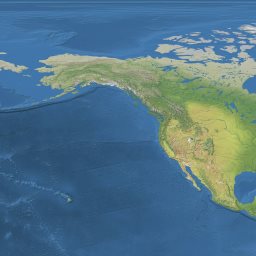
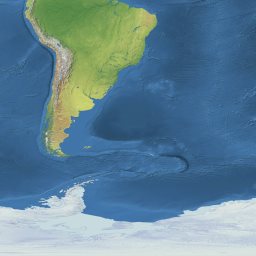
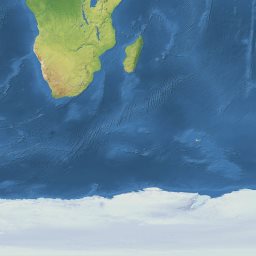
Quo Fuit places 4 dated presences for Jean-Léon Gérôme across 4 places, from 1853 to 1891.
Each one keeps the sentence it was taken from and a link to its source.
Jean-Léon Gérôme (11 May 1824 – 10 January 1904) was a French painter and sculptor in the style now known as academicism.Wikipedia, full article · CC BY-SA
Every dot is a place Jean-Léon Gérôme is documented in, on a dated record. The interactive globe carries the full detail.
Where Jean-Léon Gérôme was documented, and when
1853 to 1854period
Constantinopleattested“The Age of Augustus, the Birth of Christ, which combined the birth of Christ with conquered nations paying homage to Augustus, may have been intended to flatter Napoleon III, whose government commissioned the mural and who was identified…”source: Wikipedia: Jean-Léon Gérôme
1853 to 1854period
Greeceattested“The Age of Augustus, the Birth of Christ, which combined the birth of Christ with conquered nations paying homage to Augustus, may have been intended to flatter Napoleon III, whose government commissioned the mural and who was identified…”source: Wikipedia: Jean-Léon Gérôme
1890year
Marbleattested“In 1890, Gérôme made at least two paintings of the mythical Greek sculptor Pygmalion kissing his statue, Galatea, at the very moment she is transformed from marble into living flesh.”source: Wikipedia: Jean-Léon Gérôme
1891year
Montmartre Cemeteryattested“He was buried in the Montmartre Cemetery in front of the statue La Douleur (Pain), which he had cast for his son Jean who had died in 1891.”source: Wikipedia: Jean-Léon Gérôme
Open Quo Fuit to see these 4 presences on the
globe, filter them by date, and follow the journey year by year.
Other places tied to Jean-Léon Gérôme in the record
In each of these, a source puts Jean-Léon Gérôme and the place in the same dated sentence without stating
that Jean-Léon Gérôme was there. They are kept apart from the timeline above for exactly that reason:
a mention is not a presence, and Quo Fuit does not quietly promote one into the other.
1840 to 1843period
Parismentioned“In 1840 he was sent to Paris at the age of 16 where he studied under Paul Delaroche, whom he later accompanied to Italy in 1843.”source: Wikipedia: Jean-Léon Gérôme
1840 to 1843period
Italymentioned“In 1840 he was sent to Paris at the age of 16 where he studied under Paul Delaroche, whom he later accompanied to Italy in 1843.”source: Wikipedia: Jean-Léon Gérôme
1844year
Parismentioned“On his return to Paris in 1844, like many students of Delaroche, he joined the atelier of Charles Gleyre and studied there for a brief time.”source: Wikipedia: Jean-Léon Gérôme
1847year
Parismentioned“He sent this painting to the Paris Salon of 1847, where it gained him a third-class medal.”source: Wikipedia: Jean-Léon Gérôme
1848year
Parismentioned“His paintings The Virgin, the Infant Jesus and Saint John and Anacreon, Bacchus and Eros took a second-class medal at the Paris Salon of 1848.”source: Wikipedia: Jean-Léon Gérôme
1850year
Pompeianmentioned“The prince had bought his Greek Interior (1850), a depiction of a brothel also in the Pompeian manner.”source: Wikipedia: Jean-Léon Gérôme
Musée Condémentioned“And I prefer three touches of color on a piece of canvas to the most vivid memory, but one had to continue on with some regret." Gérôme's reputation was greatly enhanced at the Paris Salon of 1857 by his display of Egyptian Recruits Cros…”source: Wikipedia: Jean-Léon Gérôme
1857 to 1859period
Parismentioned“And I prefer three touches of color on a piece of canvas to the most vivid memory, but one had to continue on with some regret." Gérôme's reputation was greatly enhanced at the Paris Salon of 1857 by his display of Egyptian Recruits Cros…”source: Wikipedia: Jean-Léon Gérôme
1858year
Pompeianmentioned“In 1858, he helped to decorate the Paris house of Prince Napoléon Joseph Charles Paul Bonaparte in the Pompeian style.”source: Wikipedia: Jean-Léon Gérôme
1869year
Suez Canalmentioned“Along with the most eminent French artists, he was invited to the opening of the Suez Canal in 1869.”source: Wikipedia: Jean-Léon Gérôme
1884year
École des Beaux Artsmentioned“Similarly he objected to the Manet memorial exhibition at the École des Beaux Arts in 1884.”source: Wikipedia: Jean-Léon Gérôme
1890year
Greecementioned“Also in 1890, responding to widespread fascination with the ancient Tanagra figurines recently excavated in Greece, Gérôme sculpted the 5-foot-high, tinted-marble Tanagra, a female nude personifying the Tyche, or presiding spirit, of the…”source: Wikipedia: Jean-Léon Gérôme
1892year
Royal Academymentioned“His lifesize statue Bellona, in ivory, bronze, and gemstones, attracted great attention at the 1892 exhibition in the Royal Academy of London.”source: Wikipedia: Jean-Léon Gérôme
Two people documented in the same place in the same year is a correlation, not a meeting.
Quo Fuit will never say they met without a source that says so.
How to read this page
Every line above is a dated fact taken from a source, with the sentence it came from and a link
back to it. Nothing is inferred, and a gap in the record is not evidence that someone was elsewhere.
A tag says how the fact is carried by its source: documented a structured,
explicitly dated record, attested a sentence that states the person was there,
mentioned a sentence that ties the person to the place without stating presence.
Sentences quoted from Wikipedia are available under CC BY-SA 4.0. Public domain books come from
Project Gutenberg. Quo Fuit claims no rights over these sources.
See Jean-Léon Gérôme on a 3D globe, filter the record by date, and cross this life with another to find
where the two overlap.