Quo Fuit places 3 dated presences for Jacques Cartier across 3 places, from 1491 to 1540.
Each one keeps the sentence it was taken from and a link to its source.
Jacques Cartier (31 December 1491 to 1 September 1557) was a French maritime explorer from Brittany.Wikipedia, full article · CC BY-SA
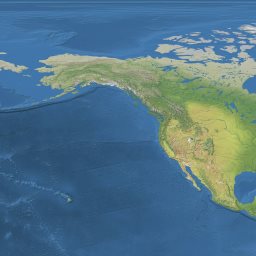
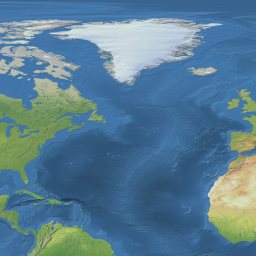
Every dot is a place Jacques Cartier is documented in, on a dated record. The interactive globe carries the full detail.
Where Jacques Cartier was documented, and when
1491year
Saint-Maloattested“Jacques Cartier was born in 1491 in Saint-Malo, the port on the north-east coast of Brittany.”source: Wikipedia: Jacques Cartier
May 1536month
Franceattested“Ready to return to France in early May 1536, Cartier decided to kidnap Chief Donnacona and take him to France, so that he might personally tell the tale of a country further north, called the "Kingdom of Saguenay", said to be full of gol…”source: Wikipedia: Jacques Cartier
17 October 1540exact date
Canadaattested“On October 17, 1540, Francis ordered the navigator Jacques Cartier to return to Canada to lend weight to a colonization project of which he would be "captain general".”source: Wikipedia: Jacques Cartier
Open Quo Fuit to see these 3 presences on the
globe, filter them by date, and follow the journey year by year.
Other places tied to Jacques Cartier in the record
In each of these, a source puts Jacques Cartier and the place in the same dated sentence without stating
that Jacques Cartier was there. They are kept apart from the timeline above for exactly that reason:
a mention is not a presence, and Quo Fuit does not quietly promote one into the other.
1534year
Manoir de Brionmentioned“In 1534, two years after the Duchy of Brittany was formally united with the French crown in the Edict of Union, Cartier was introduced to King Francis I by Jean Le Veneur, bishop of Saint-Malo and abbot of Mont Saint-Michel, at the Manoi…”source: Wikipedia: Jacques Cartier
September 1534month
Francementioned“Cartier returned to France in September 1534, sure that he had reached an Asian land.”source: Wikipedia: Jacques Cartier
1535 to 1536period
Francementioned“It is not known exactly when he decided to spend the winter of 1535–1536 in Stadacona, and it was by then too late to return to France.”source: Wikipedia: Jacques Cartier
2 October 1535exact date
Stadaconamentioned“Cartier left his main ships in a harbour close to Stadacona, and used his smallest ship to continue on to Hochelaga (now Montreal), arriving on October 2, 1535.”source: Wikipedia: Jacques Cartier
2 October 1535exact date
Hochelaga (village)mentioned“Cartier left his main ships in a harbour close to Stadacona, and used his smallest ship to continue on to Hochelaga (now Montreal), arriving on October 2, 1535.”source: Wikipedia: Jacques Cartier
15 July 1536exact date
Saint-Malomentioned“Lawrence and a three-week Atlantic crossing, Cartier and his men arrived in Saint-Malo on July 15, 1536, concluding the second, 14-month voyage, which was to be Cartier's most profitable.”source: Wikipedia: Jacques Cartier
1543year
Charlesbourg-Royalmentioned“Meanwhile, Roberval took command at Charlesbourg-Royal, but it was abandoned in 1543 after disease, foul weather and hostile natives drove the would-be settlers to despair.”source: Wikipedia: Jacques Cartier
Two people documented in the same place in the same year is a correlation, not a meeting.
Quo Fuit will never say they met without a source that says so.
How to read this page
Every line above is a dated fact taken from a source, with the sentence it came from and a link
back to it. Nothing is inferred, and a gap in the record is not evidence that someone was elsewhere.
A tag says how the fact is carried by its source: documented a structured,
explicitly dated record, attested a sentence that states the person was there,
mentioned a sentence that ties the person to the place without stating presence.
Sentences quoted from Wikipedia are available under CC BY-SA 4.0. Public domain books come from
Project Gutenberg. Quo Fuit claims no rights over these sources.
See Jacques Cartier on a 3D globe, filter the record by date, and cross this life with another to find
where the two overlap.